Post by : Mina Rahman
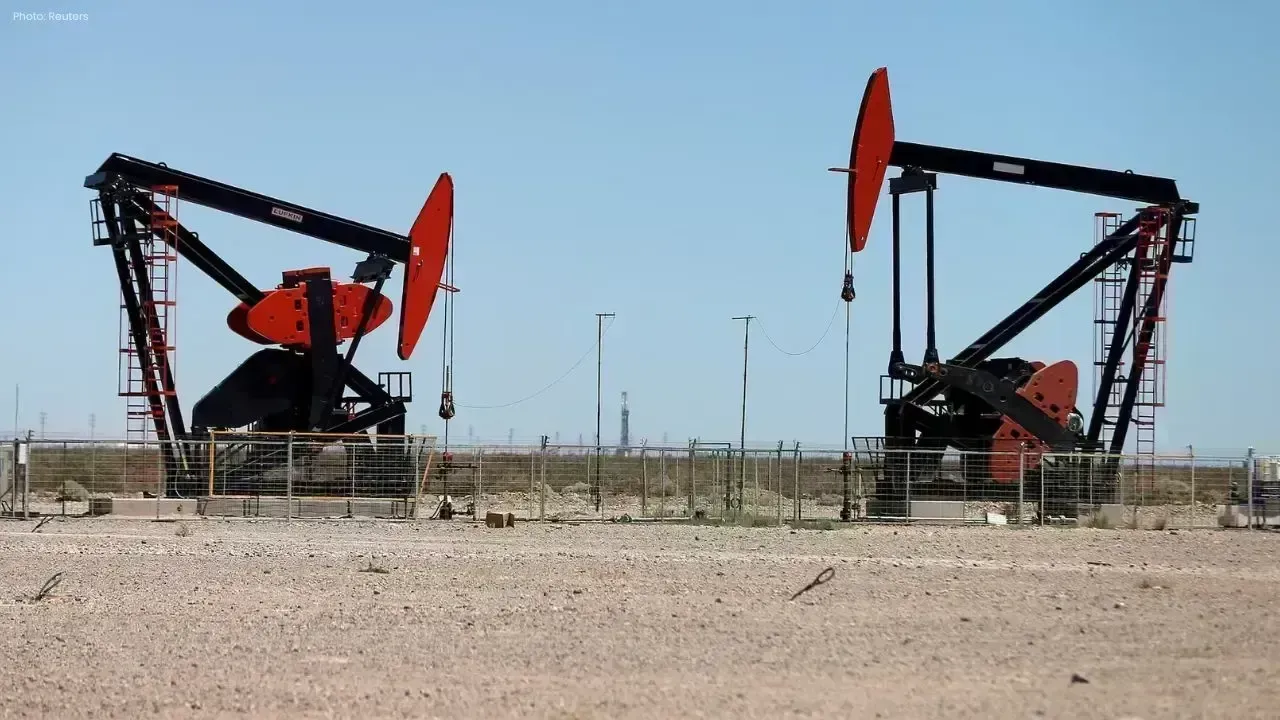
On January 23, 2026, global oil prices experienced a significant increase, driven by escalating tensions in the Middle East, raising concerns about potential disruptions to oil supplies. The surge followed the announcement by the United States of new sanctions targeting Iran’s oil trade, coupled with the deployment of substantial naval forces to the area.
Brent crude oil, the standard for global pricing, surged by almost 3 percent, rising by $1.82 to close at $65.88 per barrel. Similarly, US benchmark West Texas Intermediate (WTI) experienced an increase of $1.71, or nearly 2.9 percent, ending at $61.07 per barrel. This rapid rise underscores the oil market’s sensitivity to political and military events.
The driving force behind this price escalation was the US government's intensified pressure on Iran. New sanctions were introduced affecting several vessels and companies involved in the transport of Iranian oil and petroleum products, aiming to inhibit Iran's capacity to sell oil internationally.
In tandem with these sanctions, the US confirmed the dispatch of a robust naval contingent to the Middle East, including an aircraft carrier and destroyers armed with missiles. This escalation has heightened concerns that any conflict in the region could disrupt oil supplies, considering the Middle East’s substantial contribution to global oil production.
Oil traders reacted swiftly to the situation, with many fearing that shipping routes could be compromised or that oil exports might face delays. Even the slight potential for supply issues can lead to noticeable price increases.
Compounding supply concerns is the critical situation in Kazakhstan, a major oil-producing nation. The country has seen a sharp decline in oil production due to a fire at the Tengiz oil field, one of its most significant energy sites. Kazakhstan's oil output is expected to plummet to between 1 and 1.1 million barrels per day in January, down from nearly 1.8 million typically.
Recent drone attacks on Kazakhstan's Black Sea oil export terminal have further complicated matters, disrupting oil shipments and hindering the country's ability to supply international markets, thereby tightening the global oil supply.
Despite the rise in prices, the global demand for oil remains robust. Nations continue to require high volumes of fuel for transportation, industrial activities, and power generation, intensifying the effect of any supply disruptions on prices.
Earlier in the week, oil prices temporarily dipped after the US president made and then retracted threats concerning trade tariffs on Europe, along with dismissing military action against European nations, which momentarily alleviated market concerns. However, developments regarding the Middle East swiftly reversed this trend.
The US has also expanded its military influence in the Arctic, with a new agreement involving the US, Denmark, and NATO giving US forces comprehensive access to military bases in Greenland, regarded as part of a broader strategy to bolster their global presence.
As geopolitical tensions rise across various global regions, volatility in the oil market is anticipated. Traders are significantly focused on developments in the Middle East and Central Asia, aware that any further escalation could result in even higher prices in the forthcoming days.









Anticipated Dates for UAE Eid Al Adha 2026 Unveiled by Astronomical Experts
Experts predict Eid Al Adha 2026 in the UAE to start on May 27, prompting early holiday planning amo

DAE Achieves Remarkable Growth in Q1 2026 With Record Revenue
Dubai Aerospace Enterprise announces impressive financial results for Q1 2026, reflecting a surge in

Price Increase for Sony PS5 in Southeast Asia Effective May 1
Sony announces a price increase for the PS5 across Southeast Asia starting May 1, 2026, impacting ga

Potential ‘Super El Niño’ in 2026: Understanding the Climate Risks
Could a Super El Niño emerge in 2026? Discover its implications and potential global climate impacts

Global Energy Crisis Intensifies: Markets React to Oil Supply Challenges
Markets are on edge as oil disruptions escalate, influencing prices and economic stability. Explore

Must-See Tourist Spots in London You Can't Overlook
Explore London's essential attractions, from royal landmarks to vibrant markets, ensuring an unforge




