
Post by : Saif Nasser
Disputes between governments and private investors over natural resources have reached their highest level in a decade, according to a report by the global law firm DLA Piper. The rise is being driven by countries trying to take more control of their natural wealth and by growing competition between the United States and China for access to critical minerals.
These conflicts are mostly about who owns or controls resources such as oil, gas, gold, uranium, and lithium. These materials are essential for powering industries, building electric vehicles, and producing computer chips that are now in high demand worldwide.
DLA Piper reported that 32 cases have already been filed in 2025 with the World Bank’s International Centre for Settlement of Investment Disputes (ICSID). This number is higher than all the cases filed last year. The firm said the rise shows how governments are becoming more protective of their natural resources, especially as the global value of these materials continues to grow.
“As their value has become more apparent, states have felt the need to exert greater control over any deposits of critical minerals within their borders,” said Gabriela Alvarez-Avila, a partner at DLA Piper and co-leader of its international arbitration division.
The report showed that out of the 32 ongoing cases, 17 are related to oil and gas projects. Latin America has become a major region for such disputes, with 11 cases recorded. Colombia alone is involved in four of them, making it the single most affected country.
Colombia’s President Gustavo Petro has made several policy changes that upset investors. He recently declared some mining areas as temporary natural reserves, banned fracking, and threatened to block coal exports to Israel. These steps, while popular with environmental groups, have led to legal challenges from international investors.
Mexico, Ecuador, and Panama each have two cases filed against them. Mexico’s decision in 2022 to nationalize its lithium resources—a key material for electric car batteries—sparked conflict with private companies that had already invested in the sector.
Africa, another continent rich in critical minerals, has also seen an increase in disputes. DLA Piper said there are currently 10 cases involving countries such as Niger, Tanzania, the Democratic Republic of Congo (DRC), Mali, Morocco, and Senegal.
The DRC is especially important because it has some of the world’s largest deposits of cobalt, copper, lithium, and manganese. These minerals are essential for clean energy technologies, including batteries and renewable power systems.
The United States has shown interest in building stronger partnerships with the DRC to secure these minerals. According to the report, a Congolese senator recently contacted American officials to propose a deal that would exchange mineral rights for security assistance.
However, these negotiations have not been free of controversy. In July, Australia-based AVZ Minerals accused the DRC government of breaching an international arbitration order. The company claimed that a new deal between the DRC and U.S.-backed KoBold Metals to develop part of a lithium project violated their previous agreement.
Experts say the sharp rise in disputes shows how countries are becoming more protective of their resources as demand for critical materials grows worldwide. Many governments, especially in Latin America and Africa, want to ensure that their people benefit from the profits made from mining and drilling. But investors say sudden policy changes, such as nationalization or export bans, threaten their projects and violate international contracts.
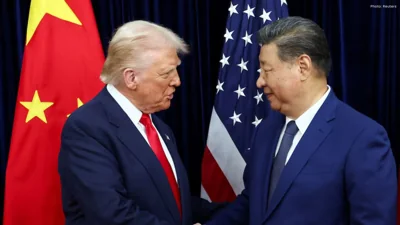
The growing competition between the U.S. and China also adds pressure. Both countries are seeking access to the same resources needed for high-tech industries and energy transition projects. As nations choose sides in this global race, disputes over ownership, trade, and investment rights are expected to continue.
The DLA Piper report highlights a growing trend that could shape the future of global energy and technology. The struggle for control over natural wealth is no longer just about profits — it has become a battle over power, sustainability, and national sovereignty.








Mattel Revives Masters of the Universe Action Figures Ahead of Film Launch
Mattel is reintroducing Masters of the Universe figures in line with its upcoming film, tapping into

China Executes 11 Members of Criminal Clan Linked to Myanmar Scam
China has executed 11 criminals associated with the Ming family, known for major scams and human tra

US Issues Alarm to Iran as Military Forces Deploy in Gulf Region
With a significant military presence in the Gulf, Trump urges Iran to negotiate a nuclear deal or fa

Copper Prices Reach Unprecedented Highs Amid Geopolitical Turmoil
Copper prices soar to all-time highs as geopolitical tensions and a weakening dollar boost investor

New Zealand Secures First Win Against India, Triumph by 50 Runs
New Zealand won the 4th T20I against India by 50 runs in Vizag. Despite Dube's impressive 65, India