Post by : Anees Nasser
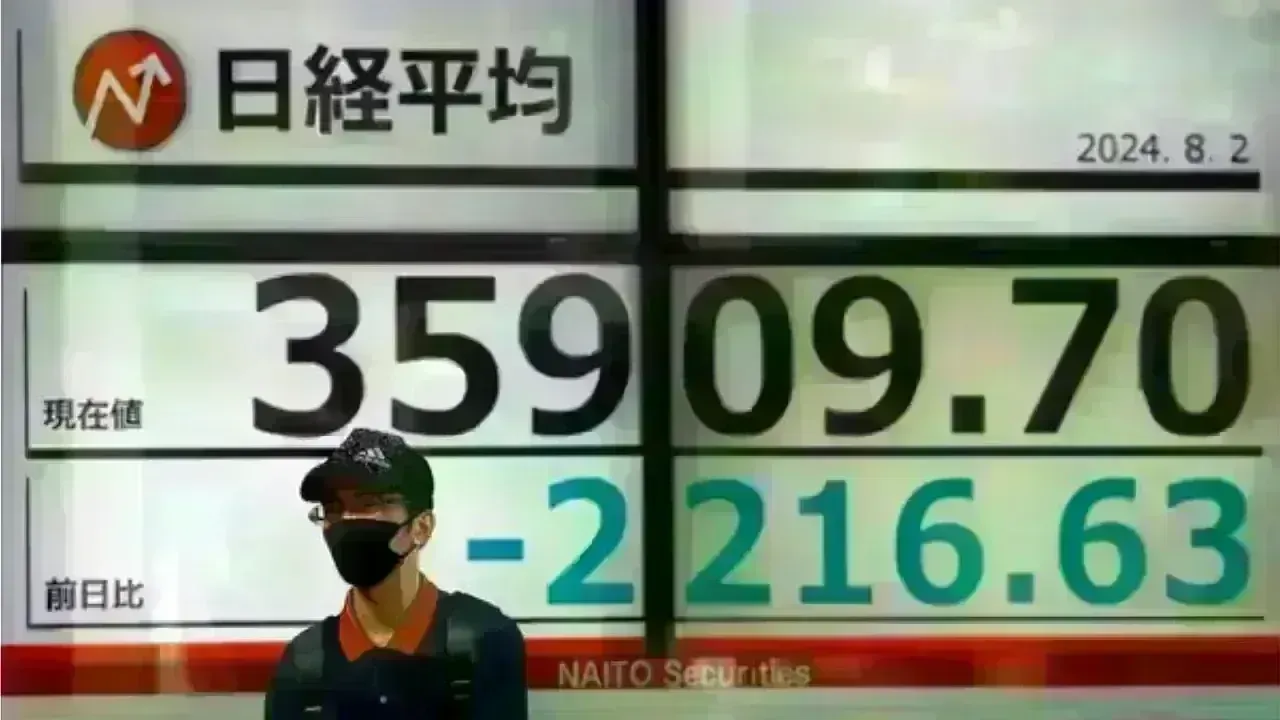
Japan's financial markets witnessed a notable decline as main indices ended significantly lower, influenced by various domestic and international factors that shook investor confidence. The Nikkei average dropped approximately 1.11 percent, while the broader Topix index also closed lower, continuing an ongoing trend of losses amidst growing worries.
This dip was fueled by new political developments that intensified market volatility and raised concerns regarding fiscal policy and climbing borrowing costs. Investors reacted quickly, evaluating the potential impacts on corporate profits and economic forecasts within one of the world’s big financial centers.
The latest downturn was primarily sparked by Japan's Prime Minister Sanae Takaichi announcing a snap general election set for February 8, 2026. As political uncertainty mounted, markets reacted negatively, causing worries that the election could prompt aggressive fiscal policies and increased public spending that would exacerbate Japan's already enormous debt levels.
With a debt-to-GDP ratio historically surpassing 250 percent, any indications of heightened fiscal stimulus without solid funding plans tend to unsettle financial markets. This unexpected electoral announcement, along with possible policy alterations, raised concerns over Japan's fiscal future.
Another significant contributor to the stress in the equity market was a rapid increase in Japanese government bond yields, particularly for longer durations. Yields on 40-year government bonds grew to around 4 percent for the first time since 2007, reflecting heightened investor anxiety about fiscal policies and bond market sell-offs.
Increasing long-term yields negatively affect stock markets by elevating borrowing costs for companies, diminishing the present value of future profits, and often prompting portfolio shifts from equities to fixed-income securities offering more attractive returns.
The Nikkei index faced considerable losses, reflecting weaknesses in key sectors sensitive to financing conditions and global demand. The wider Topix index, which covers a broader selection of stocks including smaller companies, also experienced a downturn, indicating that the drop was widespread and not limited to certain industries.
This general sell-off highlights that investors were not merely reshuffling within subsectors but were responding to systemic risks affecting Japan’s overall economic and corporate landscape.
Although the recent data did not specify sector performance in detail, equities within sectors like technology, consumer discretionary, and financials typically display heightened sensitivity to both rising bond yields and changes in policy expectations. Higher borrowing prices and political ambiguity usually compress valuations for firms reliant on growth and investment-driven expansion.
The decline of Japanese equities did not occur in isolation. International financial markets have faced pressure due to escalating geopolitical uncertainty, including renewed tariff threats from the U.S. and broader concerns over trade tensions with European partners. These global dynamics have contributed to a climate where investors gravitate towards safer assets like gold and government bonds, leading to diminished demand for equities across various regions.
Such interconnected effects demonstrate how intertwined global markets have become, with negative developments in one major economy swiftly affecting sentiments and capital flows in others.
Japan's historically low-interest rates have propelled the yen carry trade strategy—where investors borrow in yen to invest in higher-yielding assets internationally. Nonetheless, as Japanese yields increase and the yen weakens, some of these trades may be unwinding, resulting in further market volatility in both equities and bonds.
Significant shifts in carry trades could impact global capital movement and asset pricing, given the substantial volume of assets tied to this strategy.
Prime Minister Sanae Takaichi’s decision to initiate a snap election aims to gain support for her economic strategy, which includes proposals to cut consumption tax on food items for the next two years. However, the markets remain wary that these tax cuts, while potentially growth-inducing, could widen fiscal deficits and enhance government debt, especially without sound compensatory strategies.
Her leadership emphasizes structural reforms and strengthening the national economy's resilience, yet investors remain cautious about potential market disruptions as policymakers navigate this electoral period.
Snap elections typically introduce short-term uncertainties within financial markets, as investors consider possible shifts in policy direction and macroeconomic strategies. In Japan's scenario, the closeness of the election and the timing of fiscal announcements have exacerbated fears concerning future government spending and debt sustainability, contributing to market anxiety.
Long-term Japanese government bonds have become the focal point of market stress, with 30- and 40-year yields soaring to multi-year or all-time highs. Investor reactions to political happenings and fiscal expectations have prompted higher yields as compensation for risk, resulting in significant price drops within government debt.
Elevated yields can permeate the economy, influencing corporate borrowing costs, governmental refinancing expenses, and investor risk assessments. The behavior of the bond market is often viewed as a precursor to broader financial conditions, and in this case, it has foreshadowed volatility in equity markets.
Japan's bond market turbulence extends beyond national borders due its implications for the currency carry trade. If Japanese yields increase to levels comparable to or above those abroad, the motivation to engage in yen borrowing diminishes. This may lead to decreased capital inflows into foreign equities and bonds that had benefited from the strategy, tightening financial conditions on a global scale.
This shift could place additional stress on global equities, should risk assets lose a crucial source of foreign capital support.
While the current downturn is significant, it is not the first occasion on which Japan's markets have faced severe stress. Past instances—such as widespread declines associated with global upheavals or phases of systemic financial strain—illustrate that Japanese markets can become volatile when external and internal pressures converge. For instance, during the COVID-19 recession, Japanese equity benchmarks experienced sharp drops alongside global markets, indicative of synchronized sell-offs.
However, the current circumstances involve distinct elements—such as the interplay of political uncertainties, yield spikes, and global risk-averse sentiment—that set this episode apart from more typical cyclical downturns of the past.
In the near term, volatility is expected to persist within Japanese equity and bond markets. Given ongoing political uncertainties and looming global growth concerns, investors may take defensive stances, decrease their exposure to risk assets, or gravitate towards safer havens.
For long-term investors, this situation accentuates the necessity to comprehend macroeconomic fundamentals and fiscal accountability. Although market drops could present buying opportunities, they also highlight risks linked to government policy shifts, demographic challenges, and global capital flow dynamics.
Japan's demographic obstacles—including an aging population and sluggish growth—continue to shape long-term economic outlooks and market evaluations.
Currently, Japanese financial markets are traversing a delicate phase characterized by political changes, rising bond yields, and global risk-off trends. The sharp downturn in equity benchmarks mirrors profound worries regarding fiscal policy, investor sentiment, and international financial interconnections. As Japan approaches an election period with unpredictable economic policy repercussions, financial markets will likely remain responsive to both domestic developments and worldwide macroeconomic signals.
Disclaimer:
This article is based on available market reports and public information at the time of writing. Financial markets carry inherent risks, and readers are advised to conduct their own research or seek professional counsel before making any investment decisions.










Achieve Radiant Skin with This Simple Rice Flour Treatment
Transform your skincare routine! Discover how a rice flour mix can restore your skin's glow without

Meta Unveils Subscription Plans for Instagram, Facebook, and WhatsApp
Meta introduces new subscription plans for users of Instagram, Facebook, and WhatsApp, featuring enh

Suvarna Joy on Education Leadership, Resilience, and Building Purpose Through Adversity in the UAE
Suvarna Joy shares her journey of education leadership, motherhood, faith, and resilience within the

Anticipated Dates for UAE Eid Al Adha 2026 Unveiled by Astronomical Experts
Experts predict Eid Al Adha 2026 in the UAE to start on May 27, prompting early holiday planning amo

DAE Achieves Remarkable Growth in Q1 2026 With Record Revenue
Dubai Aerospace Enterprise announces impressive financial results for Q1 2026, reflecting a surge in

Price Increase for Sony PS5 in Southeast Asia Effective May 1
Sony announces a price increase for the PS5 across Southeast Asia starting May 1, 2026, impacting ga




