Post by : Shweta
Germany and Norway are actively encouraging Canada to participate in a collaborative submarine initiative that could lead to one of the largest conventional submarine fleets globally. This ambition is part of Canada's substantial investment to replace its outdated Victoria-class submarines and bolster its military capabilities across the Arctic, North Atlantic, and Pacific regions. This joint venture is framed as more than just a defence offer; it is envisioned as a long-lasting strategic alliance among NATO partners.
Canada is in the process of seeking up to 12 new conventional submarines under the Canadian Patrol Submarine Project, a defence endeavor anticipated to require billions of dollars over numerous years. The Royal Canadian Navy is under increasing pressure to update its submarine capabilities as current vessels age and as military activities intensify in Arctic waters and the North Atlantic.
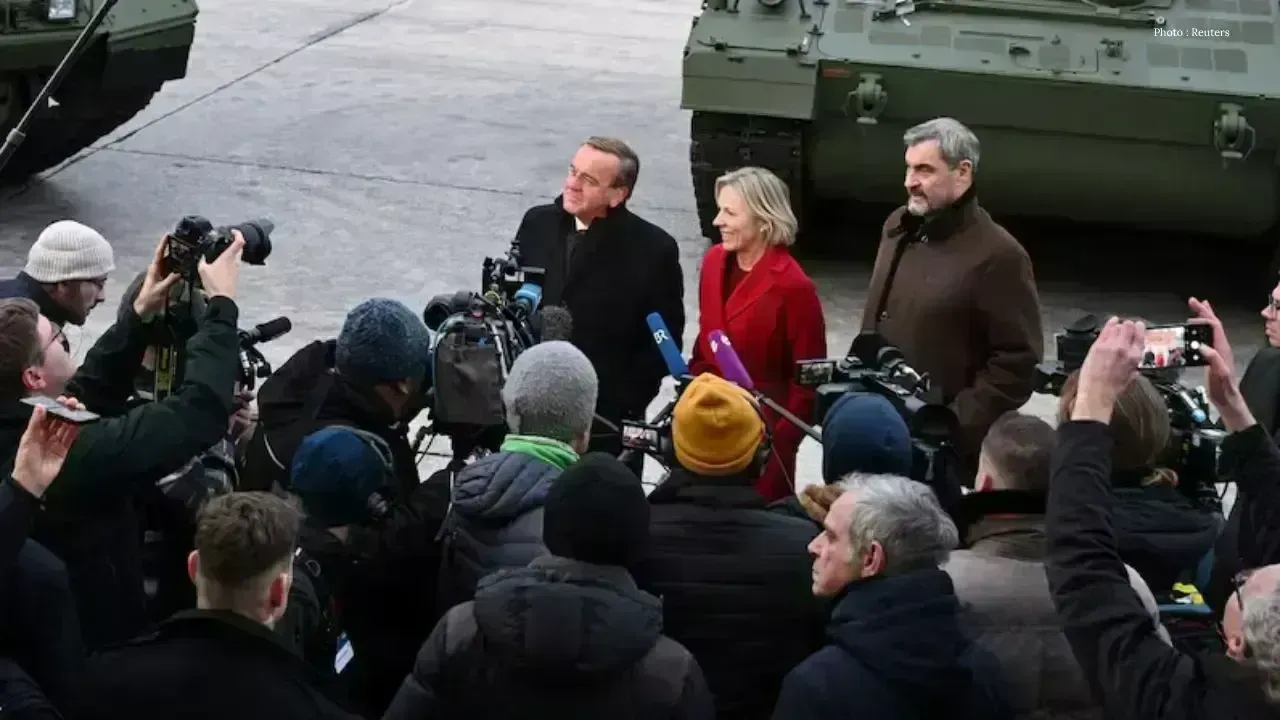
The proposal from Germany and Norway highlights the modern Type 212CD submarine, a diesel-electric craft tailored for operations in northern environments. German Defence Minister Boris Pistorius has endorsed this initiative, advocating for Canada's involvement to join a wider allied submarine framework. If Canada accepts the proposal, the three nations could eventually operate a fleet of up to 24 submarines based on a unified platform, establishing one of the world's largest conventional submarine networks.
A significant advantage of this offer is its delivery speed. Canada has emphasized the need for some submarines to be operational before retiring its current fleet in the 2030s. To accelerate this process, Germany and Norway are reportedly ready to forgo submarines originally intended for their own fleets, prioritizing Canada in the production timeline. The plan could see Canada receiving four submarines by 2036, thus bridging the capability gap caused by the decommissioning of older units.
Officials from Germany contend that the Type 212CD is particularly adept for missions in Arctic and North Atlantic regions. Its sophisticated air-independent propulsion system allows for extended periods underwater without surfacing. Military experts stress that this capacity is vital in the Arctic, where stealth and endurance play essential roles in surveillance, intelligence gathering, and deterrence operations.
The proposal further includes significant economic benefits. Germany and Norway are offering to establish joint ventures, maintenance facilities, training programs, and long-term investments in the Canadian defence industry. Proponents argue that participation in an existing multinational program could lead to reduced future operating expenditures, as upkeep, upgrades, training, and logistics might be shared across allied fleets.
Nonetheless, the German-Norwegian bid is facing formidable competition from South Korean defence firm Hanwha Ocean. South Korea has been promoting its KSS-III submarine, which is already operational, and has showcased it to Canadian officials during a prominent visit to British Columbia. Hanwha has also committed to expedited deliveries along with industrial investments and notable economic advantages.
This competition has emerged as one of the most closely monitored military procurement projects in Canada. Industry observers note that the ultimate decision will hinge on factors beyond just the submarines' specifications. Ottawa needs to weigh factors like delivery schedules, industrial advantages, alliance relationships, Arctic strategy, and long-term defence partnerships. Both bids present compelling options and enjoy the backing of significant international stakeholders.
A pivotal decision for Canada looms that could influence its naval capabilities for decades. As the security of Arctic territories grows increasingly critical due to climate impacts, expanding shipping lanes, and heightened military rivalries in the region, submarines are expected to be crucial for safeguarding Canadian sovereignty and supporting NATO operations. The nation's future fleet is anticipated to remain operational well into the latter half of the century.
With a decision due shortly, Germany and Norway are showcasing their collaborative vision for a submarine fleet as a strategic partnership centered on mutual security interests, Arctic defence, and NATO collaboration. Whichever route Canada takes, whether with the European-supported Type 212CD or South Korea's KSS-III submarines, it will represent one of the most consequential defence choices in Canada's contemporary history.









Achieve Radiant Skin with This Simple Rice Flour Treatment
Transform your skincare routine! Discover how a rice flour mix can restore your skin's glow without

Meta Unveils Subscription Plans for Instagram, Facebook, and WhatsApp
Meta introduces new subscription plans for users of Instagram, Facebook, and WhatsApp, featuring enh

Suvarna Joy on Education Leadership, Resilience, and Building Purpose Through Adversity in the UAE
Suvarna Joy shares her journey of education leadership, motherhood, faith, and resilience within the

Anticipated Dates for UAE Eid Al Adha 2026 Unveiled by Astronomical Experts
Experts predict Eid Al Adha 2026 in the UAE to start on May 27, prompting early holiday planning amo

DAE Achieves Remarkable Growth in Q1 2026 With Record Revenue
Dubai Aerospace Enterprise announces impressive financial results for Q1 2026, reflecting a surge in

Price Increase for Sony PS5 in Southeast Asia Effective May 1
Sony announces a price increase for the PS5 across Southeast Asia starting May 1, 2026, impacting ga




