Post by : Mina Rahman
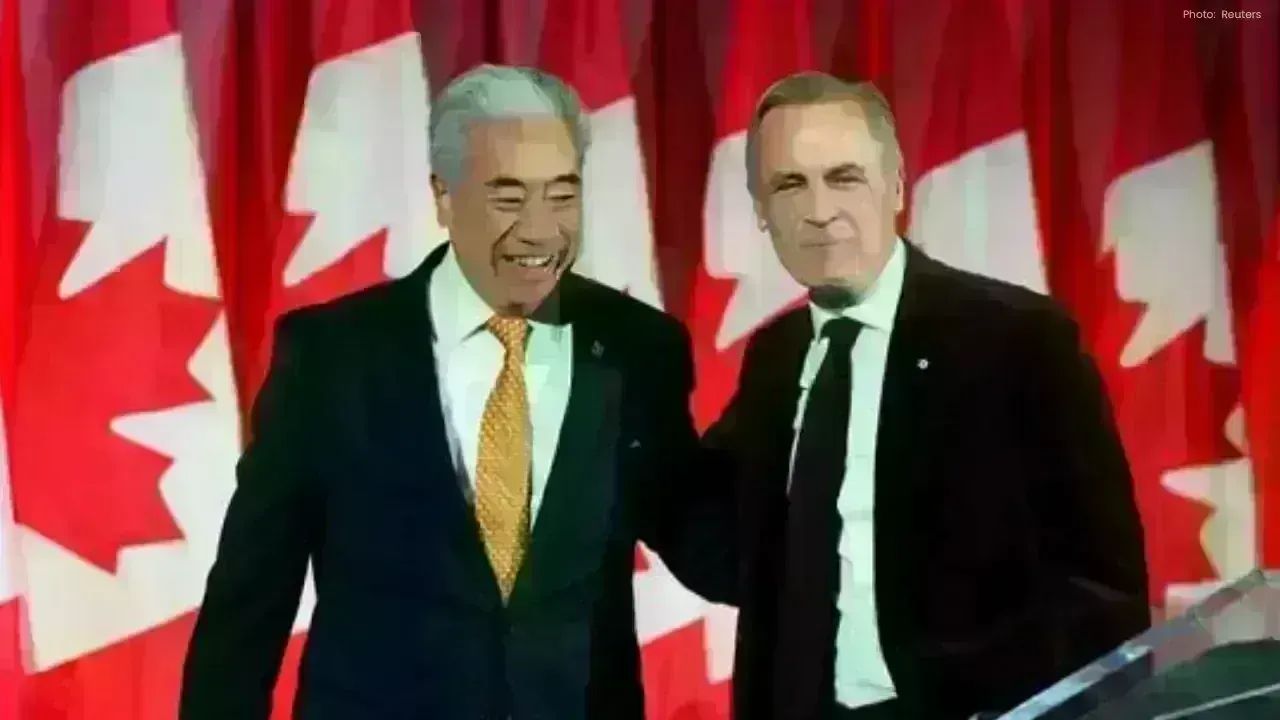
The recent shift of Conservative MP Michael Ma to the Liberal Party has sparked renewed discussion concerning the legitimacy of government formations in Canada’s parliamentary system.
Conservative leader Pierre Poilievre has characterized this move as an instance of political maneuvering, accusing Prime Minister Mark Carney of seeking a majority through clandestine tactics instead of through the electorate's will. Poilievre emphasizes that any majority should arise from general elections, not from attracting MPs from rival parties.
In contrast, Carney rebuts these allegations, asserting that the essence of legitimacy lies in the ability to maintain confidence within the House. From his viewpoint, gaining trust—whether it comes through elections, coalitions, or individual MPs switching sides—is in line with parliamentary tradition.
Canada’s electoral system does not permit voters to elect majority or minority governments directly. Rather, citizens vote for their individual representatives, who decide which leader will govern. As long as a prime minister can endure confidence votes, their government stands valid according to parliamentary norms.
Cross-floor movements are not a novel occurrence in Canadian politics. Throughout history, MPs from all principal parties have changed their allegiances, with several notable defections to Conservative administrations previously. Efforts to restrict this practice, such as a proposal requiring MPs to seek re-election after changing parties, have consistently failed.
Critics contend that such switches damage voter confidence, particularly when MPs abandon the positions they supported during elections. Supporters, however, argue that elected representatives are tasked with exercising their judgment rather than merely serving as extensions of party leadership.
Historically, minority governments have relied on partnerships for endurance. In the last Parliament, the Liberals successfully governed with backing from another party through a confidence-and-supply agreement, thereby creating a functional majority without formal floor-crossing.
What stands out in the current scenario is the potential for individual defections to indeed position the governing party beyond the majority threshold. While unprecedented at the federal level, this practice remains entirely legal.
Ultimately, the responsibility lies with the electorate. MPs who switch sides—and the leaders welcoming them—must account for their decisions in the upcoming elections. In Canada’s parliamentary framework, political repercussions may be delayed yet are inevitable.









Mattel Revives Masters of the Universe Action Figures Ahead of Film Launch
Mattel is reintroducing Masters of the Universe figures in line with its upcoming film, tapping into

China Executes 11 Members of Criminal Clan Linked to Myanmar Scam
China has executed 11 criminals associated with the Ming family, known for major scams and human tra

US Issues Alarm to Iran as Military Forces Deploy in Gulf Region
With a significant military presence in the Gulf, Trump urges Iran to negotiate a nuclear deal or fa

Copper Prices Reach Unprecedented Highs Amid Geopolitical Turmoil
Copper prices soar to all-time highs as geopolitical tensions and a weakening dollar boost investor

New Zealand Secures First Win Against India, Triumph by 50 Runs
New Zealand won the 4th T20I against India by 50 runs in Vizag. Despite Dube's impressive 65, India