Post by : Mina Rahman
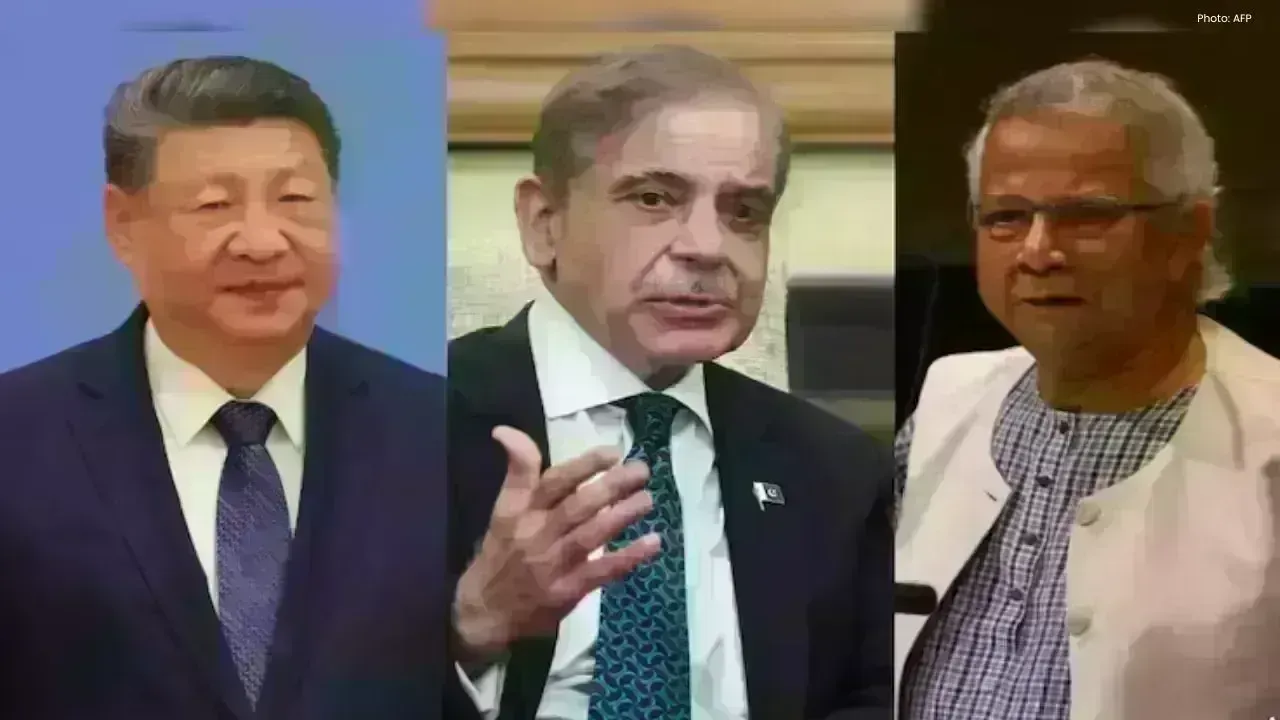
In a bold move to reshape South Asian geopolitics, Pakistan is striving to diminish India’s historic dominance by proposing a novel regional alliance. Deputy Prime Minister Ishaq Dar recently revealed that Islamabad intends to enhance its trilateral collaboration with China and Bangladesh by inviting more regional nations, embodying a vision of “open and inclusive regionalism.”
Dar emphasized the need for South Asia to move beyond “zero-sum mindsets, political fragmentation, and ineffective regional structures.” He envisions a region where conflicts are peacefully resolved, economies thrive in unison, and cooperation triumphs over division.
Earlier this year, the trio of Pakistan, China, and Bangladesh launched a trilateral framework aimed at bolstering shared economic and strategic interests. Their inaugural meeting took place in Kunming in June. Dar suggested that this collaboration could be expanded to incorporate additional nations, reflecting an adaptable strategy that doesn’t rely solely on any one country, alluding indirectly to India.
The South Asian Association for Regional Cooperation (SAARC), formed in 1985, has seen little activity in recent times. Its members include India, Pakistan, Bangladesh, Bhutan, the Maldives, Nepal, and Sri Lanka, with Afghanistan joining in 2007. The organization’s goal is to enhance economic growth, social progress, and cultural development across the region. Unfortunately, SAARC summits have seen limited convenings, with future meetings often suspended due to rising tensions, especially following cross-border incidents involving Pakistan. Consequently, India has directed its focus towards BIMSTEC, a regional consortium that excludes Pakistan and favors practical collaboration.
Experts indicate that Pakistan’s current initiative may be more aspirational than immediately feasible. Rabia Akhtar, director at the Centre for Security, Strategy and Policy Research (CSSPR), remarked that while it illustrates Pakistan’s aim to diversify regional partnerships, its ultimate success hinges on whether other countries perceive concrete advantages and can navigate the potential political fallout with India.
India continues to hold a dominant position in South Asia, with a population, economy, defense budget, and foreign currency reserves that significantly overshadow Pakistan’s. Smaller nations like Nepal and Bhutan remain reliant on India for trade, disaster management, and regional programs, underscoring New Delhi’s vital role.
Boasting over two billion residents, South Asia’s intra-regional trade is alarmingly limited to approximately $23 billion, constituting only 5% of the region’s total commercial activity. Analysts speculate that easing trade restrictions could amplify this figure to $67 billion, highlighting the substantial economic potential inherent in robust cooperation.
While Pakistan’s proposal showcases an effort to redefine regional collaboration in light of SAARC’s stagnation, the ever-present influence of India complicates any attempt to form a bloc excluding it. The efficacy of this plan will ultimately rely on whether other South Asian countries find genuine value in participating without jeopardizing their connections with India.









DAE Achieves Remarkable Growth in Q1 2026 With Record Revenue
Dubai Aerospace Enterprise announces impressive financial results for Q1 2026, reflecting a surge in

Price Increase for Sony PS5 in Southeast Asia Effective May 1
Sony announces a price increase for the PS5 across Southeast Asia starting May 1, 2026, impacting ga

Potential ‘Super El Niño’ in 2026: Understanding the Climate Risks
Could a Super El Niño emerge in 2026? Discover its implications and potential global climate impacts

Global Energy Crisis Intensifies: Markets React to Oil Supply Challenges
Markets are on edge as oil disruptions escalate, influencing prices and economic stability. Explore

Must-See Tourist Spots in London You Can't Overlook
Explore London's essential attractions, from royal landmarks to vibrant markets, ensuring an unforge

Ultimate Guide to Snagging Cheap Flights in 2026
Unlock the secrets to booking affordable flights in 2026 with insightful tips and strategies tailore




