Post by : Saif Nasser
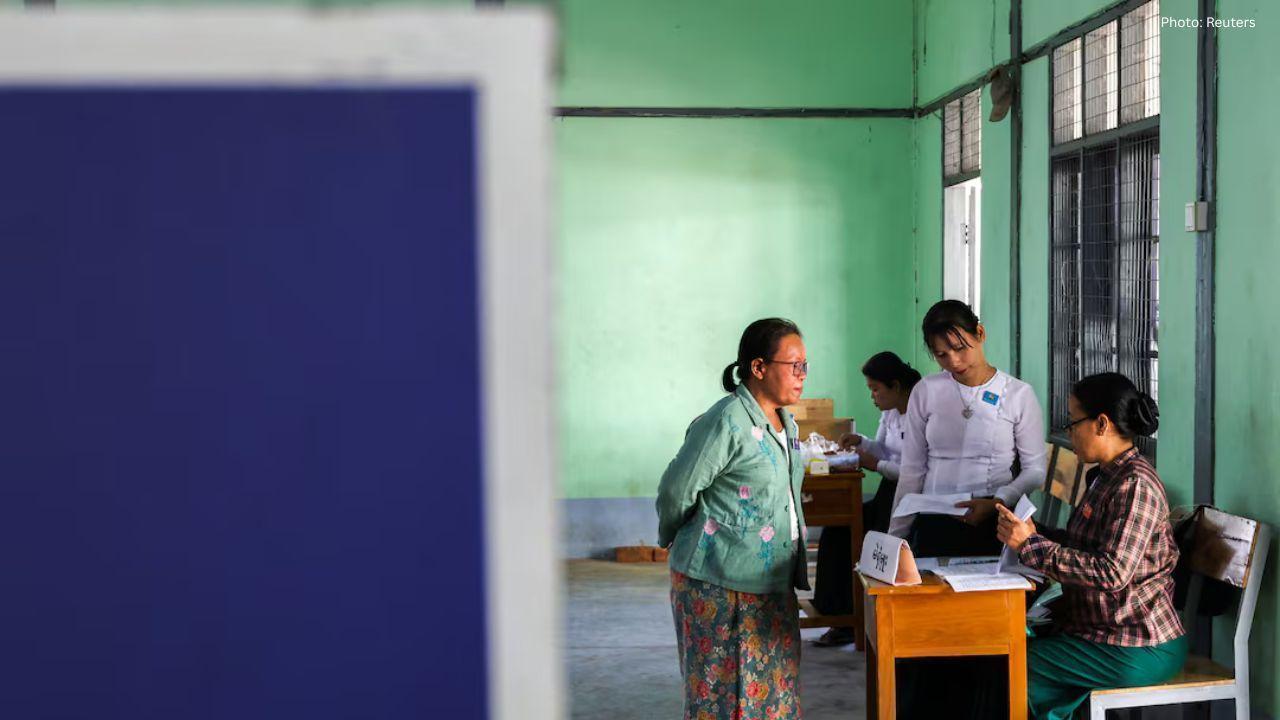
Myanmar went to the polls on Sunday at a time when the country is facing a deep civil war and a growing humanitarian emergency. The election comes as millions of people struggle with violence, hunger, and displacement following the military takeover in 2021 that removed the elected government led by Nobel Peace Prize winner Aung San Suu Kyi.
The civil conflict has caused serious damage across the country. Fighting between the military and resistance groups has destroyed homes, disrupted daily life, and forced families to flee. According to United Nations estimates, more than 3.6 million people have been driven from their homes, and over 6,800 civilians have lost their lives since the conflict began.
Myanmar’s humanitarian crisis is among the worst in Asia. Years of fighting, along with repeated natural disasters such as a powerful earthquake earlier this year, have pushed millions into poverty. The UN says around 20 million people—nearly half the population—now need humanitarian aid. Rising prices and a weak currency have made food and basic goods unaffordable for many families.
Hunger is spreading rapidly. The World Food Programme estimates that more than 16 million people are facing serious food shortages. Next year, over 12 million people could suffer from acute hunger, including about 1 million who will need urgent, lifesaving assistance. Children are suffering the most, with more than 540,000 expected to face severe malnutrition this year. One in three children under five already shows signs of stunted growth, which can affect health for life.
Aid efforts are struggling due to lack of funding. Only about 12% of the money needed for humanitarian relief in Myanmar has been received. Cuts to international aid, including from the United States, have further reduced support for people in need. At the same time, journalists and aid workers face restrictions, making it harder to report and respond to the crisis.
The economy has also taken a heavy hit. Once seen as a rising economy in Southeast Asia, Myanmar now faces high inflation, poor electricity supply, and weak growth. Frequent power cuts have pushed homes and businesses to rely more on solar energy. Despite these problems, the World Bank expects the economy to grow by about 3% next year, mainly due to reconstruction work after the earthquake and limited support for badly affected areas.
Myanmar’s military rulers have also increased cooperation with Russia. An investment agreement signed earlier this year may allow Russian energy companies to expand operations in the country, offering some economic activity but raising concerns about long-term dependence.
As voters cast their ballots, Myanmar stands at a difficult crossroads. The elections take place under the shadow of war, hunger, and economic hardship. Whether the vote can bring stability or relief remains uncertain for millions who continue to suffer across the country.









Achieve Radiant Skin with This Simple Rice Flour Treatment
Transform your skincare routine! Discover how a rice flour mix can restore your skin's glow without

Meta Unveils Subscription Plans for Instagram, Facebook, and WhatsApp
Meta introduces new subscription plans for users of Instagram, Facebook, and WhatsApp, featuring enh

Suvarna Joy on Education Leadership, Resilience, and Building Purpose Through Adversity in the UAE
Suvarna Joy shares her journey of education leadership, motherhood, faith, and resilience within the

Anticipated Dates for UAE Eid Al Adha 2026 Unveiled by Astronomical Experts
Experts predict Eid Al Adha 2026 in the UAE to start on May 27, prompting early holiday planning amo

DAE Achieves Remarkable Growth in Q1 2026 With Record Revenue
Dubai Aerospace Enterprise announces impressive financial results for Q1 2026, reflecting a surge in

Price Increase for Sony PS5 in Southeast Asia Effective May 1
Sony announces a price increase for the PS5 across Southeast Asia starting May 1, 2026, impacting ga




