Post by : Saif Nasser
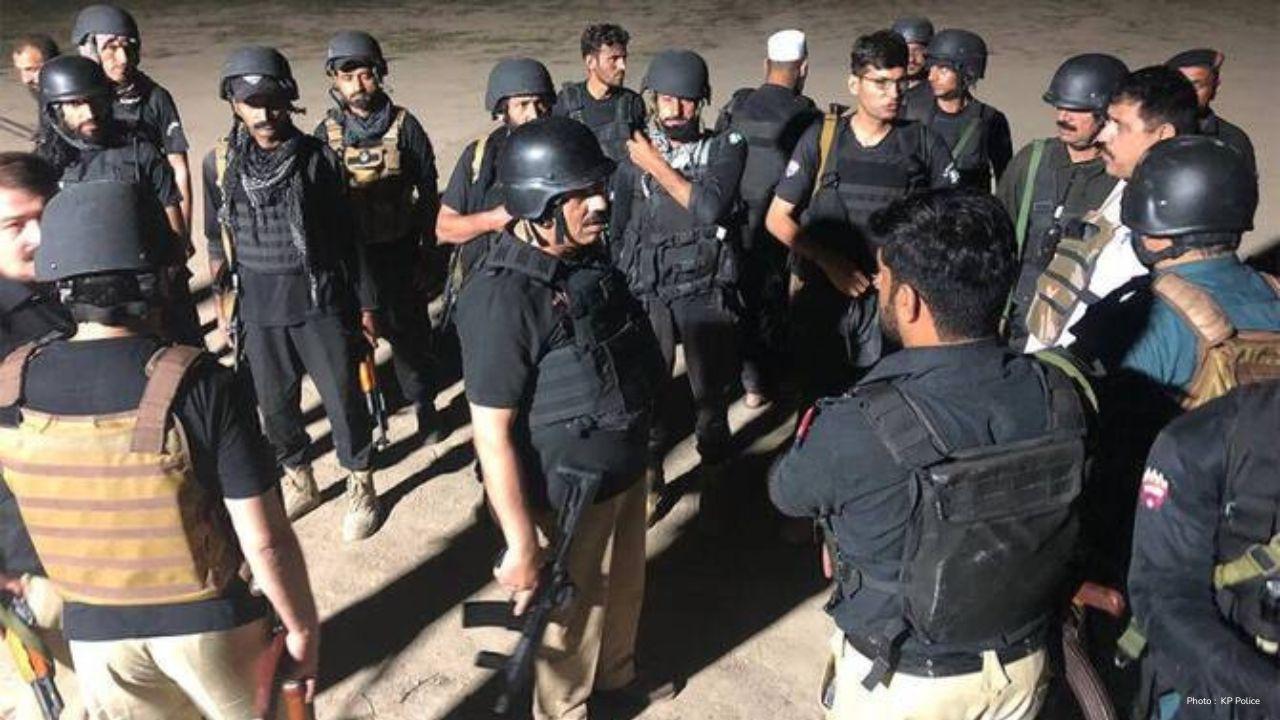
In a shocking escalation of violence in Pakistan, seven policemen lost their lives in a late-night militant attack on a police training center in Dera Ismail Khan (DI Khan), located in the Khyber Pakhtunkhwa (KP) province. Six militants were also killed in the confrontation, authorities said on Saturday. The attack highlights the ongoing security challenges in the region bordering Afghanistan, which has seen repeated violence from militant groups.
The Attack and Immediate Impact
The assault occurred at night, targeting a police training center where around 200 trainees and staff were present. According to Yaqoob Khan, a DI Khan police spokesman, the attackers initially used a vehicle loaded with explosives to strike the main gate. The impact caused a section of the facility’s wall to collapse, killing two officers immediately. This was followed by a fierce gun battle between the attackers and the security forces stationed at the center.
In total, seven police officers were killed and 13 others injured during the incident. All trainees and other staff members were safely evacuated. The six militants involved in the attack were neutralized during the counter-operation.
Militant Groups and the Security Context
The Pakistani Taliban, also known as Tehreek-e-Taliban Pakistan (TTP), initially claimed responsibility for the attack, describing it as a suicide bombing followed by an armed assault. However, the group later withdrew its claim. In recent years, KP province has faced a surge in militancy, with the TTP frequently targeting police, army personnel, and government officials.
This attack follows other violent incidents in the region. Just this week, at least 12 Pakistani soldiers, including three officers, were killed in separate militant attacks. Such incidents underscore the continuing threat posed by militant groups in Pakistan’s northwestern areas.
Regional Tensions and Cross-Border Issues
Islamabad has repeatedly accused the Afghan Taliban of providing shelter to TTP militants, claiming that these groups launch attacks against Pakistani security forces and civilians from Afghan territory. Kabul, however, has denied these accusations. The situation has recently escalated further after airstrikes were reported in Kabul, allegedly targeting Noor Wali Mehsud, the TTP chief.
Following these developments, Pakistan and Afghanistan exchanged sharp warnings. The Afghan government accused Pakistan of violating its airspace during the airstrikes, while Islamabad responded by asserting its right to defend the country and protect its territorial integrity.
Government Response and Public Safety
Authorities in Pakistan condemned the attack and assured citizens that security measures would be strengthened to prevent future incidents. The police and military are increasing patrols and surveillance, particularly near sensitive facilities like police training centers, government buildings, and border areas.
The attack also raises concerns about the safety of ordinary civilians. In regions affected by militant activity, communities often live under constant fear, with threats to both their security and daily life.
Looking Ahead: Challenges and Solutions
The DI Khan attack underscores a persistent challenge for Pakistan’s security forces: the ability of militant groups to strike critical targets despite ongoing counterterrorism efforts. Experts suggest that a combination of stronger border controls, intelligence sharing with neighboring countries, and community engagement in high-risk areas may help reduce such attacks.
International observers have urged both Pakistan and Afghanistan to work together to prevent militants from crossing borders and to take concrete steps to curb violence in the region. Without coordinated action, attacks on security personnel, government infrastructure, and civilians are likely to continue.
Disclaimer
The militant attack on the DI Khan police training center is a stark reminder of the ongoing security challenges in Khyber Pakhtunkhwa and along the Pakistan-Afghanistan border. Seven police officers sacrificed their lives defending the nation, highlighting the bravery of security forces who face constant threats from militant groups. As Pakistan strengthens its counterterrorism measures, regional cooperation and proactive intelligence will be essential to ensure peace and safety for both civilians and security personnel.









Achieve Radiant Skin with This Simple Rice Flour Treatment
Transform your skincare routine! Discover how a rice flour mix can restore your skin's glow without

Meta Unveils Subscription Plans for Instagram, Facebook, and WhatsApp
Meta introduces new subscription plans for users of Instagram, Facebook, and WhatsApp, featuring enh

Suvarna Joy on Education Leadership, Resilience, and Building Purpose Through Adversity in the UAE
Suvarna Joy shares her journey of education leadership, motherhood, faith, and resilience within the

Anticipated Dates for UAE Eid Al Adha 2026 Unveiled by Astronomical Experts
Experts predict Eid Al Adha 2026 in the UAE to start on May 27, prompting early holiday planning amo

DAE Achieves Remarkable Growth in Q1 2026 With Record Revenue
Dubai Aerospace Enterprise announces impressive financial results for Q1 2026, reflecting a surge in

Price Increase for Sony PS5 in Southeast Asia Effective May 1
Sony announces a price increase for the PS5 across Southeast Asia starting May 1, 2026, impacting ga




