Post by : Saif Nasser
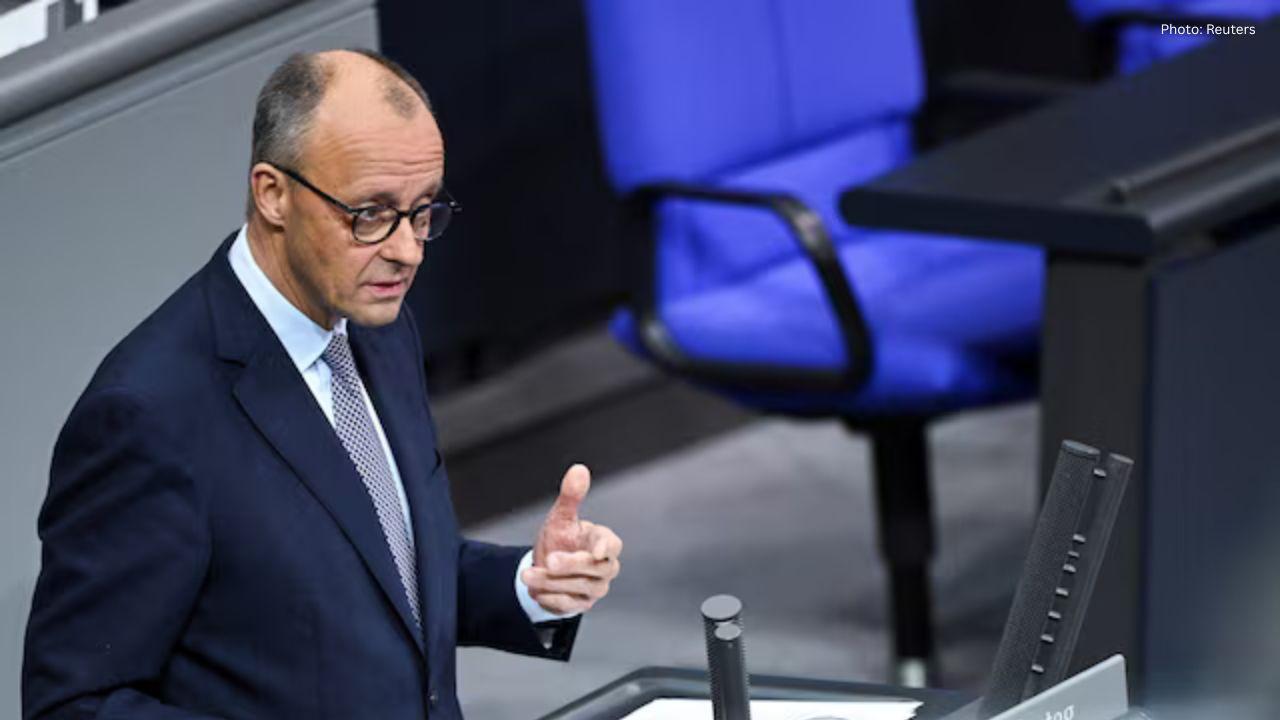
Germany’s Chancellor Friedrich Merz has called on the European Union to reconsider its strict ban on new combustion-engine cars that is planned to take effect in 2035. His statement has sparked fresh debate across Europe at a time when the automotive industry is already going through major changes. Merz said he will write a formal letter to the European Commission urging it to allow more flexibility for carmakers, even after the 2035 deadline. He explained that while climate protection remains a priority, Europe also needs to protect its economic strength and ensure that its industries remain competitive during the transition to cleaner technologies.
Merz shared his views during a news conference following a meeting of coalition leaders. According to him, the EU should avoid limiting itself to only one type of technology. He believes that electric vehicles are important, but they should not be the only option available to consumers and manufacturers. He suggested that even after 2035, the EU should allow battery-powered cars that also include a highly efficient combustion engine. These hybrid systems, he argued, could help reduce emissions while giving people more choices and making the shift to cleaner transport less risky for industries.
Germany’s automobile sector is one of the largest in the world, employing millions of people and contributing significantly to the country’s economy. Many companies are already investing large amounts of money in electric vehicle production, charging infrastructure, and battery development. However, the industry worries that a complete ban on combustion engines could lead to job losses, higher production costs, and slower manufacturing if the change happens too quickly. Merz said that keeping technological options open would help the industry adjust more smoothly without harming workers or weakening companies.
Even as he pushed for more flexibility, Merz emphasized that Europe’s climate goals are important and must continue. The current EU policy requires that all new cars sold after 2035 must produce zero emissions. This is part of the broader effort to reduce greenhouse gases and slow global warming. Merz said he supports these goals but believes that modern combustion engines have become cleaner and more efficient. He argued that the EU should not ignore these improvements or shut the door on them entirely.
The next steps depend on how the European Commission responds to Merz’s letter once it is officially sent. Any change to the 2035 rule would require discussion and agreement among EU member states, many of which strongly support a full shift to electric vehicles. For now, Merz’s comments have added pressure on European leaders to think more deeply about how to balance environmental protection with economic realities. The decision will shape the future of transportation in Europe and influence millions of car buyers, workers, and businesses.
As the world moves toward greener energy and cleaner mobility, Europe faces a difficult task: meeting its climate commitments while ensuring that industries remain strong and innovative. Whether the EU will modify its 2035 plan or hold firm to its original target remains to be seen.






Mattel Revives Masters of the Universe Action Figures Ahead of Film Launch
Mattel is reintroducing Masters of the Universe figures in line with its upcoming film, tapping into

China Executes 11 Members of Criminal Clan Linked to Myanmar Scam
China has executed 11 criminals associated with the Ming family, known for major scams and human tra

US Issues Alarm to Iran as Military Forces Deploy in Gulf Region
With a significant military presence in the Gulf, Trump urges Iran to negotiate a nuclear deal or fa
Copper Prices Reach Unprecedented Highs Amid Geopolitical Turmoil
Copper prices soar to all-time highs as geopolitical tensions and a weakening dollar boost investor

New Zealand Secures First Win Against India, Triumph by 50 Runs
New Zealand won the 4th T20I against India by 50 runs in Vizag. Despite Dube's impressive 65, India