Post by : Mina Rahman
The recent U.S. arrest of Venezuelan President Nicolás Maduro has caused a significant rift in China’s enduring partnership with Venezuela, prompting Beijing to reevaluate its position in South America. Years of strategic diplomacy and economic collaboration have suddenly become fraught with uncertainty.
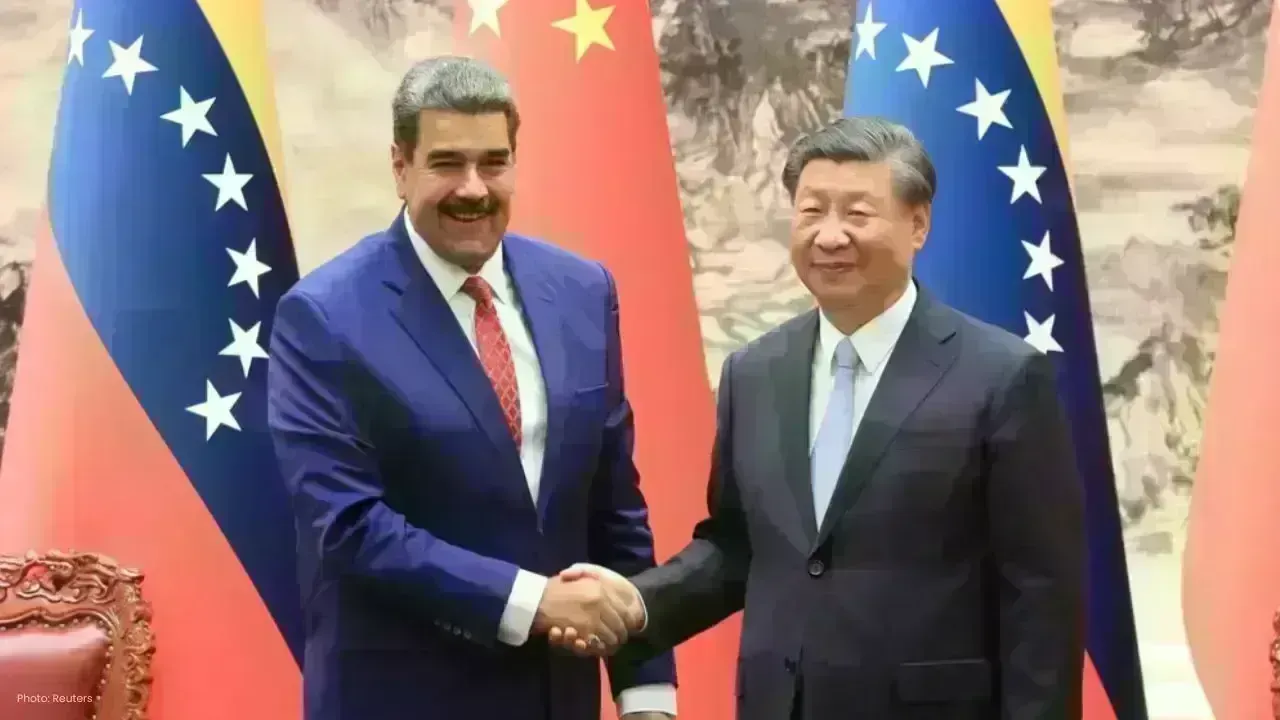
Before his arrest, Maduro had lauded Chinese President Xi Jinping as a close ally, emphasizing their robust relationship. This meeting, which included high-level officials, highlighted the deep intertwining of the two nations, particularly given China’s substantial investments in Venezuela’s oil sector and infrastructure.
Over the years, China has allocated over $100 billion for Venezuelan loans and various development initiatives, such as railway projects and power facilities. Consequently, nearly 80% of Venezuela’s oil exports last year were directed to China.
The precarious situation shifted abruptly with Maduro's capture in a U.S. operation, leaving analysts and policymakers stunned by the sharp contrast to recent diplomatic engagements.
China promptly criticized the U.S. move, branding it a breach of international law and a provocation to Venezuelan sovereignty. Officials emphasized the necessity for mutual respect for political independence among nations.
This development presents Beijing with new hurdles, potentially unsettling its investments and influence in Latin America while also reaffirming its role as a stable partner in contrast to U.S. volatility. Experts suggest that China will adopt a cautious approach to maintain its position in the region, carefully managing its ties with Washington.
U.S. authorities have signaled their opposition to Chinese and Russian presence in the Western Hemisphere, asserting that it should not be a foothold for rival powers. China has resisted efforts to compel Venezuela to break ties, cautioning that such tactics could adversely affect the Venezuelan populace.
The ramifications of Maduro's arrest extend beyond immediate concerns, even affecting debates surrounding Taiwan. Yet analysts believe China will prioritize long-term considerations over reactionary measures in this context.
China holds substantial economic interests in Venezuela, with major energy investments and approximately $10 billion owed to Chinese lenders. Nevertheless, future financial undertakings might be jeopardized if U.S. influence intensifies throughout Latin America.
Even with these uncertainties, China strives to present itself as a dependable partner, having successfully swayed multiple regional nations to recognize it over Taiwan, enhancing its foothold within the Global South.
As the political landscape in Venezuela remains unpredictable, China must adeptly maneuver through evolving geopolitical challenges while protecting its regional investments and partnerships amidst surprising global changes.








DAE Achieves Remarkable Growth in Q1 2026 With Record Revenue
Dubai Aerospace Enterprise announces impressive financial results for Q1 2026, reflecting a surge in

Price Increase for Sony PS5 in Southeast Asia Effective May 1
Sony announces a price increase for the PS5 across Southeast Asia starting May 1, 2026, impacting ga

Potential ‘Super El Niño’ in 2026: Understanding the Climate Risks
Could a Super El Niño emerge in 2026? Discover its implications and potential global climate impacts

Global Energy Crisis Intensifies: Markets React to Oil Supply Challenges
Markets are on edge as oil disruptions escalate, influencing prices and economic stability. Explore

Must-See Tourist Spots in London You Can't Overlook
Explore London's essential attractions, from royal landmarks to vibrant markets, ensuring an unforge

Ultimate Guide to Snagging Cheap Flights in 2026
Unlock the secrets to booking affordable flights in 2026 with insightful tips and strategies tailore




