Post by : Saif Nasser
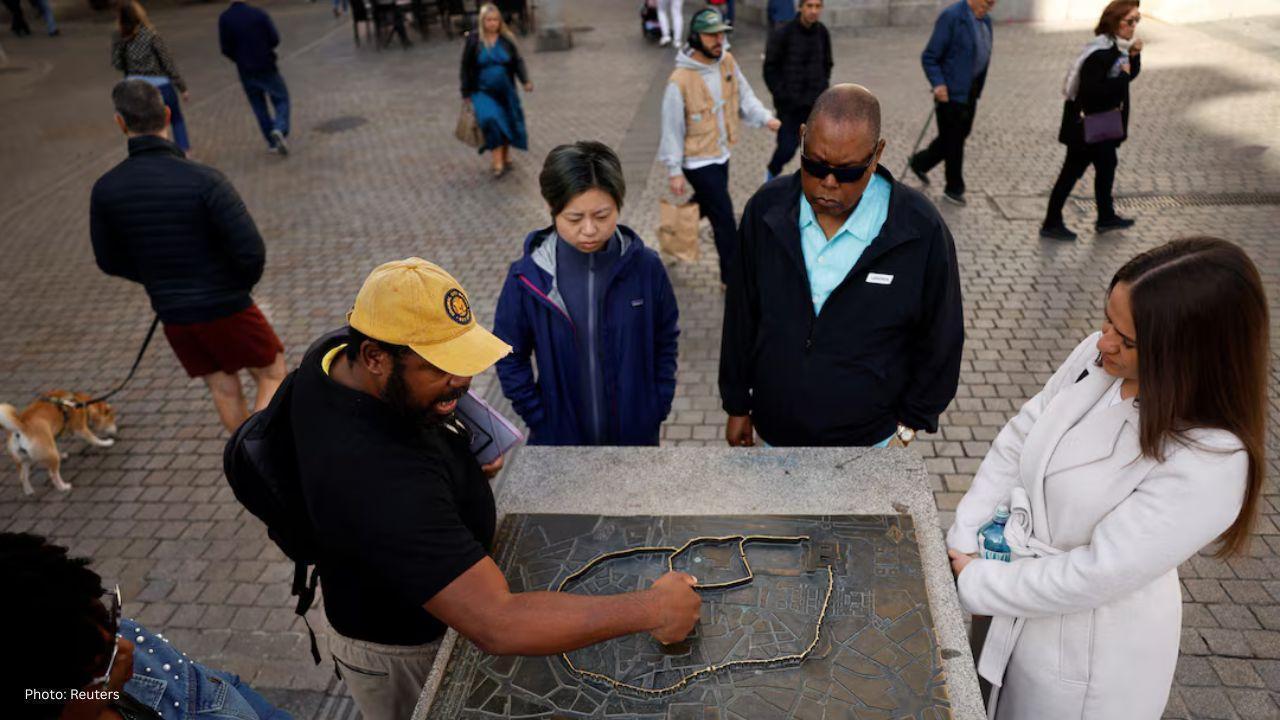
In Madrid, a new wave of walking tours is helping residents and visitors discover a side of the city often missing from history books: its Black history. These tours explore the African heritage, the legacy of slavery, and Spain’s colonial past, topics rarely discussed in schools or public memory.
Kwame Ondo, founder of AfroIberica Tours, began offering these specialized tours in 2022. Growing up in Spain, Ondo noticed the absence of Black figures in Spanish history books and decided to investigate the country’s hidden past himself. “Obviously, when you start to research, you realise it's a silenced history that's been erased,” he said. His family hails from Equatorial Guinea, a former Spanish colony that gained independence in 1968.
AfroIberica Tours mainly attracts foreign tourists, particularly Black Americans, who are eager to learn about the untold stories of African influence in Spain. The tours pass by landmarks, statues, and streets while revealing the African and Afro-descendant people who shaped the city over centuries.
Historian Antumi Toasije, a professor at New York University’s Madrid campus, said Spanish education largely ignores Africans’ presence in the country. “It's as if there had never been any, as if it were something recent that started in the 1980s after Spain joined the European Union,” he said, highlighting the gap in awareness about Spain’s colonial and slavery past.
Another group, Madrid Negro – or “Black Madrid” – approaches the history from a more activist perspective. The collective links Spain’s economic development directly to slavery and uses its tours to educate participants on this forgotten history. During these tours, participants place commemorative stickers on building facades, recite Maya Angelou’s poem Still I Rise, and light candles in memory of historic Black residents such as Antonio Solis, who helped cover funeral costs for impoverished Black families.
For members of Madrid Negro, the work is both personal and urgent. Irene Marine, of Haitian descent, said: “My Afro-descendant side is touched by this because it's all very invisible. And my Spanish and Madrid resident side says: ‘Why didn't I know this or study it? Why wasn't I taught this?’”
These tours are part of a broader movement in Europe to confront and acknowledge colonial and slavery histories that were long ignored. By highlighting the contributions and experiences of Afro-descendant people, they aim to correct historical neglect, educate the public, and celebrate a heritage that has often been erased.
Madrid’s walking tours serve not only as an educational experience but also as a reminder that history is richer and more complex than what traditional textbooks have often shown. They encourage both locals and visitors to engage with the city’s past, fostering awareness, empathy, and a deeper understanding of Spain’s African roots.









Mattel Revives Masters of the Universe Action Figures Ahead of Film Launch
Mattel is reintroducing Masters of the Universe figures in line with its upcoming film, tapping into

China Executes 11 Members of Criminal Clan Linked to Myanmar Scam
China has executed 11 criminals associated with the Ming family, known for major scams and human tra

US Issues Alarm to Iran as Military Forces Deploy in Gulf Region
With a significant military presence in the Gulf, Trump urges Iran to negotiate a nuclear deal or fa

Copper Prices Reach Unprecedented Highs Amid Geopolitical Turmoil
Copper prices soar to all-time highs as geopolitical tensions and a weakening dollar boost investor

New Zealand Secures First Win Against India, Triumph by 50 Runs
New Zealand won the 4th T20I against India by 50 runs in Vizag. Despite Dube's impressive 65, India