Post by : Bianca Suleiman
In a significant shift in the online grocery landscape, Kroger, a leading U.S. retailer, has decided to close three out of its eight automated warehouses developed in partnership with British technology firm Ocado. This decision emphasizes the competitive pressure from quicker delivery services such as Instacart and DoorDash.
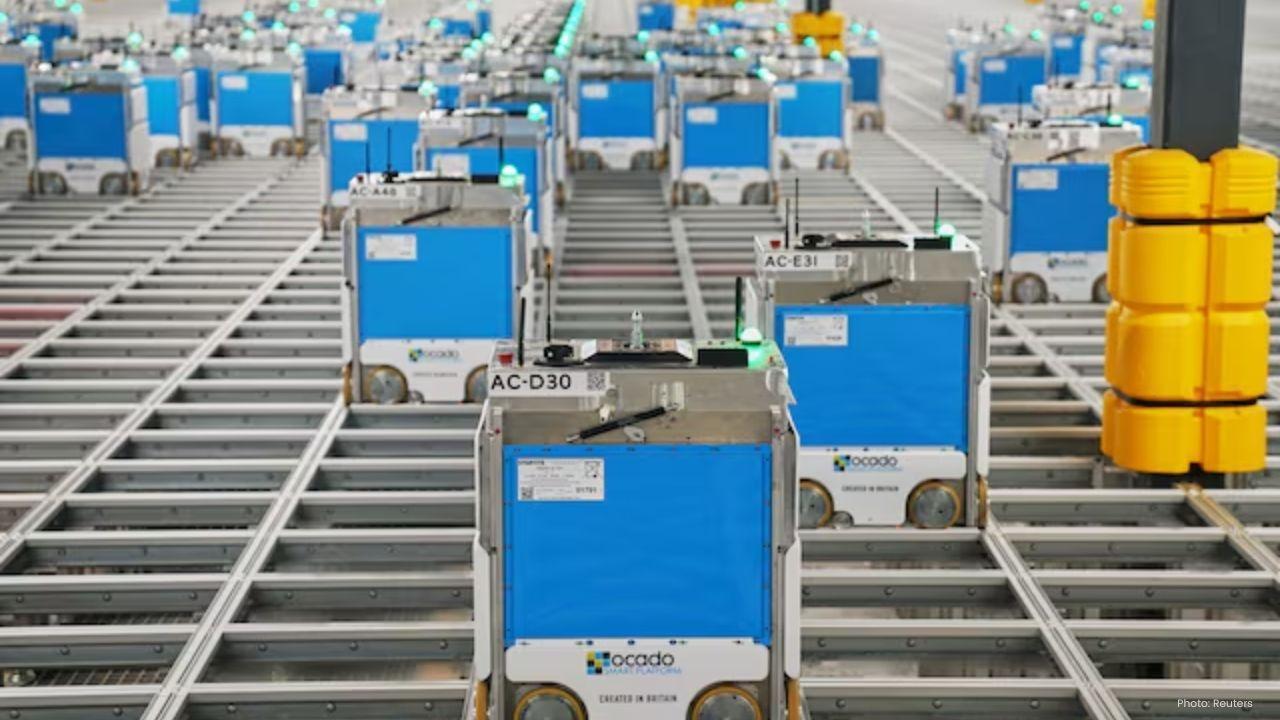
Once at the forefront of robotic warehouse innovation, Ocado has been integral in providing advanced systems for retailers to efficiently handle online food orders. However, Kroger indicated that the financial performance of three warehouses fell below expectations. The retailer now aims to deepen collaborations with fast delivery services that can utilize its existing store network, thereby reducing expenses while responding to the increasing consumer demand for rapid same-day delivery.
Analysts underscored the urgency for fast order fulfillment, stating, “Consumers really want their orders fast — ideally within a couple of hours,” highlighting the evolving consumer expectations that current automated warehouse solutions have found challenging to satisfy.
Despite having a first-mover advantage in the U.S. market, Ocado faces stiff competition from entities like Instacart and DoorDash, both of which have capitalized on the rising demand. Since its initial public offering in 2023, Instacart's stock has surged over 30%, driven by solid quarterly gains, while DoorDash’s shares have risen by 21% this year. Conversely, Ocado's market valuation has plummeted, suffering nearly a 90% decrease since its peak during the pandemic.
Some of Ocado’s automated sites were established in regions where Kroger lacked a robust retail presence, complicating profitability. However, facilities located in states like Ohio demonstrated stronger performance, indicating that effective profitability might still be achievable with the right situational conditions.
Kroger's recent retreat poses questions regarding Ocado's capacity to extend its footprint in the U.S. despite ongoing global endeavors, including collaborations with Aeon in Japan, Lotte in South Korea, and Coles in Australia. Still, its joint venture with Marks & Spencer in the U.K. remains a solitary success, showcasing notable growth in e-commerce sales.
Experts suggest that Ocado’s operational framework works best in densely populated urban settings where automated distribution can effectively reach higher-income customers. In other areas, faster, store-centric delivery methods appear to be more feasible and economical.
As Kroger recalibrates its strategy towards rapid, store-based deliveries, the outlook for expansive robotic warehouses in the U.S. grocery market faces increasing skepticism, indicating a need for a more comprehensive reassessment of automation’s role in the dynamic e-commerce landscape.










Price Increase for Sony PS5 in Southeast Asia Effective May 1
Sony announces a price increase for the PS5 across Southeast Asia starting May 1, 2026, impacting ga

Potential ‘Super El Niño’ in 2026: Understanding the Climate Risks
Could a Super El Niño emerge in 2026? Discover its implications and potential global climate impacts

Global Energy Crisis Intensifies: Markets React to Oil Supply Challenges
Markets are on edge as oil disruptions escalate, influencing prices and economic stability. Explore

Must-See Tourist Spots in London You Can't Overlook
Explore London's essential attractions, from royal landmarks to vibrant markets, ensuring an unforge

Ultimate Guide to Snagging Cheap Flights in 2026
Unlock the secrets to booking affordable flights in 2026 with insightful tips and strategies tailore

The Impact of Consistent Small Investments on Wealth Building
Discover how investing small amounts regularly can positively transform your financial future over t




