Post by : Monika
Photo: AP
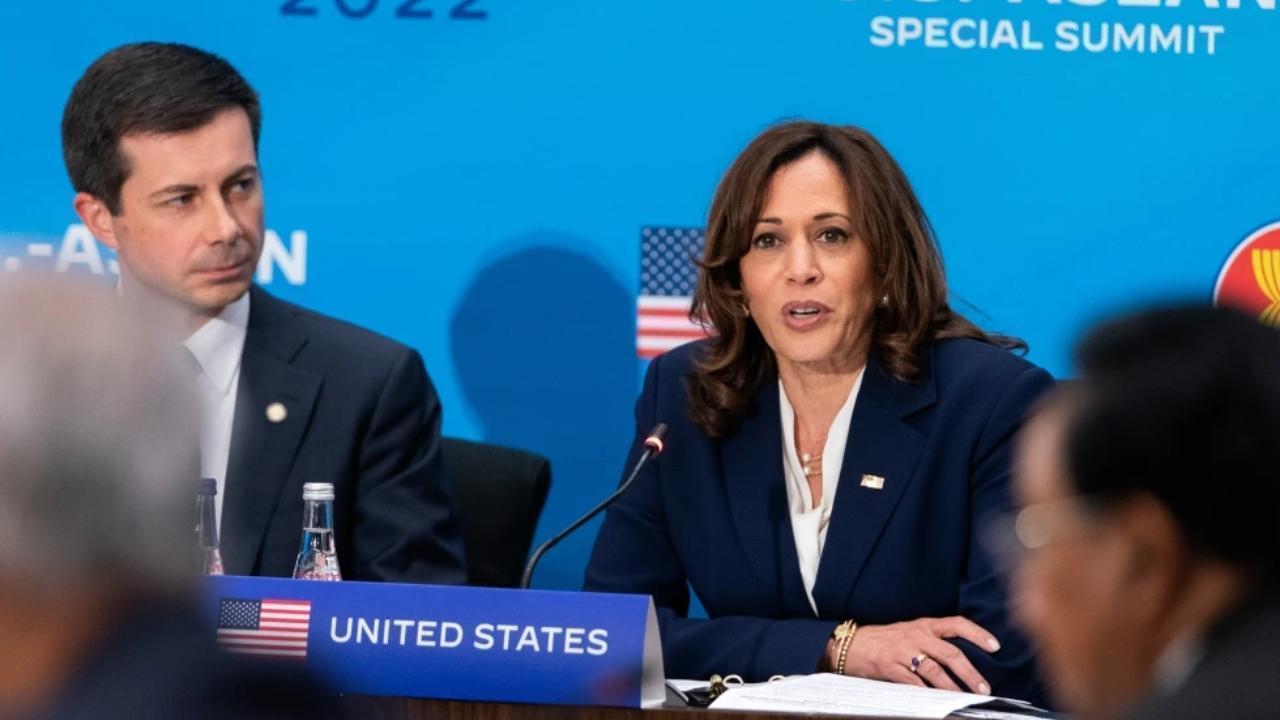
Kamala Harris, former Vice President of the United States, has shared details from her new book 107 Days, revealing that Pete Buttigieg was her first choice for running mate in the 2024 presidential election. In the book, Harris explains the thought process behind her decision and the challenges she faced as she navigated a historic campaign.
Harris’s revelations give readers an inside look into the difficult decisions and considerations political leaders face. Her book is not only a memoir but also a reflection on the complexities of race, gender, and sexual orientation in American politics. By sharing these details, Harris provides insight into the dynamics of presidential campaigns and the personal calculations that go into selecting a running mate.
The Decision-Making Process
One of the most striking revelations from Harris’s book is that she initially wanted Pete Buttigieg, the former Secretary of Transportation and mayor of South Bend, Indiana, as her running mate. Harris admired Buttigieg’s intelligence, political experience, and shared vision for the country. She describes him as an ideal partner who could complement her skills and leadership style.
However, Harris also noted that the combination of her identity as a Black woman and Buttigieg’s identity as an openly gay man could have been viewed as too radical for many voters. She wrote in her memoir that “he would have been an ideal partner—if I were a straight white man.” This statement highlights the complex realities of race, gender, and sexuality in American politics. Harris wanted to challenge stereotypes and barriers but also had to consider the practical aspects of winning an election in a divided country.
Harris explained that she and Buttigieg had a strong personal and professional relationship. They respected each other and had collaborated closely during their time in government.
This mutual respect made him her top choice. Despite the challenges, Harris considered that having such a groundbreaking ticket could inspire progress and signal a shift toward greater inclusivity in U.S. politics.
Choosing a Different Running Mate
After careful consideration, Harris decided not to pick Buttigieg and instead chose Minnesota Governor Tim Walz as her running mate. Walz brought a different set of strengths to the campaign.
He had executive experience as a governor, a moderate political stance that could appeal to a broader voter base, and a track record of bipartisan cooperation.
Although the Harris-Walz ticket represented a combination of experience and strategic planning, it faced significant challenges during the 2024 election. Harris writes in her book about the careful calculations that went into this decision,
balancing ideals with political realities. She notes that while she wanted to push boundaries, she also needed to consider the electorate’s readiness for a historic ticket.
The decision to select Walz over Buttigieg illustrates the difficult trade-offs candidates make when building a presidential campaign. Harris had to weigh personal preference and professional admiration against political strategy and the likelihood of electoral success.
Reflections on the Campaign
Harris’s book 107 Days reflects on her short-lived presidential campaign, which lasted just 107 days. She describes the campaign as both a challenging and enlightening experience, giving readers a behind-the-scenes look at the daily pressures and tough decisions political candidates face.
The book details the intense schedule, the constant media scrutiny, and the political calculations required to navigate primary elections. Harris also discusses the emotional toll of campaigning, including the stress of public appearances, debates, and fundraising demands.
By sharing these personal experiences, Harris humanizes the often glamorized life of a presidential candidate, showing the hardships behind the headlines.
In addition to discussing her own experiences, Harris examines the political landscape she entered. She highlights the challenges faced by women and people of color in national politics, emphasizing how identity can influence public perception and voter behavior. Harris’s reflections reveal her awareness of the historical context and the barriers she confronted while pursuing the presidency.
Thoughts on Pete Buttigieg
Harris provides detailed insight into her admiration for Buttigieg. She describes him as highly intelligent, disciplined, and politically savvy. Harris admired his ability to communicate effectively with voters, handle complex policy issues, and maintain a calm demeanor under pressure.
Despite their close working relationship, Harris ultimately decided against selecting Buttigieg because she believed that the American public might not be ready to embrace a ticket that was both racially and sexually groundbreaking. She viewed this choice as a strategic necessity rather than a reflection of her respect or opinion of Buttigieg.
The revelation has sparked discussions in political circles about the role of identity in selecting running mates and the challenges candidates face when attempting to balance progressive ideals with practical electoral considerations.
Campaign Challenges and Political Strategy
Harris’s book sheds light on the strategic decisions that presidential candidates must make. Selecting a running mate involves evaluating political experience, geographic balance, demographic appeal, and the ability to handle national and international issues. Harris explains that she considered multiple factors before making her final choice, including public perception, potential electoral advantage, and personal compatibility.
The decision to avoid a Buttigieg-Harris ticket was not easy. Harris emphasizes that political strategy often requires compromise and that candidates must sometimes sacrifice personal preferences for the perceived greater good of the campaign. This highlights the tension between ideals and practical realities in politics.
Additionally, Harris reflects on how race, gender, and sexual orientation intersect in politics. She notes that societal biases can influence voter perceptions and that these factors played a significant role in her decision-making process. The book offers readers a candid discussion of these issues, demonstrating the unique challenges faced by candidates from historically underrepresented groups.
Election Outcome
Despite the careful planning, the Harris-Walz ticket ultimately lost the 2024 presidential election to Donald Trump and JD Vance. Harris writes candidly about the disappointment of the loss and the lessons she learned throughout the campaign. She emphasizes that even though the result was not favorable, the experience provided valuable insights into political strategy, voter behavior, and leadership under pressure.
Harris uses the election outcome to reflect on broader political dynamics in the United States. She explores how voter priorities, media coverage, and campaign messaging influence election results. Her reflections also address the importance of perseverance, resilience, and maintaining focus on long-term goals, even in the face of setbacks.
Lessons and Insights from 107 Days
107 Days provides readers with more than just political history; it offers lessons about leadership, strategy, and navigating complex societal issues. Harris emphasizes the importance of self-awareness, careful planning, and understanding the electorate’s mindset. She also stresses the need to balance idealism with pragmatism when making strategic decisions.
One of the key lessons from the book is the impact of identity on political campaigns. Harris’s reflections highlight how factors such as race, gender, and sexual orientation can shape public perception and influence campaign strategy. She encourages future leaders to consider these dynamics while pursuing ambitious political goals.
Another important insight is the value of collaboration and mutual respect in leadership. Harris’s admiration for Buttigieg underscores the importance of choosing running mates based not only on political strategy but also on trust, competence, and shared vision.
Public Reaction and Media Coverage
Since the announcement of her book, public and media reaction has been significant. Political commentators have debated Harris’s decision not to select Buttigieg, discussing the implications for diversity and inclusivity in U.S. politics. Some praise her for recognizing political realities, while others argue that she missed an opportunity to make history with a trailblazing ticket.
The book has also prompted discussions about the broader challenges faced by women and minorities in politics. Harris’s candid reflections provide valuable insight into the personal and professional considerations that influence campaign decisions.
Kamala Harris’s new book, 107 Days, offers a detailed and personal account of her brief 2024 presidential campaign. One of the most revealing aspects of the memoir is her disclosure that Pete Buttigieg was her first choice for running mate. Harris ultimately decided against the pairing due to concerns about public readiness for a ticket that combined her identity as a Black woman with Buttigieg’s identity as an openly gay man.
The book explores the difficult balance between ideals and practical considerations in political campaigns. Harris provides readers with an honest look at the challenges of running for president, the strategic thinking behind key decisions, and the lessons learned from both successes and setbacks.
By sharing these insights, Harris contributes to the ongoing conversation about diversity, representation, and leadership in American politics. Her reflections on the campaign, her running mate selection, and the broader political landscape offer a unique perspective for anyone interested in the realities of modern elections and the complex dynamics that shape political decision-making.







DAE Achieves Remarkable Growth in Q1 2026 With Record Revenue
Dubai Aerospace Enterprise announces impressive financial results for Q1 2026, reflecting a surge in

Price Increase for Sony PS5 in Southeast Asia Effective May 1
Sony announces a price increase for the PS5 across Southeast Asia starting May 1, 2026, impacting ga

Potential ‘Super El Niño’ in 2026: Understanding the Climate Risks
Could a Super El Niño emerge in 2026? Discover its implications and potential global climate impacts

Global Energy Crisis Intensifies: Markets React to Oil Supply Challenges
Markets are on edge as oil disruptions escalate, influencing prices and economic stability. Explore

Must-See Tourist Spots in London You Can't Overlook
Explore London's essential attractions, from royal landmarks to vibrant markets, ensuring an unforge

Ultimate Guide to Snagging Cheap Flights in 2026
Unlock the secrets to booking affordable flights in 2026 with insightful tips and strategies tailore




