Post by : Saif Nasser
Japan’s new Prime Minister, Sanae Takaichi, has made it clear that reviving nuclear power will be a major part of her government’s plan to reduce energy costs and control inflation. Rising fuel prices have become a big concern for the public, and her government believes restarting nuclear reactors will help Japan depend less on expensive imported fuel.
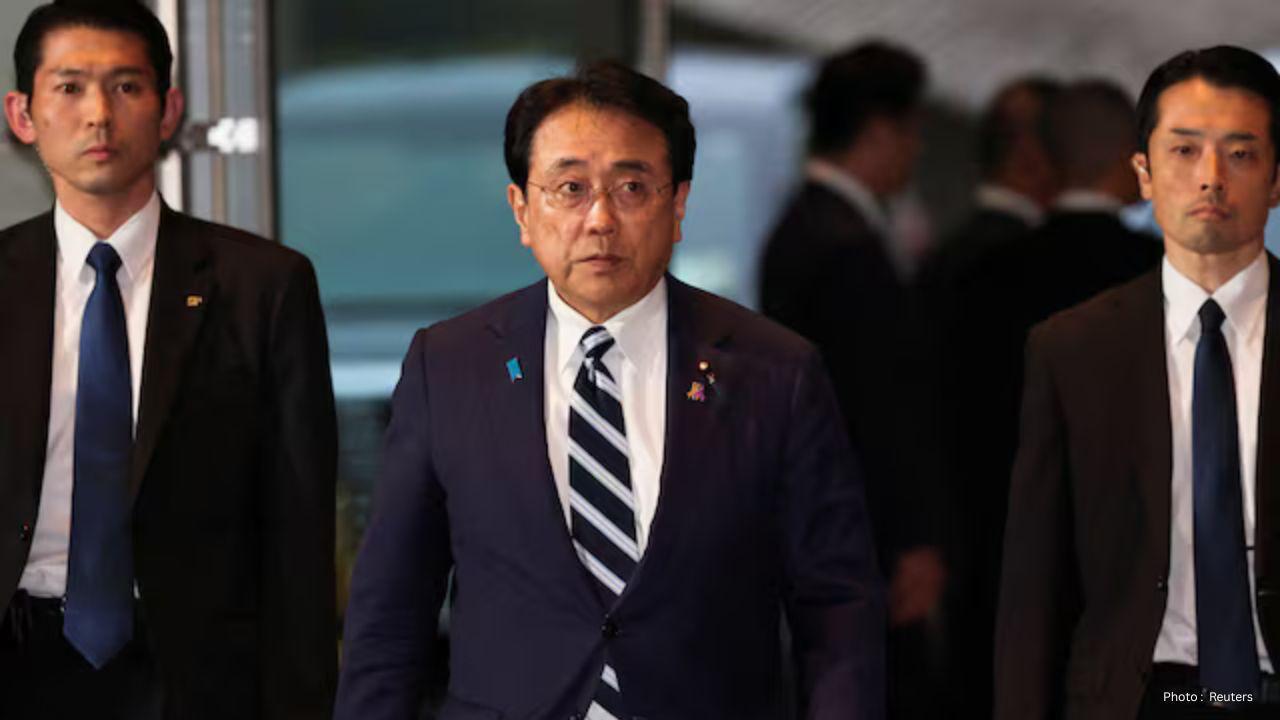
Takaichi, who is known for her strong pro-nuclear views, wants Japan to use more nuclear and next-generation fusion energy to meet its power needs safely and efficiently. She has chosen Ryosei Akazawa as the new Minister of Economy, Trade, and Industry — a key position that includes responsibility for Japan’s energy policy. Akazawa is well known for his experience in trade talks with the United States, and his appointment shows that Japan wants closer energy cooperation with Washington.
Akazawa said that Japan will work to restart nuclear power plants while also keeping in mind the safety and concerns of local communities. “We aim to proceed with nuclear restarts while taking concrete steps to gain the necessary understanding of local communities and stakeholders,” he said.
Japan spent about 10.7 trillion yen ($71 billion) last year on imported liquefied natural gas (LNG) and coal. These fossil fuels make up around 60–70% of Japan’s electricity supply. Because imported energy is so costly, it has been one of the reasons for the rise in inflation, which has hurt the popularity of Takaichi’s ruling Liberal Democratic Party.
Before the 2011 Fukushima disaster, Japan had 54 nuclear reactors. Today, 33 are still operable, but only 14 have been restarted. Each restart requires several years of safety reviews and local approval. Experts say that restarting more reactors is becoming urgent because Japan’s electricity demand is increasing, especially with the growth of data centers and high-tech industries.
Henning Gloystein, managing director of Eurasia Group, said, “Prime Minister Takaichi will almost certainly push for a more ambitious nuclear reactor relaunch. This will help bring down power prices and reduce Japan’s dependence on imported fuel.”
Takaichi also supports new solar technologies, such as perovskite solar cells, which Japan can develop and export. However, she opposes large solar farms, especially those that depend on Chinese-made panels, citing environmental concerns and a desire to promote domestic innovation.
Analysts believe her government might not strongly support costly renewable projects like offshore wind farms, which already face financial challenges. “Takaichi is unlikely to provide much long-term support for the industry as she favors nuclear restarts,” said an industry expert involved in renewable energy policy discussions.
Japan is also facing international pressure to stop buying Russian energy, especially LNG from Sakhalin, which currently makes up about 9% of Japan’s LNG imports. Ahead of U.S. President Donald Trump’s planned visit to Tokyo next week, U.S. Treasury Secretary Scott Bessent urged Japan to move away from Russian energy sources.
To strengthen energy ties with the United States, Japan plans to present a new purchase package during Trump’s visit. The package could include agreements to buy more U.S. liquefied natural gas, though Japan is not expected to commit to the $44 billion Alaska LNG project that Trump supports.
Experts say Akazawa’s experience as a negotiator in trade deals with Washington is a good sign for Japan’s energy diplomacy. “His ability to maintain dialogue with the U.S. government, including on energy matters, is a positive factor,” said a senior official from a Japanese power company.
Tom O’Sullivan, director at Mathyos Global Advisory in Tokyo, added that Akazawa understands the need for affordable energy. He said that Japan will face more pressure from its allies to speed up the restart of nuclear plants as it reduces reliance on Russian LNG.
Takaichi’s energy vision focuses on balancing safety, energy security, and economic stability. By pushing nuclear power alongside domestic innovation in renewable technology, her government hopes to make Japan more energy independent and reduce the impact of global energy shocks.







Mattel Revives Masters of the Universe Action Figures Ahead of Film Launch
Mattel is reintroducing Masters of the Universe figures in line with its upcoming film, tapping into

China Executes 11 Members of Criminal Clan Linked to Myanmar Scam
China has executed 11 criminals associated with the Ming family, known for major scams and human tra

US Issues Alarm to Iran as Military Forces Deploy in Gulf Region
With a significant military presence in the Gulf, Trump urges Iran to negotiate a nuclear deal or fa

Copper Prices Reach Unprecedented Highs Amid Geopolitical Turmoil
Copper prices soar to all-time highs as geopolitical tensions and a weakening dollar boost investor

New Zealand Secures First Win Against India, Triumph by 50 Runs
New Zealand won the 4th T20I against India by 50 runs in Vizag. Despite Dube's impressive 65, India