Post by : Monika
Photo: Reuters
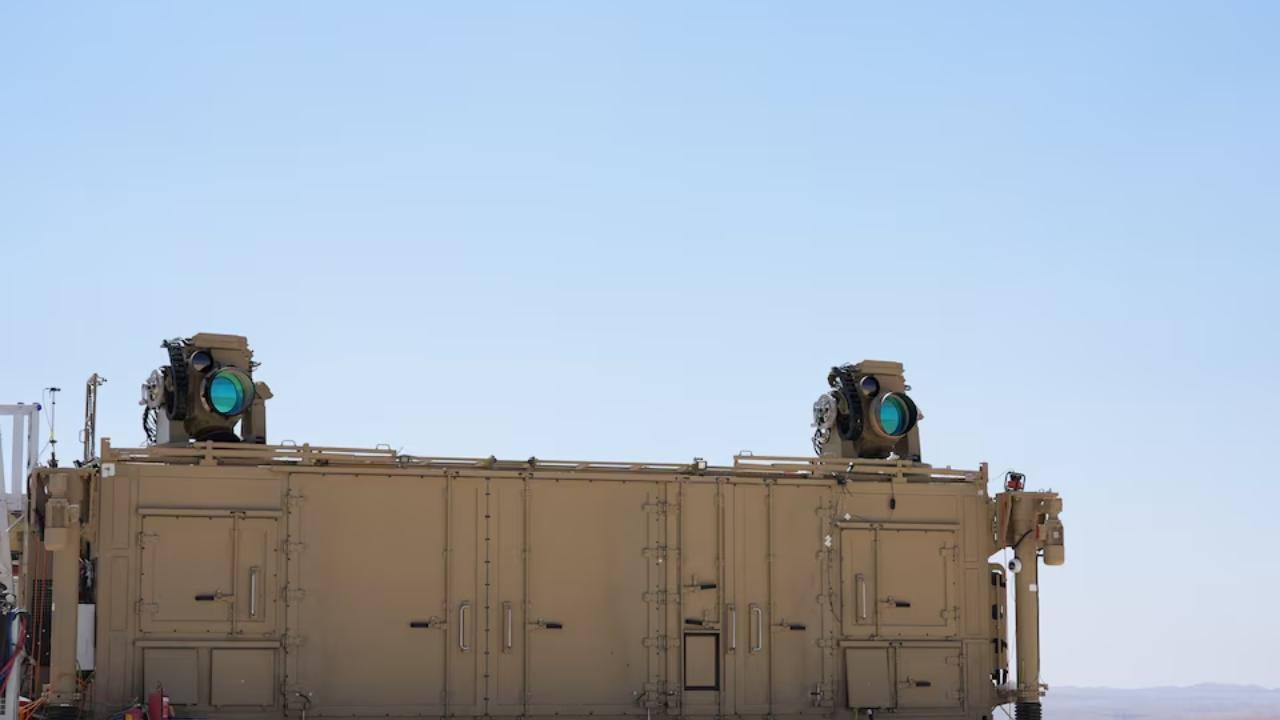
Israel is set to make history in military technology with its new laser defense system called Iron Beam. This advanced system is designed to intercept missiles, rockets, mortars, and drones before they can hit populated areas. The Israeli Ministry of Defense announced that Iron Beam has successfully completed all tests and will be ready for operational use by the end of 2025.
Iron Beam is not meant to replace existing systems but to work alongside Israel’s current air defense network, which includes the Iron Dome, David’s Sling, and Arrow systems. Together, these systems provide multiple layers of protection against threats from neighboring countries and hostile groups.
This achievement marks a significant milestone in modern military technology, as Iron Beam is one of the first high-power laser systems to be deployed for full-scale military use.
Development of Iron Beam
Iron Beam was developed by two major Israeli defense companies: Rafael Advanced Defense Systems and Elbit Systems. The project began several years ago as Israel looked for more cost-effective ways to defend its skies.
Unlike traditional missile interceptors, which are expensive and limited in number, laser systems like Iron Beam use concentrated energy beams to destroy threats in mid-air. The development process involved multiple stages, including laboratory testing, field trials, and integration with other defense systems.
The Ministry of Defense reported that the system underwent rigorous testing in southern Israel, where it successfully intercepted rockets, drones, and mortar shells. These tests proved that Iron Beam could operate under real-world conditions, making it the first operational high-power laser defense system in the world.
How Iron Beam Works
Iron Beam uses high-energy laser technology to target and destroy incoming threats. The system can detect and track multiple targets simultaneously using advanced radar and sensors. Once a threat is identified, the laser is fired at the target, heating it to the point of destruction.
The laser operates at the speed of light, making it extremely effective against fast-moving objects such as drones or short-range rockets. Unlike traditional missile interceptors, which physically collide with the target, Iron Beam burns or melts the target from a distance.
The system can engage multiple threats at the same time and is highly accurate, reducing the risk of collateral damage. Its ability to respond instantly to threats makes it a critical addition to Israel’s air defense strategy.
Cost Advantages
One of the most important features of Iron Beam is its cost-effectiveness. Traditional missile interceptors, such as those used by Iron Dome, can cost over $50,000 per missile. This becomes expensive when multiple rockets or drones are launched in a short period.
In contrast, the operational cost of firing Iron Beam is very low, primarily because the laser requires energy rather than expensive ammunition. This makes the system ideal for defending against smaller threats, which would otherwise be too costly to intercept using conventional missiles.
This cost advantage allows Israel to preserve its missile inventory for larger, more dangerous threats while still protecting its population from smaller attacks.
Strategic Importance
Iron Beam is expected to play a key role in Israel’s national defense strategy. The country faces constant threats from neighboring regions and hostile groups that have access to missiles and drones.
By adding Iron Beam to its defense network, Israel gains several advantages:
Multiple Layers of Defense: Iron Beam complements the Iron Dome, David’s Sling, and Arrow systems, creating a multi-tier defense network. Each system has a different range and target type, ensuring that all potential threats are covered.
Rapid Response: The laser can engage targets almost instantly, which is especially important for fast-moving drones or mortar shells.
Cost Savings: Using the laser for smaller threats helps reduce the overall cost of defense operations.
Technological Edge: Deploying a high-power laser system demonstrates Israel’s leadership in military technology and innovation.
Amir Baram, the Director-General of the Israeli Ministry of Defense, stated that Iron Beam represents a “significant leap in air defense capabilities”. Yuval Steinitz, Chairman of Rafael, described the system as a “game-changing technology with unprecedented impact on modern warfare.”
Integration with Other Systems
This layered approach ensures that any incoming threat has multiple chances to be neutralized before reaching populated areas. The combination of conventional missile systems and the laser system makes Israel’s air defense network more resilient, flexible, and efficient.
Future Developments
Elbit Systems is also working on airborne laser technology, which could complement Iron Beam in the future. Airborne lasers can be deployed on drones or aircraft, providing an additional layer of protection over a larger area.
Researchers are exploring ways to increase the laser’s range and power, which could allow Iron Beam to engage more distant threats. The goal is to create a comprehensive system that can handle all types of aerial threats, from drones and rockets to advanced missiles.
Israel’s development of laser defense technology may inspire other countries to invest in similar systems, potentially changing the future of warfare worldwide.
Operational Readiness
The Ministry of Defense confirmed that Iron Beam has completed all necessary operational tests and will be ready for deployment by the end of 2025. Training for military personnel is already underway to ensure that the system can be operated effectively.
Once deployed, Iron Beam will provide continuous protection, with the ability to engage threats day and night under various weather conditions. The system’s sensors and tracking technology allow it to operate even in low visibility, ensuring reliable performance in emergencies.
Global Significance
The deployment of Iron Beam is significant not only for Israel but also for global military technology. High-power laser systems are still rare in modern militaries, and Israel is among the first countries to field such a system operationally.
The system demonstrates the potential of energy-based weapons, which could supplement or even replace traditional missile defense systems in the future. This technological advancement may influence military strategies worldwide, prompting other countries to explore laser defense systems.
Challenges and Considerations
Despite its advantages, Iron Beam faces certain challenges:
Weather Conditions: Heavy rain, fog, or dust storms can reduce the effectiveness of laser systems. Israel is working to optimize Iron Beam to function in a variety of environmental conditions.
Power Supply: High-energy lasers require significant electrical power. Ensuring a reliable power source in battlefield conditions is crucial for continuous operation.
Rapid Development of Threats: Adversaries may develop countermeasures, such as faster drones or missiles designed to evade lasers. Ongoing upgrades will be necessary to maintain the system’s effectiveness.
Integration Complexity: Coordinating Iron Beam with other defense systems requires advanced software and real-time data sharing, which involves complex technical challenges.
Israel’s Iron Beam laser system represents a major step forward in air defense technology. By combining high-energy lasers with existing missile defense systems, Israel is creating a robust, cost-effective, and flexible defense network capable of intercepting a wide range of aerial threats.
The system is expected to be fully operational by the end of 2025 and will provide continuous protection against missiles, rockets, mortars, and drones. Its low operational cost and rapid response time make it a significant improvement over traditional missile interceptors.
Iron Beam also demonstrates Israel’s leadership in military technology, offering a glimpse into the future of energy-based weapons. As other countries observe the system’s performance, it could inspire new developments in laser defense and reshape global military strategies.
The deployment of Iron Beam marks a historic achievement in modern warfare, combining advanced technology, strategic planning, and operational readiness to protect civilians and maintain national security.










Starbucks Engages Boyu Capital for Major Chinese Expansion
Starbucks teams up with Boyu Capital, selling a majority stake to boost growth and adapt to the Chin

Three Individuals Charged in Massive Meth Trafficking Case in Malaysia
In Malaysia, a married couple and another suspect are charged with trafficking 510kg of meth, facing

Singapore Police Revisit Geylang Murder Scene with Suspect
In Geylang, police return a murder suspect to the scene of a crime involving the fatal stabbing of a

Mattel Revives Masters of the Universe Action Figures Ahead of Film Launch
Mattel is reintroducing Masters of the Universe figures in line with its upcoming film, tapping into

China Executes 11 Members of Criminal Clan Linked to Myanmar Scam
China has executed 11 criminals associated with the Ming family, known for major scams and human tra