Post by : Shweta
The establishment of a new military boundary, dubbed the “Yellow Line,” by Prime Minister Benjamin Netanyahu’s administration is stirring intense worries regarding the integrity of the ceasefire with Lebanon. This line stretches roughly 10 kilometers into southern Lebanon and remains under Israeli military oversight.
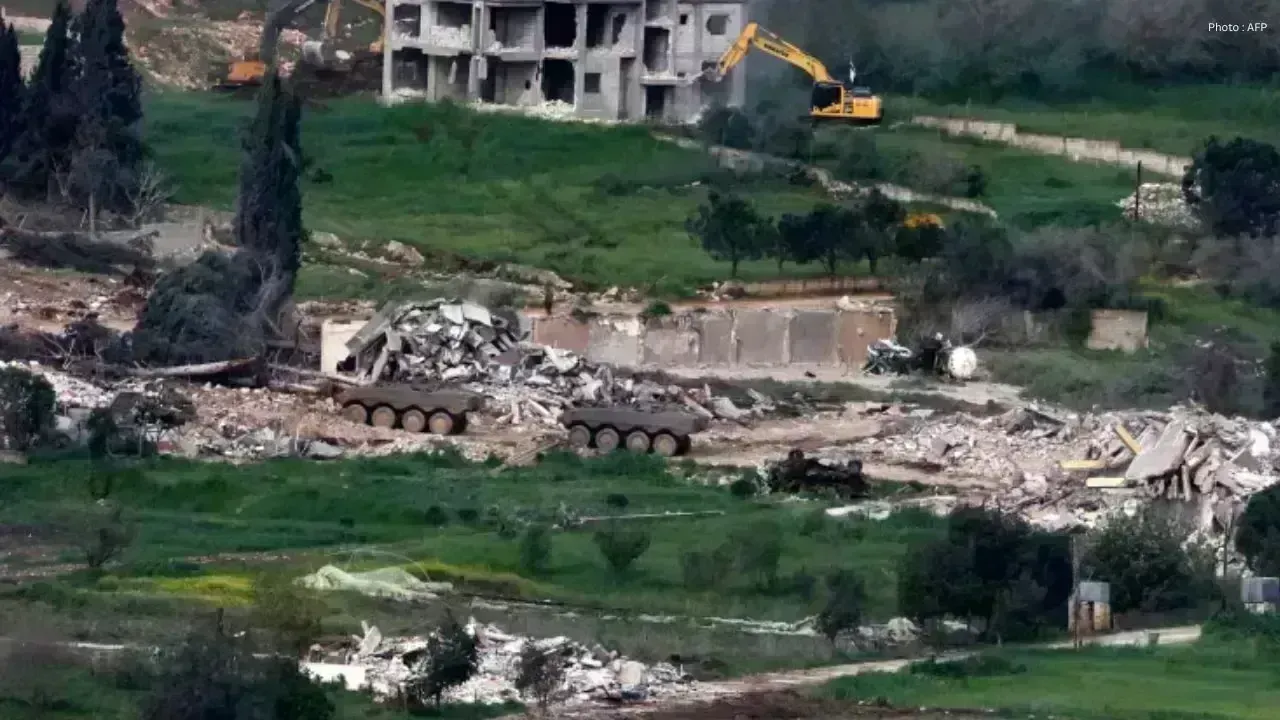
Following weeks of fierce conflict, the ceasefire was anticipated to bring an end to hostilities. Yet, reports indicate that Israeli military activities—including home demolitions, artillery fire, and land clearance—persist near the border, prompting doubts about compliance with the ceasefire.
Israeli authorities maintain that the “Yellow Line” serves as a crucial security buffer, aimed at thwarting threats from Hezbollah and safeguarding Israel's right to self-defense. They assert intentions to retain troops in the region and conduct operations whenever deemed necessary.
Conversely, Lebanon and Hezbollah vehemently oppose this action, claiming that the Israeli military’s presence in Lebanese territory undermines national sovereignty and contradicts the ceasefire agreement’s intent. They argue a true ceasefire necessitates an absolute halt to military activities, rather than selective enforcement.
The complexity of the situation is exacerbated by ambiguous language within the ceasefire agreement. While it calls for an end to fighting, it also permits Israel to engage militarily in self-defense against perceived threats. Experts highlight that this ambiguity fosters different interpretations, complicating the proper enforcement of the ceasefire.
Concerns are also rising that this temporary zone could transition into a permanent military presence. Analysts suggest that Israel might leverage control over this territory in future negotiations, intensifying worries among Lebanese communities, many of whom are already displaced and unable to return home within the restricted area.
The implications extend beyond Lebanon, connecting to broader regional dynamics involving Iran and the United States. Escalations in Lebanon could jeopardize diplomatic efforts in the area and heighten the risk of further conflict.
Despite both parties officially claiming that the ceasefire is intact, ongoing military activities and disputes over the “Yellow Line” indicate a precarious situation. The path forward hinges on both sides' ability to reach a clear consensus and minimize actions that may provoke renewed violence.










7.5 Magnitude Earthquake Strikes Japan, Tsunami Alerts Issued
Japan experiences a hefty 7.5 quake, prompting tsunami alerts and safety measures. Stay updated on a

Reopening of the Strait of Hormuz: New Regulations to Impact Global Trade
Iran reopens the strategic Strait of Hormuz with new regulations affecting oil transport and global

Top 10 Must-See Attractions in NYC for First-Time Explorers
Discover essential experiences for first-time visitors to NYC, including attractions, culture, and i

Starbucks Engages Boyu Capital for Major Chinese Expansion
Starbucks teams up with Boyu Capital, selling a majority stake to boost growth and adapt to the Chin

Three Individuals Charged in Massive Meth Trafficking Case in Malaysia
In Malaysia, a married couple and another suspect are charged with trafficking 510kg of meth, facing