Post by : Saif Nasser
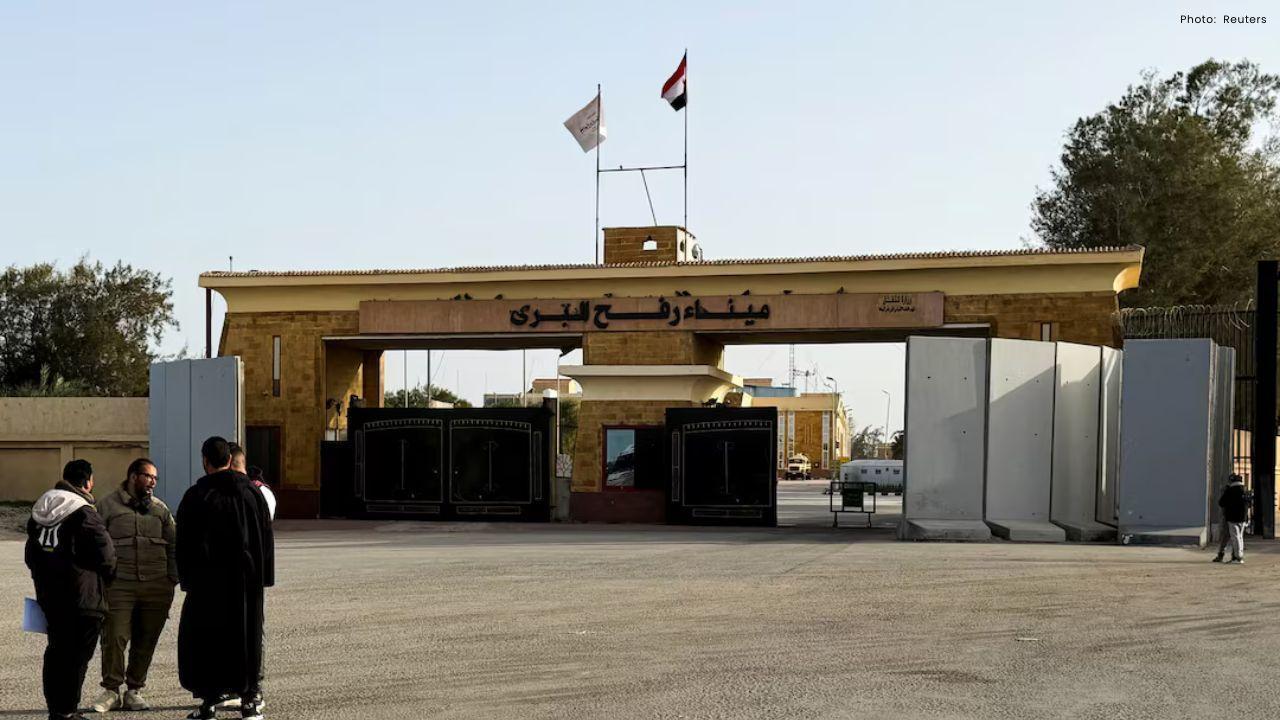
Israel has reopened the Rafah border crossing between Gaza and Egypt, allowing people to travel on foot under strict controls. The crossing had been closed for months after Israeli forces took control of the area during the war in Gaza. This decision marks an important but cautious step in easing movement for Palestinians affected by the conflict.
The reopening allows Palestinians to leave Gaza and also permits those who fled earlier in the war to return. However, the movement is limited. Israeli and Egyptian authorities are carrying out security checks, and both sides are expected to place daily limits on the number of people who can cross. This means that travel through Rafah will remain slow and tightly managed.
Israel first seized the Rafah crossing in May 2024, around nine months after the Gaza war began. The war started after a deadly attack by Hamas on southern Israel in October 2023. Heavy fighting followed, causing widespread destruction across Gaza. A ceasefire brokered in October brought a fragile pause in fighting. Reopening Rafah is part of the first stage of a wider plan supported by U.S. President Donald Trump to bring the war to an end.
Israeli officials have confirmed that European monitoring teams are now present at the crossing. According to an Israeli security source, the crossing is open for residents moving in and out, but only under supervision. This monitoring is meant to address security concerns while allowing limited civilian travel.
Before the crossing was closed, Rafah was the main exit point for Palestinians fleeing Gaza. During the first nine months of the war, many civilians crossed into Egypt to escape the fighting. Palestinian officials estimate that about 100,000 people left Gaza during this time. Some were helped by aid organizations, while others paid large sums of money to secure permission to cross.
The closure of Rafah had serious consequences. It cut off a key route for wounded and sick Palestinians who needed medical care outside Gaza. Although Israel has allowed a small number of patients to leave through its own territory for treatment in other countries, thousands more are still waiting for care, according to the United Nations.
Despite the reopening, Israel continues to bar foreign journalists from entering Gaza. Journalists have been banned since the start of the war, limiting independent reporting from inside the territory. Israel says allowing journalists in could endanger soldiers and reporters. Media groups strongly disagree, arguing that the public has the right to independent information, especially when aid workers and UN staff are already allowed in.
Life in Gaza remains extremely difficult. Nearly two million Palestinians are living in tents or damaged homes, surrounded by ruins. Basic services are limited, and rebuilding has barely begun. While the reopening of Rafah offers some relief, it does not change the wider humanitarian crisis on the ground.
Looking ahead, the second phase of the proposed peace plan calls for Gaza to be governed by Palestinian technocrats, Hamas to give up its weapons, and Israeli troops to withdraw as reconstruction begins. Israeli leaders have expressed doubts that Hamas will disarm. Some officials say the military is preparing for possible renewed fighting.
Since the ceasefire was announced, violence has not fully stopped. Health officials in Gaza say more than 500 Palestinians have been killed in Israeli attacks, while militants have killed four Israeli soldiers. Over the weekend, Israel carried out heavy airstrikes, killing at least 30 people, saying the attacks were in response to a ceasefire violation.
The reopening of the Rafah crossing is a small but meaningful step. For many Palestinians, it offers hope of movement, medical care, and family reunification. However, with strict limits, ongoing violence, and deep political disagreements, the path to lasting peace remains uncertain.







DAE Achieves Remarkable Growth in Q1 2026 With Record Revenue
Dubai Aerospace Enterprise announces impressive financial results for Q1 2026, reflecting a surge in

Price Increase for Sony PS5 in Southeast Asia Effective May 1
Sony announces a price increase for the PS5 across Southeast Asia starting May 1, 2026, impacting ga

Potential ‘Super El Niño’ in 2026: Understanding the Climate Risks
Could a Super El Niño emerge in 2026? Discover its implications and potential global climate impacts

Global Energy Crisis Intensifies: Markets React to Oil Supply Challenges
Markets are on edge as oil disruptions escalate, influencing prices and economic stability. Explore

Must-See Tourist Spots in London You Can't Overlook
Explore London's essential attractions, from royal landmarks to vibrant markets, ensuring an unforge

Ultimate Guide to Snagging Cheap Flights in 2026
Unlock the secrets to booking affordable flights in 2026 with insightful tips and strategies tailore




