Post by : Priya
Photo:Reuters
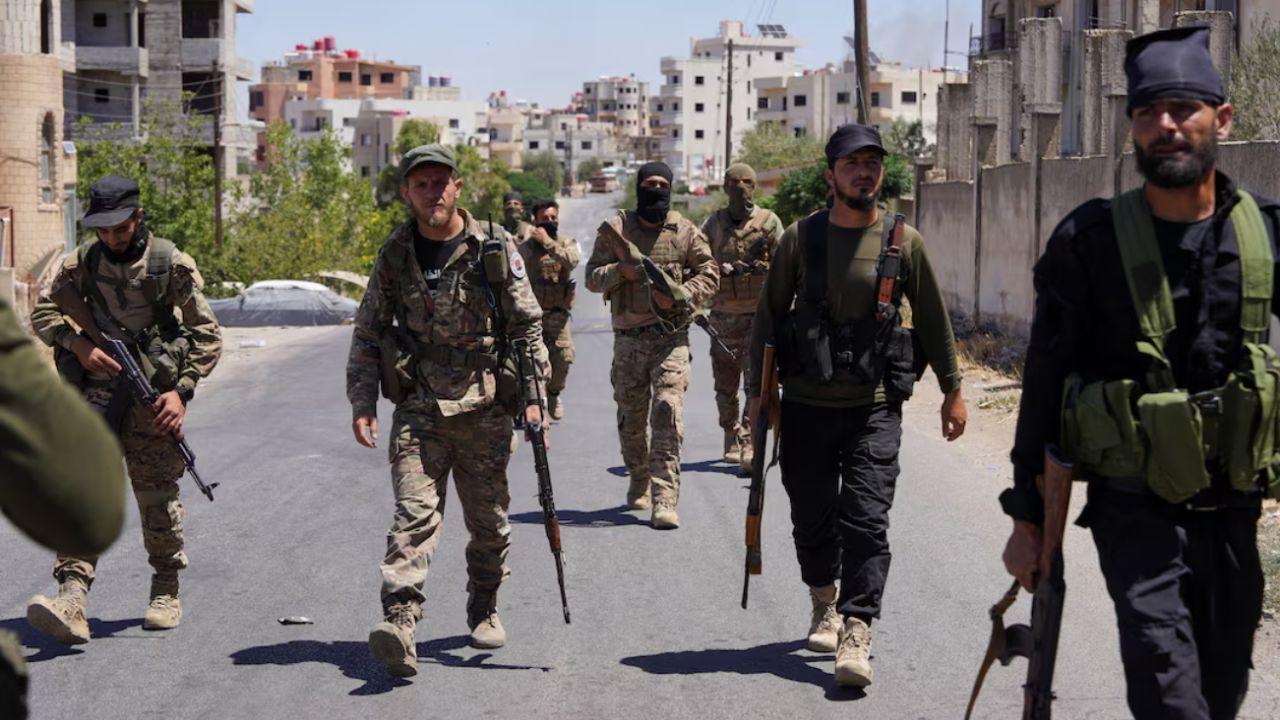
A new wave of violence has erupted in Syria, once again putting the war-torn country in global headlines. Tensions are escalating in the southern region, especially in the province of Sweida, where fierce fighting has broken out between the Syrian army and members of the country's Druze minority. The situation became even more complicated when Israel launched airstrikes near Damascus, citing regional security concerns.
Understanding the Druze Community in Syria
The Druze are a small but historically significant religious minority in Syria, with their largest population concentrated in the southern province of Sweida. The Druze faith is an offshoot of Islam, but the community has developed its own distinct identity over centuries.
In Syria, the Druze have often maintained a position of neutrality, especially during the country’s long-running civil war. They have generally tried to avoid direct conflict with both the Assad government and opposition forces. However, recent tensions suggest that this neutral stance is becoming harder to maintain.
What Sparked the Violence in Sweida?
For years, residents of Sweida have expressed dissatisfaction with the Syrian government. Complaints have ranged from poor economic conditions, lack of services, rising crime, and neglect by authorities in Damascus.
Tensions turned into armed clashes in recent weeks. Local Druze fighters, many of whom were previously civilians, took up arms against the Syrian army, accusing the government of failing to protect the province and violating their rights.
The conflict in Sweida quickly grew in intensity, with reports of street battles, the use of heavy weapons, and rising casualties. The fighting has now spread to neighboring areas, threatening wider instability in southern Syria.
Israel’s Role: Why the Airstrikes in Damascus?
As fighting escalated in southern Syria, Israel launched airstrikes near the capital, Damascus. According to Syrian state media, the country’s air defenses were activated in response to incoming Israeli missiles. Several military sites were reportedly hit.
Israel has not officially confirmed the attack, which is in line with its usual policy of ambiguity. However, this is not the first time Israel has conducted airstrikes in Syria. Over the past decade, Israel has regularly targeted Iranian-backed forces and Hezbollah militants operating in the country.
The timing of the recent strikes suggests that Israel is deeply concerned about developments in southern Syria. The fear is that the chaos could provide an opportunity for hostile forces—such as Iran or Hezbollah—to strengthen their presence near Israel’s border.
The Strategic Importance of Southern Syria
Southern Syria holds significant strategic value. It shares borders with Jordan and Israel and lies close to the Golan Heights, a contested area that Israel captured from Syria in 1967.
Any instability in this region poses a direct threat to Israeli national security. That is why Tel Aviv closely monitors events in this area and often takes swift military action if it detects movements by groups it considers hostile.
The Golan Heights also holds military importance due to its high elevation, which provides a tactical advantage in surveillance and defense.
Impact on Civilians
As is often the case in armed conflicts, civilians are bearing the brunt of the violence. Residents in Sweida and surrounding areas report homes being destroyed, schools closed, and hospitals struggling to treat the wounded.
Many families have fled their homes in search of safety. Shelters are overcrowded, and basic services such as electricity, water, and food supplies are becoming scarce.
One resident told a local news outlet:
"We don’t want to fight. We just want to live in peace. But the army is attacking our towns, and now Israel is bombing nearby. We are trapped."
Humanitarian organizations have issued urgent appeals for aid and called on all parties to respect international law and protect civilian lives.
Syrian Government’s Response
The Syrian government, led by President Bashar al-Assad, has not commented in detail on the latest violence in Sweida. However, several reports suggest that Damascus is sending more troops to the region in an attempt to suppress the Druze uprising.
Assad’s government has often dealt harshly with internal dissent. It remains to be seen whether Damascus will offer negotiations or continue its military campaign.
Some analysts believe that the government’s handling of Sweida could set a precedent for how it deals with other restive regions in the future.
International Reaction
The international community is closely watching the developments in Syria. The United Nations has called for an immediate end to hostilities and urged all parties to engage in dialogue.
In Washington, U.S. officials expressed concern over the Israeli airstrikes but also acknowledged Israel’s right to defend itself against threats. Meanwhile, Russia and Iran—both allies of the Assad regime—have condemned Israel’s actions.
European Union representatives have also called for restraint, warning that further escalation could destabilize the entire region.
Risks of a Broader Regional Conflict
The Middle East remains one of the most volatile regions in the world. With so many actors involved in Syria—including the Assad regime, rebel groups, Kurdish forces, ISIS remnants, Iran, Hezbollah, Russia, the U.S., and Israel—the risk of a wider conflict is always present.
The fighting in Sweida could become a trigger for larger clashes if it draws in outside powers or spreads to other parts of the country. Israel’s airstrikes, while targeted, carry the risk of unintended consequences, such as civilian deaths or counter-attacks.
Historical Background of Israel-Syria Tensions
Israel and Syria have technically been at war since 1948, when Israel was established. Although there have been periods of relative calm, the two nations have never signed a peace agreement.
The most contentious issue remains the Golan Heights. Israel annexed the territory in 1981, a move not recognized by the international community (with the exception of U.S. recognition in 2019 under the Trump administration).
Tensions have remained high, especially since the start of the Syrian civil war in 2011. As Iran and Hezbollah increased their presence in Syria, Israel responded with frequent airstrikes to prevent weapons transfers and military buildup.
The Role of Iran and Hezbollah
Iran and Hezbollah are key players in Syria, supporting the Assad government both militarily and financially. Their presence near the Israeli border is a constant source of tension.
Israel fears that Iran could establish a permanent military base in Syria, using it to launch attacks on Israeli territory. Hezbollah, based in Lebanon, already has a large stockpile of missiles and a history of conflict with Israel.
If the current unrest in Sweida gives these groups more room to operate, Israel is likely to take further military action.








Mattel Revives Masters of the Universe Action Figures Ahead of Film Launch
Mattel is reintroducing Masters of the Universe figures in line with its upcoming film, tapping into

China Executes 11 Members of Criminal Clan Linked to Myanmar Scam
China has executed 11 criminals associated with the Ming family, known for major scams and human tra
US Issues Alarm to Iran as Military Forces Deploy in Gulf Region
With a significant military presence in the Gulf, Trump urges Iran to negotiate a nuclear deal or fa

Copper Prices Reach Unprecedented Highs Amid Geopolitical Turmoil
Copper prices soar to all-time highs as geopolitical tensions and a weakening dollar boost investor

New Zealand Secures First Win Against India, Triumph by 50 Runs
New Zealand won the 4th T20I against India by 50 runs in Vizag. Despite Dube's impressive 65, India