Post by : Bianca Suleiman
Photo: AFP
Water levels at Iraq’s large Dukan Dam are getting very low. This is because there hasn’t been much rain and because other countries are building dams upstream. These changes are causing big problems for millions of people who already have little water due to drought.
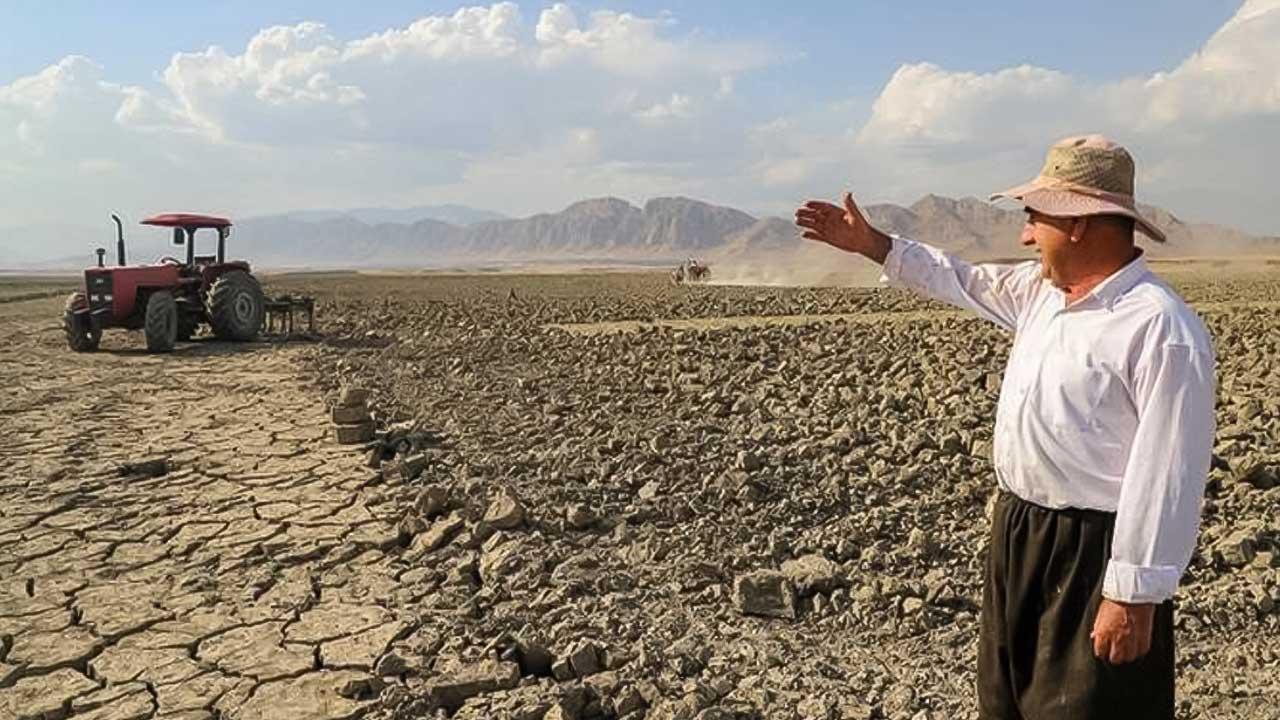
Cracks can now be seen along the dried-up shore of Dukan Lake, which was made in the 1950s and is located in northern Iraq’s Kurdistan region. The lake, which is connected to the dam, is now only one-fourth full.
Kochar Jamal Tawfeeq, the director of the dam, said the lake now holds only about 1.6 billion cubic meters of water. It can hold up to 7 billion cubic meters. That means it’s only at 24% of its full capacity. He said the lake hasn’t been this empty in almost 20 years.
Satellite photos show that the lake’s surface has shrunk by 56% from May 2019 to June 2025. Tawfeeq explained that the main cause is climate change and less rain. Even when it rains, the timing is off and not as helpful as before.
Normally, the area gets about 600 millimeters of rain in the winter, but last winter it got only 220 millimeters — a big drop.
Another problem is the Little Zab River, which flows from Iran and fills the Dukan Lake. Iran has built many small dams on this river to store more water for itself. Because of this, less water reaches Iraq.
Iraq has blamed Iran and Turkiye for building too many dams. These dams block the flow of water into Iraq’s Tigris and Euphrates rivers, which are very important for the country.
Iraq has about 46 million people, and they are facing the worst effects of climate change. There are more droughts, higher temperatures, and more land turning into desert. By the end of May 2025, Iraq’s total water storage was the lowest it has been in 80 years.
Above the dam, in a village called Sarsian, a 57-year-old farmer named Hussein Khader Sheikhah is trying to grow crops like cucumbers, melons, beans, and sunflower seeds on a small plot of land.
Last winter, he planted 13 hectares of wheat, but almost all of it died because of the dry weather. He lost about $5,700. Now, he is trying to grow something small to recover a bit, but he said,
“One hectare near the river can’t make up for the loss of 13 hectares.”
The drop in water levels at the Dukan Dam has affected about 4 million people living downstream in the Sulaimaniyah and Kirkuk areas. Many are now facing serious water shortages, even for drinking.
In Kirkuk, water plants have seen their supply drop by 40%. Zaki Karim, a local water official, said that the city is already used to getting water only at certain times because the country’s water system is very old and not well managed.
Now, they are having to ration water even more strictly, and people are getting water even less often. Officials are also going house to house to teach people not to waste water. They are also stopping people who try to get water illegally.
Kirkuk province has around two million people, and the goal is to make sure everyone gets at least some water, even if there are delays. Karim said,
“If some plants have trouble, we’ll make sure there’s no full stop — everyone should get their share.”








Anticipated Dates for UAE Eid Al Adha 2026 Unveiled by Astronomical Experts
Experts predict Eid Al Adha 2026 in the UAE to start on May 27, prompting early holiday planning amo

DAE Achieves Remarkable Growth in Q1 2026 With Record Revenue
Dubai Aerospace Enterprise announces impressive financial results for Q1 2026, reflecting a surge in

Price Increase for Sony PS5 in Southeast Asia Effective May 1
Sony announces a price increase for the PS5 across Southeast Asia starting May 1, 2026, impacting ga

Potential ‘Super El Niño’ in 2026: Understanding the Climate Risks
Could a Super El Niño emerge in 2026? Discover its implications and potential global climate impacts

Global Energy Crisis Intensifies: Markets React to Oil Supply Challenges
Markets are on edge as oil disruptions escalate, influencing prices and economic stability. Explore

Must-See Tourist Spots in London You Can't Overlook
Explore London's essential attractions, from royal landmarks to vibrant markets, ensuring an unforge




