Post by : Saif Nasser
Tensions in the Middle East rose again after Iran announced a temporary closure of the Strait of Hormuz while it carried out live-fire military drills. The move happened at the same time as a new round of indirect nuclear talks between Iran and the United States took place in Geneva.
The Strait of Hormuz is one of the most important shipping routes in the world. About one-fifth of global oil supply passes through this narrow waterway each day. Even a short disruption can worry markets and governments because it can affect fuel prices and global trade.
Iranian state media said missiles were fired as part of naval exercises and that the waterway would be closed for several hours for safety reasons. While Iran has held drills there before, officially announcing a closure is rare and seen as a strong political and military message.
The timing is important. The closure came while Iranian and American representatives were meeting again to discuss Iran’s nuclear program. These talks are indirect, meaning the two sides are not sitting face to face but are using mediators to pass messages and proposals.
Iran’s Supreme Leader Ali Khamenei used strong language while speaking about military pressure. He warned that even powerful armed forces can be struck in ways they cannot easily recover from. His comments were widely seen as a warning against possible military action.
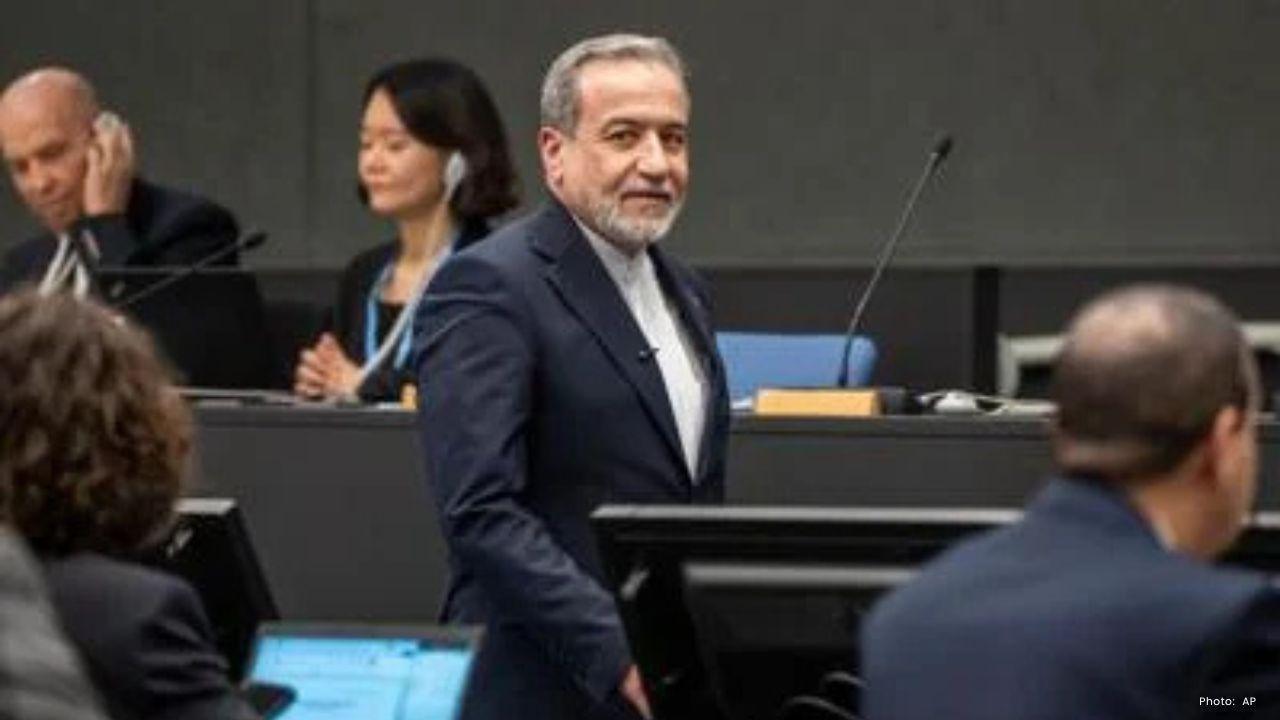
At the same time, Iran’s foreign minister Abbas Araghchi sounded more hopeful. Speaking at a disarmament meeting in Geneva, he said a “new window” had opened for reaching an agreement. He said Iran wants a stable and negotiated solution that benefits all sides and the wider region.
This difference in tone — tough military warnings alongside diplomatic optimism — shows Iran’s two-track approach. It is showing strength on the ground while also keeping the door open for negotiation.
On the American side, President Donald Trump said he would stay involved in the negotiation process. His administration is pushing for strict limits on Iran’s nuclear activities. Trump has previously warned that force could be used if talks fail. Iran has answered that any attack would bring a response.
U.S. Vice President JD Vance said the latest talks produced mixed results. He explained that there was progress in some areas, but serious gaps still remain. According to U.S. officials, more detailed proposals may be exchanged in the coming weeks.
Another key player is the UN nuclear watchdog, the International Atomic Energy Agency, which monitors nuclear programs around the world. Iranian officials met with its director in Geneva and discussed how the agency could help support any future agreement.
Meanwhile, the United States has increased its military presence in the region. Additional warships and an aircraft carrier group are moving toward Middle Eastern waters. U.S. officials say this is meant to protect shipping and deter attacks. Iran and several Gulf countries warn that more military buildup increases the risk of miscalculation.
From an editorial point of view, the temporary closure of the strait is less about immediate military effect and more about strategic messaging. Iran is reminding the world that it has the ability to disrupt a critical global trade route. That gives it leverage, but it also raises the danger level.
Energy markets reacted calmly after the talks, with oil prices falling slightly. This suggests that traders believe a deal is still possible and that the closure was short-term. Still, repeated threats to major shipping lanes can quickly change market confidence.
The bigger issue is whether diplomacy can move faster than confrontation. Military drills, ship movements, and strong speeches may gain attention, but they also increase the chance of accident or misunderstanding. One wrong move in a crowded waterway could trigger a wider crisis.
Talks about nuclear limits are difficult and slow, but they remain the safest path forward. The alternative — conflict around one of the world’s most important oil routes — would affect far more than just the two countries involved.






Reopening of the Strait of Hormuz: New Regulations to Impact Global Trade
Iran reopens the strategic Strait of Hormuz with new regulations affecting oil transport and global

Top 10 Must-See Attractions in NYC for First-Time Explorers
Discover essential experiences for first-time visitors to NYC, including attractions, culture, and i

Starbucks Engages Boyu Capital for Major Chinese Expansion
Starbucks teams up with Boyu Capital, selling a majority stake to boost growth and adapt to the Chin

Three Individuals Charged in Massive Meth Trafficking Case in Malaysia
In Malaysia, a married couple and another suspect are charged with trafficking 510kg of meth, facing
Singapore Police Revisit Geylang Murder Scene with Suspect
In Geylang, police return a murder suspect to the scene of a crime involving the fatal stabbing of a