Post by : Saif Nasser
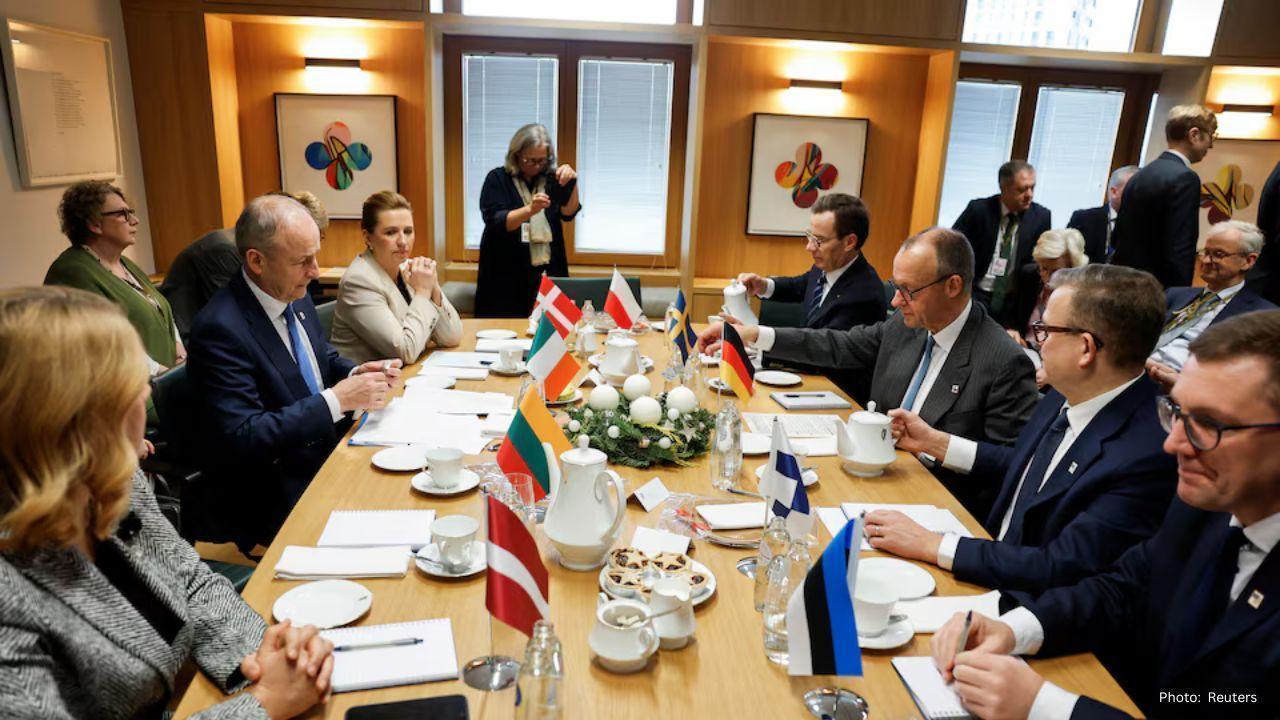
Global investors reacted with caution on Friday after European Union leaders agreed on a major funding plan to support Ukraine’s defence against Russia. Instead of using frozen Russian assets, which had divided member states, EU leaders chose to borrow money, securing a 90 billion euro loan. The decision was aimed at avoiding legal and political risks while keeping financial markets stable.
Following the announcement, German 10-year government bond yields rose slightly, moving up by about 1.8 basis points to 2.867%. This level remained below the nine-month high seen a day earlier, suggesting that markets were not overly alarmed. The euro also stayed steady against a stronger U.S. dollar, showing that currency traders viewed the decision as largely neutral.
Many analysts said the EU’s choice to avoid seizing Russian assets helped protect trust in European debt markets. Using frozen assets could have raised fears among global investors that government-held funds might not be safe in Europe. Such concerns could have pushed borrowing costs higher for EU countries. By choosing to borrow instead, leaders aimed to prevent long-term damage to Europe’s reputation as a safe place to invest.
Kyle Rodda, a senior market analyst in London, explained that taking Russian assets could have made European government bonds less attractive and pushed interest rates higher. He said the extra borrowing adds only a small burden compared to the bigger risk of scaring away large investors, including countries like China, that buy European debt.
Some market experts also pointed out how the decision could affect gold prices. Shaniel Ramjee, a senior investment manager, noted that protecting assets within a legal system may slightly reduce demand for gold, which is often bought as a safe haven when investors fear instability.
Others focused on what the decision means for future EU borrowing. Christoph Rieger, a rates strategist in Frankfurt, said the EU may issue more short-term bills to raise funds, while keeping long-term bond issuance near recent levels. Over time, this could make the EU a regular borrower in global markets, especially after its current large funding programmes end.
From a broader view, some investors welcomed the move. George Boubouras, head of research at an Australian asset management firm, described the deal as positive but warned that more funding will likely be needed. He also cautioned that markets may be underestimating future risks, especially if current geopolitical tensions rise again in 2026.
Overall, the EU’s funding decision brought a calm but watchful response from markets. While investors appear relieved that frozen Russian assets were left untouched, they remain aware that the cost of supporting Ukraine will continue to shape Europe’s finances and global market confidence in the years ahead.







Mattel Revives Masters of the Universe Action Figures Ahead of Film Launch
Mattel is reintroducing Masters of the Universe figures in line with its upcoming film, tapping into

China Executes 11 Members of Criminal Clan Linked to Myanmar Scam
China has executed 11 criminals associated with the Ming family, known for major scams and human tra

US Issues Alarm to Iran as Military Forces Deploy in Gulf Region
With a significant military presence in the Gulf, Trump urges Iran to negotiate a nuclear deal or fa

Copper Prices Reach Unprecedented Highs Amid Geopolitical Turmoil
Copper prices soar to all-time highs as geopolitical tensions and a weakening dollar boost investor

New Zealand Secures First Win Against India, Triumph by 50 Runs
New Zealand won the 4th T20I against India by 50 runs in Vizag. Despite Dube's impressive 65, India