Post by : Saif Nasser
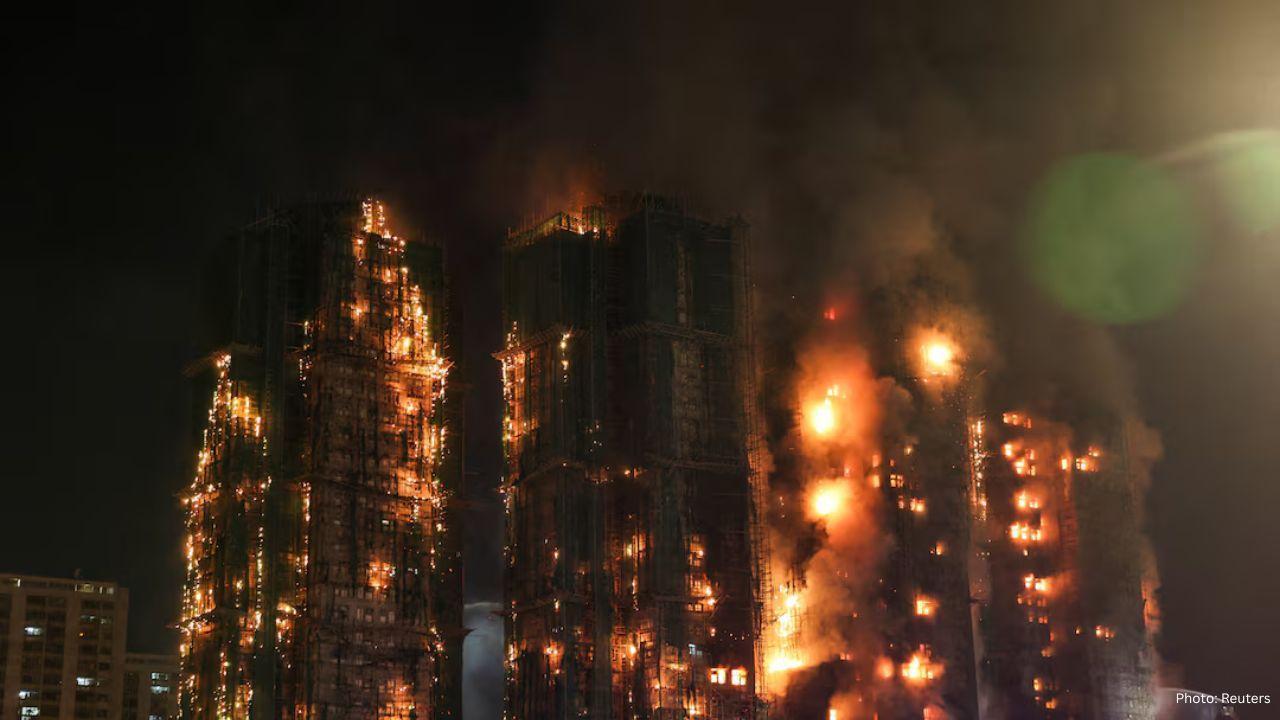
The deadly fire that tore through the Wang Fuk Court housing complex in Hong Kong has now become one of the city’s most painful tragedies. As investigators look deeper into what led to the disaster, a troubling story has emerged. It is a story about safety failures, wrong information, rising renovation costs, and a long struggle by residents who tried to protect their homes but were ignored.
The fire, which happened on November 26 and claimed at least 159 lives, has raised serious questions about how the renovation contractor, Prestige Construction, was chosen, and whether the residents were misled. According to documents reviewed by Reuters, homeowners were told that Prestige had a clean safety record. This information came from Will Power Architects, a consultant hired to review bids for the renovation contract. But it was not true.
Government records show that Prestige had been penalized more than a dozen times between 2016 and 2019 for workplace safety violations. These violations included unsafe scaffolding and faulty electrical work. Prestige had also been punished in earlier years for negligence, and even banned from certain projects for several months. This history was never properly shared with residents, who believed they were choosing a safe and responsible contractor.
The renovation at Wang Fuk Court was supposed to repair the old buildings, fix fire safety systems, and upgrade water pipes. The complex was built in the 1980s and required major work under Hong Kong law. Will Power ranked Prestige’s bid very highly and described its safety record as spotless. That recommendation became a key reason Prestige won the HK$330 million contract.
But soon after the project began, residents noticed worrying signs. Workers were seen smoking near flammable materials. Foam boards used to protect windows were highly flammable. Parts of the scaffolding mesh did not meet fire safety standards. Some residents with construction experience warned that the materials were dangerous. Complaints were made again and again, and photos were taken as evidence. Still, the work continued.
By early 2024, another major problem began to grow. The cost of the renovation suddenly more than doubled from the original HK$150 million estimate. Residents were shocked, and many felt they were not consulted properly. A group of homeowners then tried to call a special meeting to remove the estate’s leadership and cancel Prestige’s contract. But the homeowners’ board rejected their request, calling the meeting pointless and harmful.
The struggle continued for months. Finally, during a typhoon on September 6, 2024, more than 1,200 residents showed up for a long and emotional meeting. By the end of the night, new leadership had been chosen. But even with new representatives in charge, ending Prestige’s contract was not possible. A lawyer warned that canceling the agreement could make every homeowner legally responsible for the financial damage. Because of this, the contract remained in place.
The new board still tried to fix what it could. A task group of residents with technical experience was formed to monitor the renovation. They collected photos and videos of potential safety risks and demanded explanations from Prestige. Some residents, out of fear and frustration, took safety into their own hands.
One of the most heartbreaking stories is that of a retired electrician, Mr. Wong, whose photo—showing him in despair as the fire spread—was shared around the world. His wife was trapped inside their burning home. Before the fire, he had removed the flammable foam boards from his windows and replaced them with safer materials. He would spray water over the mesh outside his flat to lower the fire risk. His effort showed the fear many residents felt long before the tragedy happened.
After the fire, police arrested several people linked to Prestige and Will Power as part of ongoing manslaughter and corruption investigations. Authorities believe that Prestige may have tried to hide unsafe materials by mixing low-quality mesh with better-quality samples to fool inspectors. The Labour Department admitted that it previously told residents the materials were safe, even though complaints continued.
The Wang Fuk Court disaster is more than a story of a fire. It is a story about how trust was broken. Residents were given wrong information. Their concerns were ignored. Their efforts were delayed. Costs soared, and safety measures failed. The result was a tragedy that could have been prevented.
As Hong Kong continues its investigations, families who lost loved ones are demanding justice. They want answers and accountability from the contractor, the consultant, and the officials who allowed unsafe work to continue. They want to know why warnings were not taken seriously. And most of all, they want to make sure that no other community faces the same fate.
The fire at Wang Fuk Court has become a painful lesson for Hong Kong—a reminder that safety must never be ignored, and that the voices of residents must always matter.




Mattel Revives Masters of the Universe Action Figures Ahead of Film Launch
Mattel is reintroducing Masters of the Universe figures in line with its upcoming film, tapping into
China Executes 11 Members of Criminal Clan Linked to Myanmar Scam
China has executed 11 criminals associated with the Ming family, known for major scams and human tra

US Issues Alarm to Iran as Military Forces Deploy in Gulf Region
With a significant military presence in the Gulf, Trump urges Iran to negotiate a nuclear deal or fa

Copper Prices Reach Unprecedented Highs Amid Geopolitical Turmoil
Copper prices soar to all-time highs as geopolitical tensions and a weakening dollar boost investor

New Zealand Secures First Win Against India, Triumph by 50 Runs
New Zealand won the 4th T20I against India by 50 runs in Vizag. Despite Dube's impressive 65, India