
Post by : Saif Nasser
Goldman Sachs has raised a strong warning about the growing risk of disruption in the supply of rare earth elements and other critical minerals, saying that China’s heavy control over these resources could threaten global industries and economic stability.
In its latest report, the U.S. investment bank said China now controls about 69% of the world’s rare earth mining, 92% of refining, and nearly 98% of global magnet production. These materials are crucial for building electric vehicles, batteries, smartphones, wind turbines, and even military equipment.
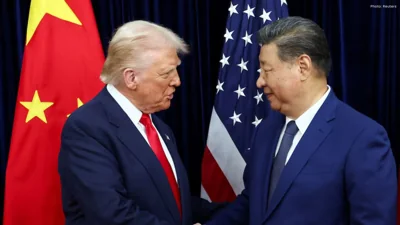
The warning comes after China expanded its export restrictions on October 9, adding five new rare earth elements and tightening rules for companies that make semiconductors. The timing also comes ahead of a meeting between U.S. President Donald Trump and Chinese President Xi Jinping, where trade and technology tensions are expected to be major topics.
According to Goldman Sachs, if there is even a 10% disruption in the global supply of rare earths, the world could lose around $150 billion in economic output. Such shortages could also push up prices for many products that rely on these materials, adding inflation pressure worldwide.
Rare earth elements, also known as REEs, are a group of 17 metals that play a key role in high-tech industries. Although the market for rare earths is worth only about $6 billion, much smaller than the $200 billion copper market, their importance is far greater because they are essential for advanced technologies like artificial intelligence, defense systems, and renewable energy.
Goldman Sachs identified several materials that are especially at risk of export curbs from China. These include samarium, graphite, lutetium, and terbium. Samarium is used in special magnets that can withstand high temperatures, making it vital for aerospace and defense manufacturing. Lutetium and terbium are used in electronics, screens, and clean energy systems. Any shortage in these elements could reduce global productivity and slow industrial growth.
The bank also warned that lighter rare earths such as cerium and lanthanum may become targets of future restrictions because China dominates their mining and refining. Even though companies outside China, such as Australia’s Lynas Rare Earths and Belgium-based Solvay, are increasing production, their capacity is still limited compared to China’s.
Goldman Sachs said that many countries are now trying to build independent supply chains to reduce dependence on China, but the challenges are huge. Heavy rare earth deposits outside China and Myanmar are rare, smaller in size, and often mixed with radioactive materials. Developing new mines takes up to 10 years, while refining facilities can take another five years to build.
The report also noted that magnet manufacturing outside China remains slow, even as countries like the United States, Japan, and Germany push for growth. China continues to hold control over essential inputs, such as samarium, which limits the speed at which others can expand.
Goldman Sachs pointed out that this imbalance could create major risks for investors, industries, and governments. It said that companies such as Lynas Rare Earths, Iluka Resources, and MP Materials may benefit from growing demand and government support as countries rush to strengthen their supply chains. The bank expects shortages in materials like Neodymium-Praseodymium Oxide, which are vital for making high-performance magnets used in electric vehicles and renewable energy systems.
Beyond rare earths, the report warned that geopolitical tensions could also disrupt supplies of other key commodities such as cobalt, oil, and natural gas. These disruptions, it said, could impact industries across the world and further weaken economic recovery.
Goldman Sachs’ analysis highlights a growing concern among global policymakers: that China’s near-total control of critical mineral processing gives it powerful leverage over world markets. The report suggests that unless other nations increase their mining and refining capacity soon, industries like electric vehicles, defense, and renewable energy could face long-term risks.
Experts say that the U.S. and Europe must take urgent action to diversify their supply sources and invest in new technologies to recycle rare earths and produce magnets domestically. However, these efforts will take years to match China’s scale and cost advantage.
The warning adds to global concerns over resource security at a time when competition for critical minerals is intensifying. Analysts say that future trade disputes or sanctions could trigger severe supply shortages, affecting both prices and production in key sectors.








Mattel Revives Masters of the Universe Action Figures Ahead of Film Launch
Mattel is reintroducing Masters of the Universe figures in line with its upcoming film, tapping into

China Executes 11 Members of Criminal Clan Linked to Myanmar Scam
China has executed 11 criminals associated with the Ming family, known for major scams and human tra

US Issues Alarm to Iran as Military Forces Deploy in Gulf Region
With a significant military presence in the Gulf, Trump urges Iran to negotiate a nuclear deal or fa

Copper Prices Reach Unprecedented Highs Amid Geopolitical Turmoil
Copper prices soar to all-time highs as geopolitical tensions and a weakening dollar boost investor

New Zealand Secures First Win Against India, Triumph by 50 Runs
New Zealand won the 4th T20I against India by 50 runs in Vizag. Despite Dube's impressive 65, India