Post by : Saif Nasser
Ghana has taken a strong step to protect its environment by banning all mining activities in forest reserves. The decision aims to stop damage to rivers, forests, and farmland caused by uncontrolled and illegal mining. The announcement was made by the Ministry of Environment, Science and Technology and took effect this week.
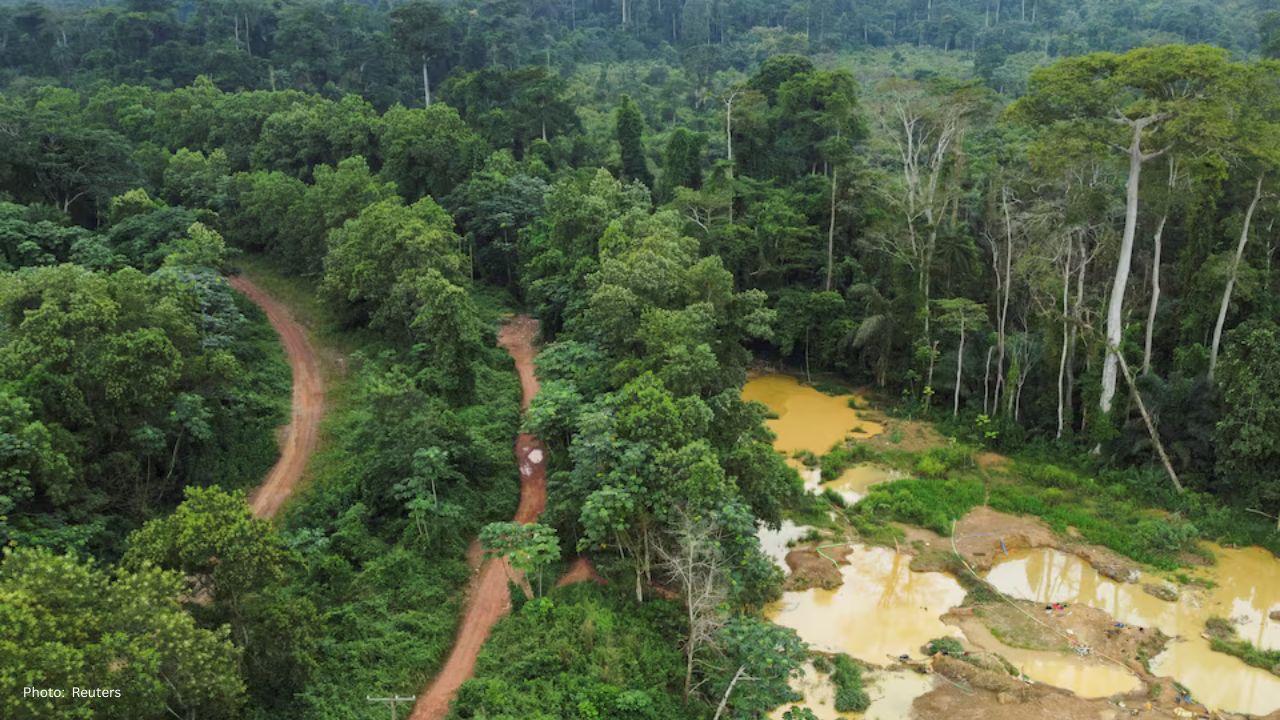
Ghana is Africa’s largest gold producer, but the country is also facing a serious environmental crisis. In recent years, small-scale and illegal mining, locally known as “galamsey,” has spread rapidly. These activities have destroyed large areas of forest, polluted rivers with chemicals, and damaged cocoa farms that many families depend on for their income.
The government said mining in forest reserves will no longer be allowed under any conditions. This reverses a 2022 rule that had permitted limited and controlled mining in protected forest areas. Officials believe the earlier policy weakened forest protection and made it harder to stop environmental abuse.
Illegal mining now affects 13 of Ghana’s 16 regions, including major cocoa-growing areas such as Ashanti, Western, and Eastern regions. Rivers that once provided clean drinking water have turned muddy and unsafe. Forests that help bring rainfall and protect farms have been cut down, worsening climate and food security risks.
Large mining companies have also suffered. Firms like Gold Fields, AngloGold Ashanti, Newmont, and Asante Gold say illegal miners often invade their licensed areas. To protect their operations, these companies have spent heavily on security, surveillance drones, and community outreach programs.
The government has tried several measures to fix the problem. These include licensing small-scale miners, creating community mining schemes, and sending security forces to stop illegal operations. However, environmental damage has continued, leading to public anger and protests across the country.
Acting Environment Minister Emmanuel Armah-Kofi Buah said healthy forests are vital for Ghana’s future. He explained that forests bring rainfall, protect farms, and support local communities, while clean rivers ensure safe drinking water for generations to come.
Environmental groups have welcomed the ban but warned that it is only a first step. Daryl Bosu of A Rocha Ghana said the repeal of mining rights in forest reserves gives the country a chance to repair past damage. He added that Ghana must also deal with illegal logging, farming encroachment, and invest in long-term forest restoration programs.
The ban marks a major shift in Ghana’s environmental policy. It sends a clear message that protecting nature, water, and food sources is more important than short-term profits. Many Ghanaians now hope the government will enforce the new rules strictly and help restore the forests for future generations.








Anticipated Dates for UAE Eid Al Adha 2026 Unveiled by Astronomical Experts
Experts predict Eid Al Adha 2026 in the UAE to start on May 27, prompting early holiday planning amo

DAE Achieves Remarkable Growth in Q1 2026 With Record Revenue
Dubai Aerospace Enterprise announces impressive financial results for Q1 2026, reflecting a surge in

Price Increase for Sony PS5 in Southeast Asia Effective May 1
Sony announces a price increase for the PS5 across Southeast Asia starting May 1, 2026, impacting ga

Potential ‘Super El Niño’ in 2026: Understanding the Climate Risks
Could a Super El Niño emerge in 2026? Discover its implications and potential global climate impacts

Global Energy Crisis Intensifies: Markets React to Oil Supply Challenges
Markets are on edge as oil disruptions escalate, influencing prices and economic stability. Explore

Must-See Tourist Spots in London You Can't Overlook
Explore London's essential attractions, from royal landmarks to vibrant markets, ensuring an unforge




