Post by : Sami Jeet
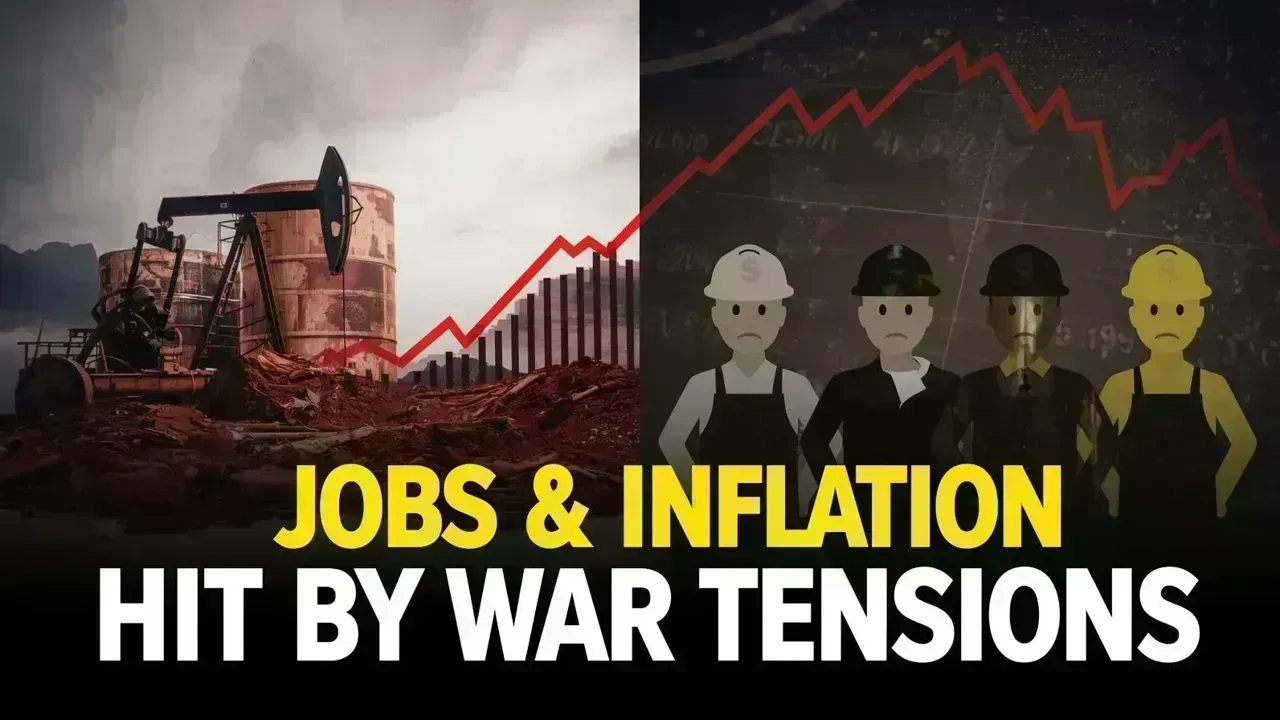
The escalation of conflict involving the United States and Iran has transcended mere geopolitics, significantly affecting the US economy, employment landscape, and overall living expenses. What appears to be a distant conflict is strikingly influencing energy prices, hiring trends, corporate confidence, and inflation rates throughout the nation.
Central to this economic disturbance is the Strait of Hormuz, a pivotal global oil passage. Increased tensions in this area have immediate repercussions for the US economy, as energy prices profoundly impact nearly all sectors.
The primary economic threat begins with oil prices.
Due to ongoing hostilities, the global oil supply has faced interruptions, causing crude prices to spike. Current prices have at times exceeded $110 per barrel, leading to a significant uptick in fuel costs across the US.
This situation arises because:
Oil is not merely a commodity; it is the bedrock of modern economies. An uptick in oil prices triggers a chain reaction affecting countless other goods.
Increased oil prices lead directly to higher inflation, a trend currently observable in the US.
Here’s how this process unfolds:
This sequence has resulted in:
Sectors such as agriculture are also feeling the strain due to rising energy and fertilizer expenses.
Experts caution that this could initiate a phase of prolonged inflation, characterized by sustained price elevations.
For policymakers, the present landscape poses significant challenges.
Typically, rising inflation can be managed through adjustments to interest rates. However, the inflation caused by conflict stems from supply disruptions, diverging from standard consumer-driven demand issues.
This results in a precarious balance:
This raises fears of a scenario reminiscent of stagflation, characterized by:
One of the clearest effects of escalating costs and uncertainty is observed in the job market.
Employers are exercising caution due to:
Consequently:
Particularly hard hit are service-oriented sectors that make up a significant portion of the workforce.
The impact of these trends is not uniform across industries.
Sectors facing hurdles:
These sectors are particularly susceptible due to their reliance on stable fuel and supply chains.
Industries finding advantages:
Energy firms benefit from rising crude costs, while defense companies are witnessing a surge in demand due to the escalating geopolitical climate.
Common approaches include:
For instance, delivery and transportation services are implementing fuel surcharges, leading to inflated costs for end-users.
This cycle perpetuates an increase in inflation as costs continue to mount.
The average American is already feeling the strain.
Concurrently, job security may also be deteriorating, complicating the ability for families to navigate soaring expenses.
This duality of increased costs and stagnant income growth exacerbates pressures on overall living standards.
Financial uncertainties tied to geopolitical tensions are influencing market behavior.
This diminished confidence can trigger:
These factors compound existing economic pressures.
Should tensions escalate further, the likelihood of a more significant economic downturn increases.
Possible repercussions comprise:
If disruptions in oil supply persist, these effects could intensify dramatically.
A crucial variable remains the duration of the conflict.
If disruptions in the Strait of Hormuz continue, the consequences for inflation and employment could profoundly deepen.
The US economy, while robust, remains intricately linked to global dynamics.
Even with substantial domestic energy production, the country is still subject to influences from:
This indicates that external conflicts can exert significant pressure on the US economy.
The ongoing tensions between the United States and Iran are sending notable economic ripples throughout the US, influencing inflation and employment metrics.
Centrally linked to this effect is the rise in energy costs, which impacts industries and compels businesses to rethink their strategies.
The US is currently navigating a delicate equilibrium:
If these tensions continue, the prospect of intensified economic slowdown looms large.
The upcoming weeks will be vital in determining whether a stabilization occurs or whether more profound economic implications arise.
This content serves informational purposes and reflects contemporary economic trends. Changes in condition may occur based on global events.










Unlocking Wellness in the UAE: 7 Transformative Habits
Explore 7 effective wellness practices inspired by the UAE lifestyle for a healthier, happier life.

Starbucks Engages Boyu Capital for Major Chinese Expansion
Starbucks teams up with Boyu Capital, selling a majority stake to boost growth and adapt to the Chin

Three Individuals Charged in Massive Meth Trafficking Case in Malaysia
In Malaysia, a married couple and another suspect are charged with trafficking 510kg of meth, facing
Singapore Police Revisit Geylang Murder Scene with Suspect
In Geylang, police return a murder suspect to the scene of a crime involving the fatal stabbing of a

Mattel Revives Masters of the Universe Action Figures Ahead of Film Launch
Mattel is reintroducing Masters of the Universe figures in line with its upcoming film, tapping into