French Unions Strike Against Budget Cuts, Pressure Macron

French Unions Strike Against Budget Cuts, Pressure Macron

Post by : Monika

Photo: Reuters

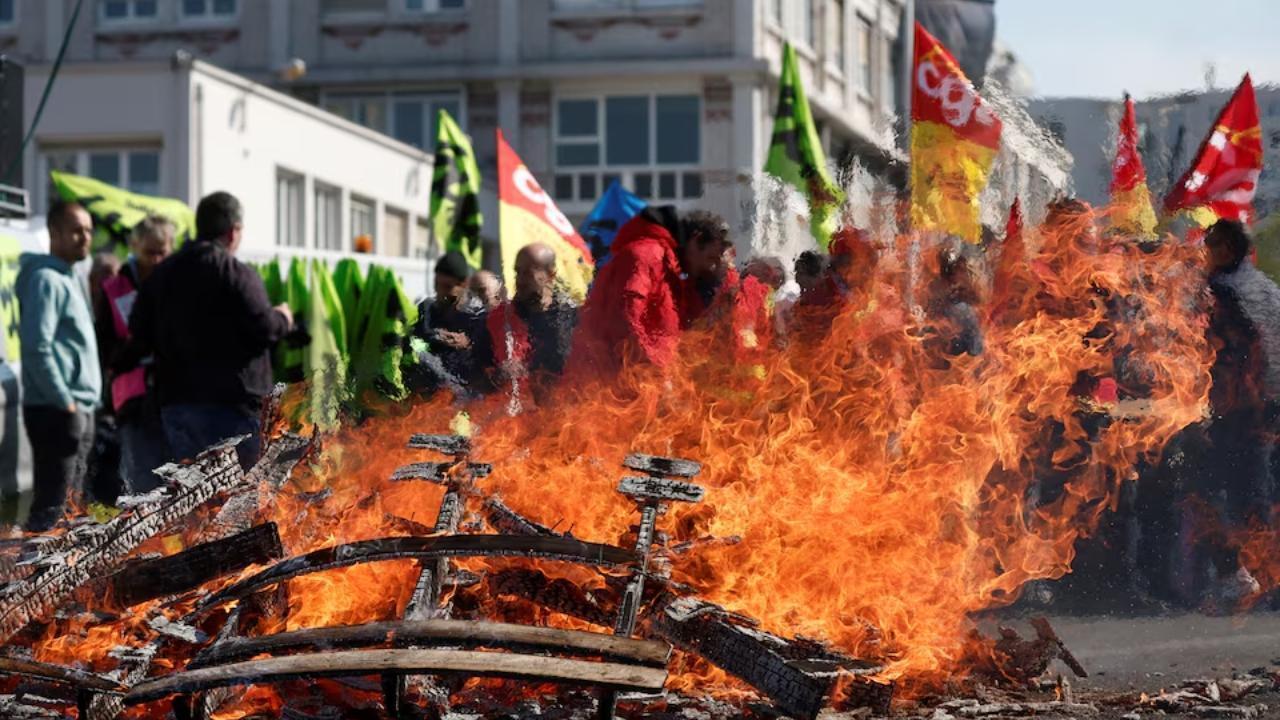
France is going through a big protest day. On Thursday, many workers, teachers, hospital staff, and students all over the country are striking and protesting. They are angry at planned government cuts to public services and changes to pensions. These actions are meant to pressure President Emmanuel Macron and his government to change course.

Who’s Protesting and Why

Unions: Groups of workers have called this strike. They represent many sectors: schools, hospitals, public transport, pharmacies, etc.

Teachers will walk off the job. Many train drivers and hospital workers will not work. Students are also blocking high schools. All because they feel government plans are unfair.

What they are protesting:

  • Budget cuts that would reduce funding for public services (like schools and hospitals).
  • Pension reforms: changes that would make people work longer before retiring.
  • Plans to raise taxes on normal people, or give tax breaks to the rich. Unions want those reversed.

Where Protests Will Hit Most

  • In Paris, many metro lines will be shut down for most of the day, except during rush hours.
  • In many places, schools will be partly or fully closed. Students are helping by blocking school gates.
  • Regional and commuter trains will suffer delays or cancellations. Long-distance trains may be less affected.
  • Pharmacies in many towns are expected to close or reduce hours.
  • Even electricity production is being affected: one nuclear power plant, Flamanville 1, reduced its output as part of the strike.

How Many People and What the Government Is Doing

  • The government thinks around 800,000 people might take part in the strikes and protests.
  • To keep things under control, around 80,000 police and gendarmes will be deployed across France. They will use riot units, drones, and armoured vehicles.
  • Some blockades and protests are expected to happen outside bus depots, in front of schools, and at busy transport hubs.

Government’s Situation

  • The budget deficit (how much more France spends than it earns) is big. It is almost double the limit set by the European Union (which is 3% of GDP).
  • Sebastien Lecornu is the new Prime Minister. He replaced the previous one after controversial austerity (spending cuts) plans were rejected.
  • The government has proposed big cuts (some say around €44 billion) to bring down spending. But many people think these cuts are too harsh.
  • Unions and opposition parties are demanding that many of these proposals be canceled or changed. They want more spending on public services, and not just cuts.

What Protesters Want

  • Reversal of pension reforms (so people retire at the earlier age again).
  • More public money spent on schools, hospitals, transport, and other services.
  • Higher taxes for very rich people instead of taking money from working families.
  • That the government listens to workers and citizens before passing such large budget cuts.

Possible Effects

  • Transport will be disrupted: trains, metros, maybe flights in some places. People may find it hard to get to work or school.
  • Schools and hospitals may run with fewer staff or partially closed.
  • Public anger is strong. Many agree that the cost of living is high, the services are under pressure, and people are worried about having to work longer due to pension age changes.
  • Politically, this is tough for Macron and the new prime minister. They risk losing public trust and might face difficulty passing new laws, especially ones with cuts.

Why This Is Serious for the Government

Macron’s government is already in a difficult political position. The budget plans have caused disagreements in Parliament. Some previous proposals were rejected by lawmakers.

Because of these strikes, there is pressure to adjust or drop unpopular measures. If the protests stay strong, the government might be forced to compromise.

Also, France’s credit rating was downgraded by financial agencies because of high national debt and a large deficit. This makes it more expensive for the government to borrow money.

What Comes Next

  • The government may try to negotiate with unions. Maybe adjust the budget proposals to reduce the burden on working people.
  • Protests may continue, especially if workers don’t see changes. More unions may join.
  • There might be more disruptions in transport, power, and public services if people stay active.
  • Politically: Macron and Lecornu will need to win more support in Parliament if they want to pass their budget. Without that support, their plans may be blocked or changed a lot.

Many French workers and citizens are deeply unhappy with planned budget cuts and changes to pensions. The strike is a way for them to show their frustration and demand change.

President Macron and his government are under big pressure. They need to make hard choices: reduce spending but also protect social services and public trust.

For students and people across France, this day of strikes shows how policy decisions—on pensions, spending, taxes—affect everyday life. It also shows how citizens can use protests and strikes to push for changes.


Sept. 18, 2025 3:51 p.m. 1901
NATO Holds Arctic Military Drills with Focus on Civilian Preparedness
March 9, 2026 6:50 p.m.
NATO launches major Arctic military drills with 25,000 troops, focusing on how civilians and public services can support defense during a crisis
Read More
Amazon Electronics Premier League 2026 Brings Big Discount on Apple iPhone Air
March 9, 2026 5:19 p.m.
Amazon’s Electronics Premier League 2026 sale offers a big discount on Apple iPhone Air, with the price dropping by over ₹26,000 along with bank offers.
Read More
Bangladesh Closes Universities and Limits Fuel Sales as Energy Crisis Deepens
March 9, 2026 3:46 p.m.
Bangladesh shuts universities and limits fuel sales as the Iran war disrupts global energy supplies, forcing emergency steps to save electricity and fuel
Read More
Kenya Flood Death Toll Rises to 42 After Heavy Rains Devastate Communities
March 9, 2026 3:22 p.m.
Deadly floods in Kenya have killed at least 42 people after heavy rains hit Nairobi and other regions, damaging homes, roads, and displacing thousands
Read More
Germany’s Industrial Output Falls Unexpectedly in January
March 9, 2026 2:33 p.m.
Germany’s industrial output fell unexpectedly by 0.5% in January, raising concerns about the strength of Europe’s largest economy
Read More
Bondi Beach Shooting Case Raises Debate as Suspect’s Lawyers Seek Gag Order to Protect Family
March 9, 2026 1:38 p.m.
Lawyers for the Bondi Beach shooting suspect ask a court to block media from naming his family, citing safety risks after the deadly 2025 attack
Read More
Indian Refinery Stocks Drop as Global Oil Prices Surge Amid Iran Conflict
March 9, 2026 12:50 p.m.
Indian refinery stocks fall as global crude oil prices surge near 2022 highs amid tensions linked to Iran, raising worries about fuel costs and the economy
Read More
Trump’s China Visit Expected to Focus on Stability, Not Major Breakthrough
March 9, 2026 12:36 p.m.
Trump’s planned China visit is expected to focus on maintaining stability in US–China relations, with limited chances of major trade or policy breakthroughs
Read More
Live Nation Moves Closer to Settlement in Major U.S. Antitrust Case
March 9, 2026 11:59 a.m.
Live Nation is reportedly close to settling a major U.S. antitrust lawsuit over its control of the concert and ticketing industry through Ticketmaster
Read More
Sponsored
Trending News