Post by : Mina Rahman
The US Federal Reserve has reduced its key interest rate for the third time this year, cutting it by 0.25 percentage points to a range of 3.50%–3.75%—its lowest in three years. The move comes amid internal disagreements within the central bank over how to balance a slowing job market with persistent inflation pressures.
The Fed’s latest economic projections indicate a potential additional rate cut next year, although policymakers emphasized that future actions will depend on incoming economic data.
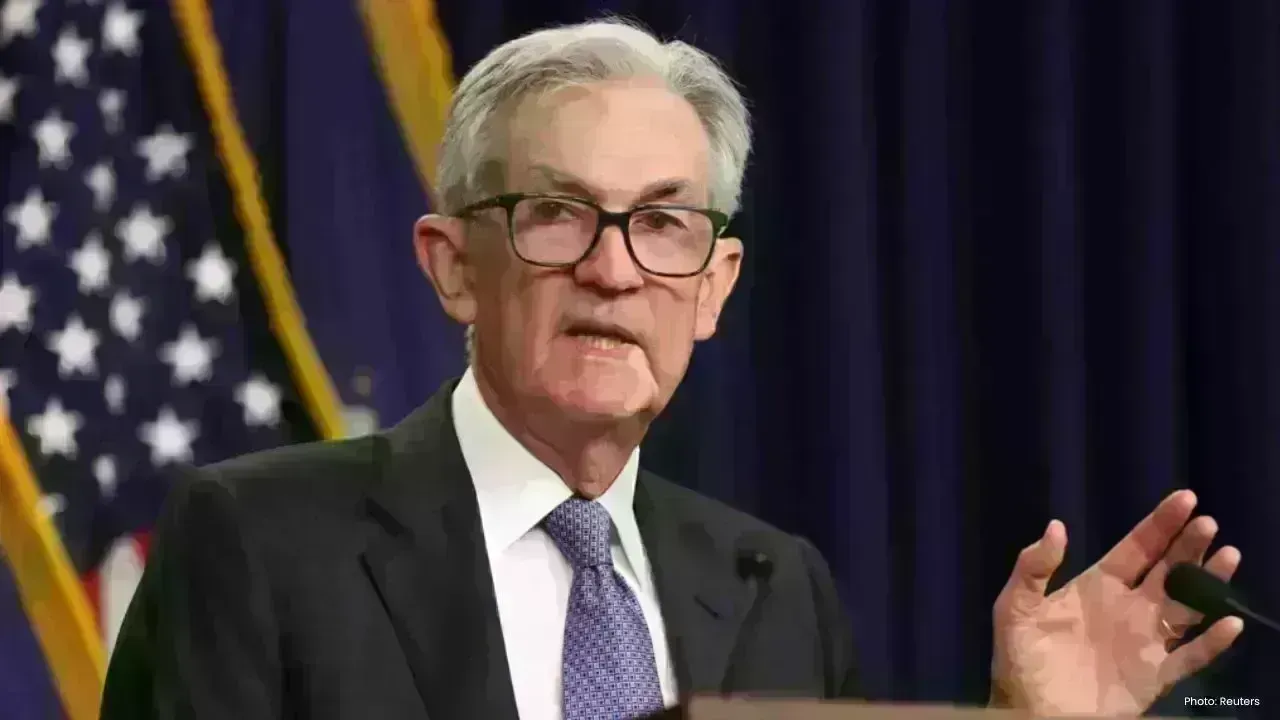
Fed Chair Jerome Powell highlighted the importance of observing the effects of the three cuts already implemented before deciding on further action. “We are well-positioned to wait and see how the economy evolves,” Powell told reporters, adding that policymakers will closely analyze upcoming data before the next meeting in January.
While some, including former President Donald Trump, have urged the Fed to lower rates aggressively, Powell acknowledged the challenges of simultaneously addressing inflation and unemployment. “You can’t do two things at once,” he said.
The decision was not unanimous, signaling widening divisions within the central bank. Three Fed officials dissented: Stephen Miran voted for a larger 0.5 percentage point cut, while Austan Goolsbee and Jeffrey Schmid favored holding rates steady.
Trump, who has repeatedly criticized the Fed for not cutting rates faster, said after the announcement that the Fed’s reduction could have been “at least doubled.” He insisted that US rates should be “the lowest in the world.”
A lack of reliable economic data caused by the prolonged US government shutdown, which ended in November, has left Fed officials partially in the dark. Nevertheless, concerns over a cooling labor market have outweighed inflation worries for now.
Recent reports show the US unemployment rate ticked up from 4.3% to 4.4% in September, marking a slight rise in joblessness. Rate cuts aim to stimulate the economy by making borrowing cheaper for businesses and consumers.
Inflation remains above the Fed’s 2% target, reaching 3% in September—the first time since January. Analysts note that while tariffs have pushed some prices higher, softer-than-expected inflation readings recently have given the Fed room to prioritize supporting the labor market.
Colleen McHugh, a consultant with investment platform Wealthify, explained that while elevated inflation complicates rate cuts, the weak jobs market likely influenced the Fed’s decision. She predicts one or two more rate reductions next year, depending on economic developments.
Powell acknowledged the unusual level of tension within the Fed between its dual mandates of price stability and maximum employment. “When you have competing pressures, this is what you see,” he said, describing the debate as respectful and thorough.
Looking ahead, upcoming data on November’s labor market and inflation could clarify the path for interest rates. Analysts expect that signs of a further slowdown in jobs may strengthen calls for additional easing.
Adding to uncertainty is Trump’s search for a successor to Powell, whose term ends next May. Kevin Hassett, a long-time Trump economic adviser and former chair of the White House Council of Economic Advisers, is seen as a leading contender. Other potential candidates include economist Kevin Warsh, current Fed Governor Christopher Waller, and Treasury Secretary Scott Bessent.
Experts note that the new Fed chair must balance independence with credibility; any perception of bias toward the White House could unsettle markets. Thomas Hoenig, a senior fellow at the Mercatus Center, warned that markets may react strongly if the Fed chair is seen as politically influenced.
Powell dismissed concerns that the selection process is affecting his approach, insisting it does not change his decision-making. “No,” he replied when asked if Trump’s search for a new Fed chair was influencing his thinking.
As the Fed navigates these competing pressures, markets will be closely watching how interest rate policy adapts to evolving economic conditions in the months ahead.










DAE Achieves Remarkable Growth in Q1 2026 With Record Revenue
Dubai Aerospace Enterprise announces impressive financial results for Q1 2026, reflecting a surge in

Price Increase for Sony PS5 in Southeast Asia Effective May 1
Sony announces a price increase for the PS5 across Southeast Asia starting May 1, 2026, impacting ga

Potential ‘Super El Niño’ in 2026: Understanding the Climate Risks
Could a Super El Niño emerge in 2026? Discover its implications and potential global climate impacts

Global Energy Crisis Intensifies: Markets React to Oil Supply Challenges
Markets are on edge as oil disruptions escalate, influencing prices and economic stability. Explore

Must-See Tourist Spots in London You Can't Overlook
Explore London's essential attractions, from royal landmarks to vibrant markets, ensuring an unforge

Ultimate Guide to Snagging Cheap Flights in 2026
Unlock the secrets to booking affordable flights in 2026 with insightful tips and strategies tailore




