Post by : Saif Nasser
Eurovision Song Contest has always been known as a celebration of music, culture, and entertainment. Every year, millions of viewers around the world watch singers from different countries perform on one stage. But this year’s Eurovision final in Vienna has become much more than a music competition. The event is now deeply connected to the growing political tensions surrounding the Gaza war and Israel’s participation in the contest.
Several countries decided to boycott Eurovision 2026 because Israel was allowed to compete despite the ongoing conflict in Gaza. Spain, Ireland, Iceland, Slovenia, and the Netherlands chose not to participate, making this one of the biggest controversies in the history of the competition. Their decision reflects how strongly the Gaza conflict has affected public opinion across Europe.
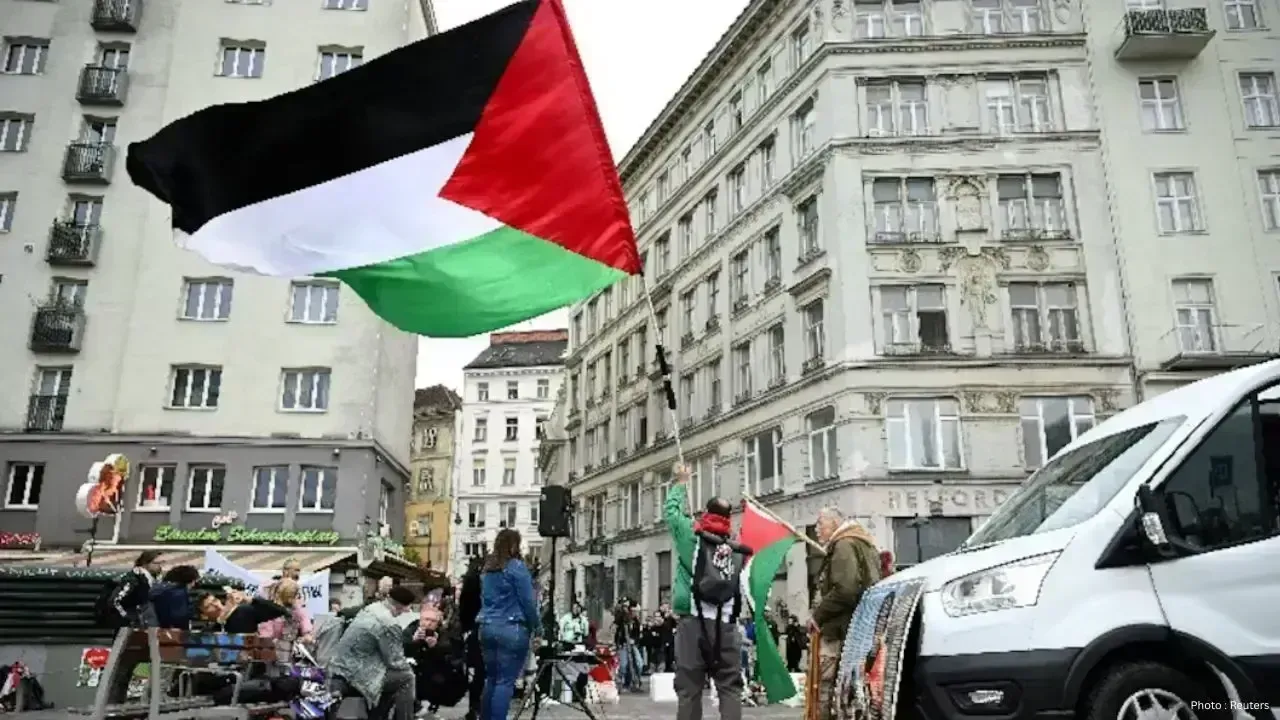
Protests were held in Vienna before and during the event. Demonstrators gathered outside the venue carrying Palestinian flags and calling for peace in Gaza. Inside the arena, there were reports of boos and protests during Israel’s performance. Security around the event was increased because organizers feared more demonstrations during the final.
The European Broadcasting Union, which organizes Eurovision, has continued to defend its decision to allow Israel to compete. Officials say Eurovision should remain a non-political event focused on music and unity. However, many critics believe it is impossible to separate politics from a competition watched by millions during a major international crisis.
This is not the first time politics has affected Eurovision. Over the years, wars, international disputes, and political disagreements have often influenced voting patterns and public reactions. But the current Gaza conflict has created one of the most serious challenges the contest has ever faced.
Supporters of Israel argue that artists should not be punished because of political conflicts. Others believe allowing Israel to participate while Gaza faces destruction sends the wrong message to the world. These opposing views have divided fans, broadcasters, and even former Eurovision winners.
Despite the controversy, the competition continues. Organizers hope music can still bring people together during difficult times. But this year’s Eurovision has shown that global events and human suffering cannot easily be ignored, even on a stage built for entertainment.






Anticipated Dates for UAE Eid Al Adha 2026 Unveiled by Astronomical Experts
Experts predict Eid Al Adha 2026 in the UAE to start on May 27, prompting early holiday planning amo

DAE Achieves Remarkable Growth in Q1 2026 With Record Revenue
Dubai Aerospace Enterprise announces impressive financial results for Q1 2026, reflecting a surge in

Price Increase for Sony PS5 in Southeast Asia Effective May 1
Sony announces a price increase for the PS5 across Southeast Asia starting May 1, 2026, impacting ga

Potential ‘Super El Niño’ in 2026: Understanding the Climate Risks
Could a Super El Niño emerge in 2026? Discover its implications and potential global climate impacts

Global Energy Crisis Intensifies: Markets React to Oil Supply Challenges
Markets are on edge as oil disruptions escalate, influencing prices and economic stability. Explore

Must-See Tourist Spots in London You Can't Overlook
Explore London's essential attractions, from royal landmarks to vibrant markets, ensuring an unforge




