Post by : Saif Nasser
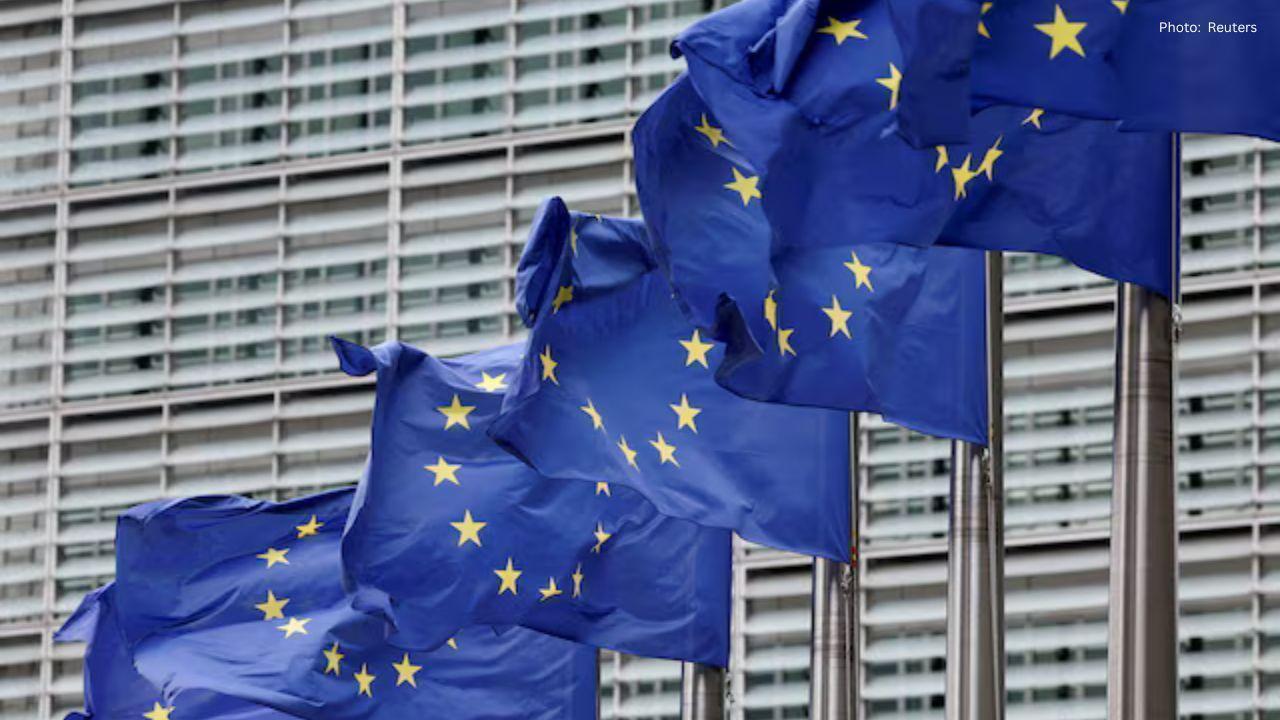
The European Union is set to expand its carbon border levy to cover more imported goods, including car parts and washing machines, as part of efforts to cut global emissions and protect European industries. The European Commission announced the proposals on Wednesday.
The Carbon Border Adjustment Mechanism (CBAM), the world’s first carbon border tariff, is designed to charge fees on imported goods based on the amount of CO2 emissions generated during their production. It currently applies to steel, aluminium, cement, and fertilisers. Starting in January, companies importing these goods will begin paying fees linked to the carbon price already paid by EU producers.
The new proposals aim to cover downstream products that use a significant share of steel and aluminium, such as machinery and construction materials. EU officials are also tightening rules to prevent foreign companies from evading the levy by under-reporting emissions. In such cases, the EU could apply default emissions values, resulting in higher CBAM fees.
“This is not about asking for more than necessary, but ensuring fairness for goods entering the European Union,” said Wopke Hoekstra, EU Climate Commissioner.
Supporters of the measure, including the Business for CBAM Coalition, say the expansion will protect European industries from “carbon leakage,” a situation where companies move production abroad to avoid strict climate rules.
Despite criticism from trading partners including China, India, and South Africa, the EU is moving forward, emphasizing that foreign nations are increasingly adopting their own carbon pricing systems. Experts note that CBAM has already encouraged some countries to reduce emissions in order to remain competitive in the European market.
Brussels also proposes using 25 percent of the revenue from the levy to help European manufacturers offset higher production costs, but only for companies that invest in low-carbon technology.
The proposals will now be negotiated by EU member states and the European Parliament before becoming law. Importers will have until September 2027 to buy and surrender CBAM certificates to comply fully.
The expansion of the carbon border levy is seen as a critical step in the EU’s broader strategy to reduce greenhouse gas emissions while maintaining industrial competitiveness. It signals Europe’s commitment to tackling climate change and ensuring imported goods meet environmental standards.








DAE Achieves Remarkable Growth in Q1 2026 With Record Revenue
Dubai Aerospace Enterprise announces impressive financial results for Q1 2026, reflecting a surge in

Price Increase for Sony PS5 in Southeast Asia Effective May 1
Sony announces a price increase for the PS5 across Southeast Asia starting May 1, 2026, impacting ga

Potential ‘Super El Niño’ in 2026: Understanding the Climate Risks
Could a Super El Niño emerge in 2026? Discover its implications and potential global climate impacts

Global Energy Crisis Intensifies: Markets React to Oil Supply Challenges
Markets are on edge as oil disruptions escalate, influencing prices and economic stability. Explore

Must-See Tourist Spots in London You Can't Overlook
Explore London's essential attractions, from royal landmarks to vibrant markets, ensuring an unforge

Ultimate Guide to Snagging Cheap Flights in 2026
Unlock the secrets to booking affordable flights in 2026 with insightful tips and strategies tailore




