Post by : Bianca Suleiman
The Dubai Electricity and Water Authority (DEWA) is reinforcing its role as a leader in global energy and water services. Over three decades, it has evolved from a local provider into a significant player in sustainable practices and innovative technology.
Originally established on January 1, 1992, following a decree from the late Sheikh Maktoum bin Rashid Al Maktoum, DEWA resulted from the merger of the Dubai Electricity Company and the Dubai Water Department, both created in 1959 under the guidance of the late Sheikh Rashid bin Saeed Al Maktoum. This amalgamation established a unified approach directed towards strategic planning, effective governance, and infrastructure development for the future.
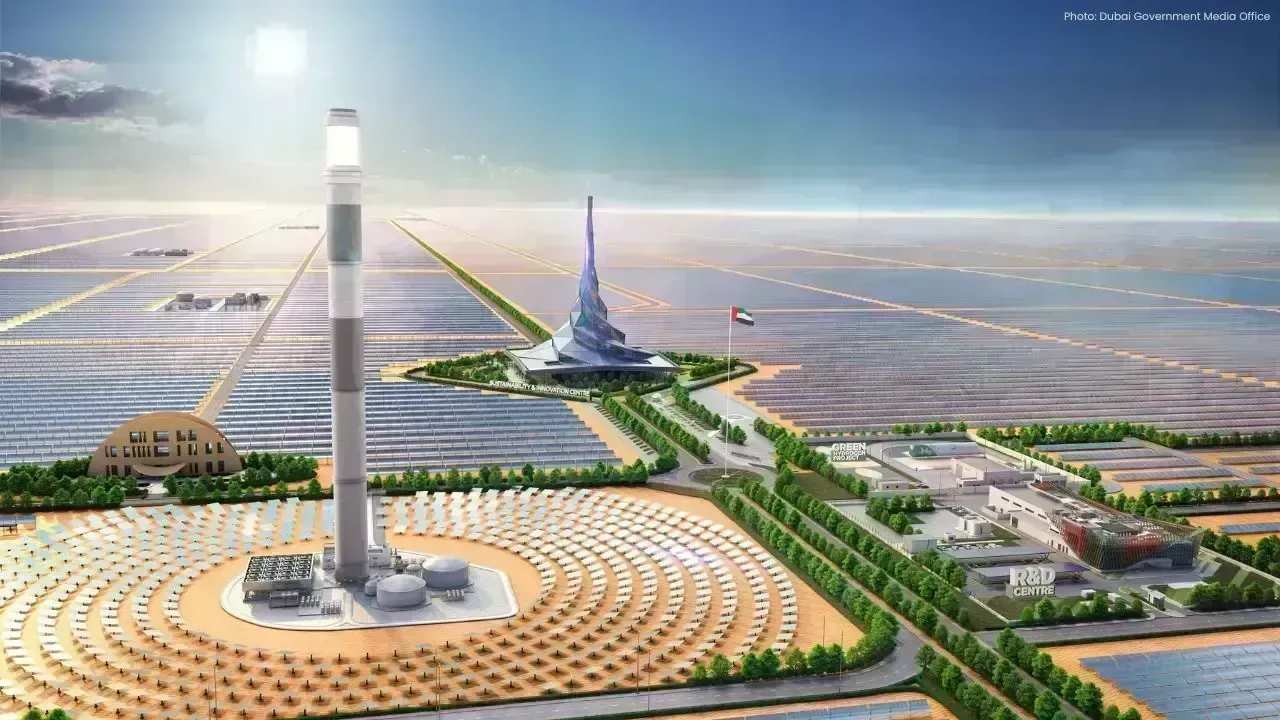
Guided by HH Sheikh Mohammed bin Rashid Al Maktoum, DEWA is expanding its capabilities to accommodate Dubai's brisk economic and urban advancement. The authority operates highly efficient power generation and water desalination facilities, some of which hold global records, such as the tallest concentrated solar power tower (over 263 meters) and the largest storage capacity at the Mohammed bin Rashid Al Maktoum Solar Park Phase IV.
Currently, DEWA's power generation capacity is approximately 18 gigawatts (GW), with aims to boost this to 23GW by the year 2030. This growth is strategized to fulfill increasing demand while promoting sustainable development and elevating Dubai's standing on a global scale.
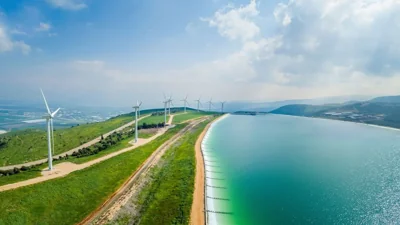
Investing in clean energy is pivotal to DEWA's strategy. The Mohammed bin Rashid Al Maktoum Solar Park stands as one of the largest solar parks globally, currently operating at a capacity of 3,860MW. The project also incorporates cutting-edge technologies and artificial intelligence to enhance operational efficiency, such as optimizing PV panel cleaning, energy forecasting, and grid storage system integration.
To mitigate the variability in renewable energy, DEWA employs advanced storage solutions which include battery systems, pumped-storage hydroelectric power, thermal storage via molten salt in CSP projects, and exploring green hydrogen. The integrated approach also includes the Hatta Pumped-Storage Hydroelectric Power Plant.
These initiatives align with Dubai’s Clean Energy Strategy 2050, targeting a 100% clean energy paradigm and achieving net-zero emissions by 2050. Presently, clean energy contributes about 21% to Dubai's energy mix, with aspirations to enhance this to over 36% by 2030 as solar power surpasses 8,000MW.
In summary, DEWA's evolution illustrates a transition from simple expansion of infrastructure to a sophisticated, innovation-led utility model that prioritizes sustainability and efficiency, reinforcing Dubai's position as a leader in the global clean energy landscape.




Anticipated Dates for UAE Eid Al Adha 2026 Unveiled by Astronomical Experts
Experts predict Eid Al Adha 2026 in the UAE to start on May 27, prompting early holiday planning amo

DAE Achieves Remarkable Growth in Q1 2026 With Record Revenue
Dubai Aerospace Enterprise announces impressive financial results for Q1 2026, reflecting a surge in

Price Increase for Sony PS5 in Southeast Asia Effective May 1
Sony announces a price increase for the PS5 across Southeast Asia starting May 1, 2026, impacting ga

Potential ‘Super El Niño’ in 2026: Understanding the Climate Risks
Could a Super El Niño emerge in 2026? Discover its implications and potential global climate impacts

Global Energy Crisis Intensifies: Markets React to Oil Supply Challenges
Markets are on edge as oil disruptions escalate, influencing prices and economic stability. Explore

Must-See Tourist Spots in London You Can't Overlook
Explore London's essential attractions, from royal landmarks to vibrant markets, ensuring an unforge




