Post by : Shweta
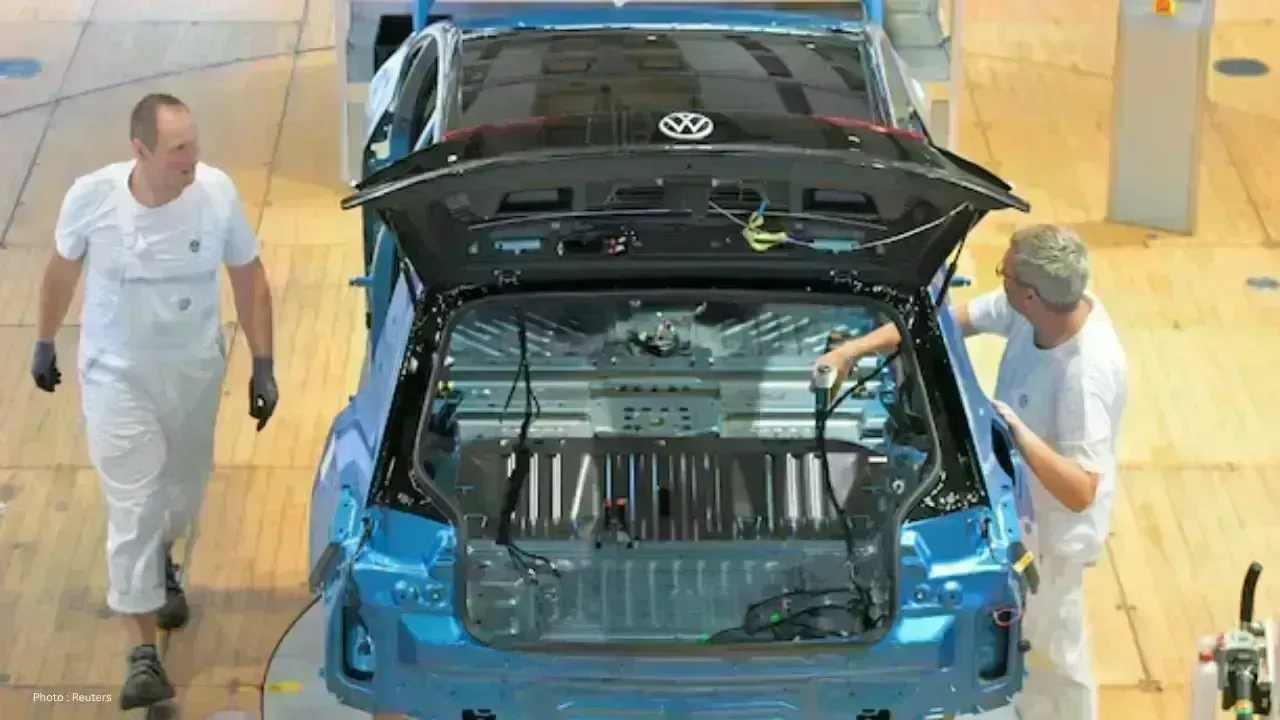
The German automotive industry association has raised alarms that up to 125,000 jobs might vanish by 2035 as the sector grapples with increasing competition, the transition to electric vehicles, and declining global demand. This revelation heightens apprehensions regarding one of Germany’s critical industries and its implications for Europe's largest economy.
This cautionary note from the VDA, the automotive industry group, highlights the unprecedented changes as manufacturers pivot from traditional gasoline and diesel vehicles to electric modes of transport. Leaders in the sector emphasize that this transformation is occurring under particularly challenging circumstances marked by soaring energy prices, economic instability, and robust competition from Chinese electric vehicle firms.
Germany's automotive sector is integral to the nation’s economy, sustaining hundreds of thousands of jobs both directly and indirectly. However, experts indicate that electric vehicles tend to use fewer components and necessitate less assembly compared to conventional combustion-engine cars, potentially diminishing demand for numerous manufacturing roles over time.
The VDA warns that smaller automotive firms and suppliers may face the steepest challenges during this shift. Entities focused on engine components, fuel systems, and transmission technologies are projected to be particularly at risk as electric vehicle production expands throughout Europe.
Without enhanced government backing and improved industrial policies, Germany risks losing its status as a premier automotive manufacturing hub, cautioned the VDA. Industry representatives are urging for reduced electricity costs, expedited infrastructure advancements, and increased investment in battery production and digital technologies.
Prominent manufacturers such as Volkswagen, BMW, and Mercedes-Benz are already funneling billions of euros into electric vehicle initiatives and new production plants. Nevertheless, these companies are under pressure from dwindling demand in Europe and intensifying competition from cost-effective Chinese electric vehicle brands.
Several key manufacturers have disclosed restructuring strategies and job cuts in recent years, with analysts noting that automation, artificial intelligence, and digital manufacturing are diminishing the need for traditional labor in the sector.
This forewarning of future job losses emerges as Germany’s economy confronts broader industrial hurdles. Manufacturing activity is decelerating across various sectors due to declining exports, global trade tensions, and surging operational costs related to energy prices and inflation.
Labor unions have responded cautiously to the report, cautioning that workers should not bear the entire burden of the shift toward electric vehicles. Union leaders are advocating for stronger job protection initiatives, retraining programs, and long-term investment strategies to assist workers in adapting to emerging technologies.
German political leaders also face mounting pressure to safeguard industrial jobs while fulfilling climate objectives aimed at lowering carbon emissions. The European Union's plan to phase out the sale of new combustion-engine vehicles by 2035 is propelling the shift toward electric transport across the region.
Experts assert that the future of Germany’s automotive landscape hinges on the pace at which companies can embrace new technologies while competing with the swift rise of Chinese and American players. They further warn that delays in charging infrastructure, battery manufacturing, and digital innovation could exacerbate Europe’s standing in the global automotive marketplace.
Despite these concerns, the VDA believes that Germany maintains robust engineering expertise, advanced manufacturing abilities, and well-known automotive brands. Industry leaders are confident that if governments and businesses collaborate effectively, the nation can sustain its competitiveness during this pivotal transition in the coming decade.









Anticipated Dates for UAE Eid Al Adha 2026 Unveiled by Astronomical Experts
Experts predict Eid Al Adha 2026 in the UAE to start on May 27, prompting early holiday planning amo

DAE Achieves Remarkable Growth in Q1 2026 With Record Revenue
Dubai Aerospace Enterprise announces impressive financial results for Q1 2026, reflecting a surge in

Price Increase for Sony PS5 in Southeast Asia Effective May 1
Sony announces a price increase for the PS5 across Southeast Asia starting May 1, 2026, impacting ga

Potential ‘Super El Niño’ in 2026: Understanding the Climate Risks
Could a Super El Niño emerge in 2026? Discover its implications and potential global climate impacts

Global Energy Crisis Intensifies: Markets React to Oil Supply Challenges
Markets are on edge as oil disruptions escalate, influencing prices and economic stability. Explore

Must-See Tourist Spots in London You Can't Overlook
Explore London's essential attractions, from royal landmarks to vibrant markets, ensuring an unforge




