Post by : Bianca Suleiman
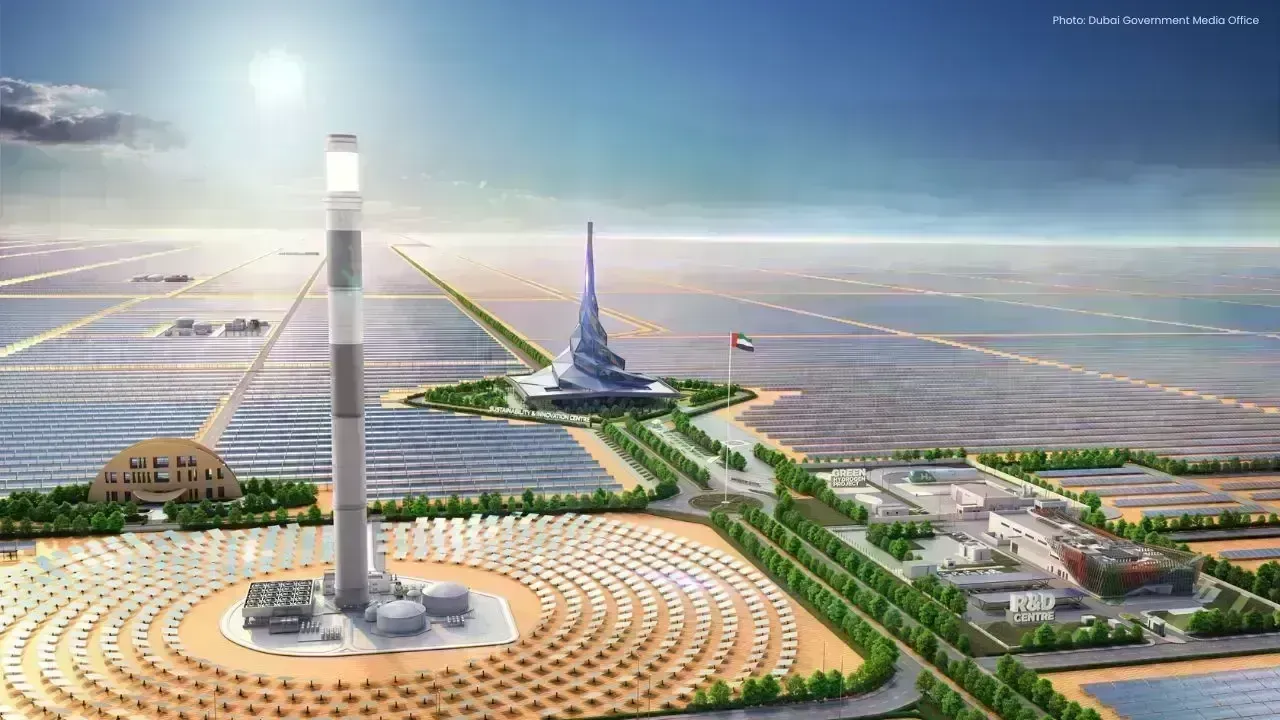
The Dubai Electricity and Water Authority (DEWA) has marked a significant milestone in Dubai’s clean energy endeavors by adding 1,000 megawatts (MW) of renewable energy capacity as it closed 2025. This addition is a crucial part of the sixth phase of the Mohammed bin Rashid Al Maktoum Solar Park, which aims for a total capacity of 1,800MW, showcasing Dubai’s commitment to expanding renewable energy initiatives adhering to top global standards.
HE Saeed Mohammed Al Tayer, DEWA's Managing Director and CEO, described the achievement as a reflection of DEWA’s dedication to the vision set by HH Sheikh Mohammed bin Rashid Al Maktoum, Vice President and Prime Minister of the UAE and Ruler of Dubai. He emphasized the need to hasten the transition to renewable energy, thereby bolstering Dubai’s position as a leader in sustainability and energy innovation worldwide.
Al Tayer further explained that this project is based on a systematic long-term plan involving phased implementation. This strategy increases the reliability of Dubai’s energy framework while addressing the growing demands spurred by economic growth, urbanization, and population expansion. He also highlighted that this milestone contributes to the UAE’s Net Zero 2050 Strategy and the Dubai Clean Energy Strategy 2050, which aims to achieve 100% clean energy production by mid-century.
According to DEWA, this advancement underscores Dubai’s role as a premier global model in the transition to a green economy driven by sustainability, innovation, and cutting-edge technology. It reflects the rapid pace at which DEWA is broadening its renewable energy initiatives, thereby elevating the share of clean energy in the overall energy mix and establishing an efficient, future-ready power generation framework.
Launched in 2012 by HH Sheikh Mohammed bin Rashid Al Maktoum, the Mohammed bin Rashid Al Maktoum Solar Park is a key strategic project supporting the UAE’s long-term clean energy aspirations. With this latest milestone, the solar park's total capacity now stands at 3,860MW.
By 2030, the overall capacity is anticipated to surpass 8,000MW, significantly higher than the initial goal of 5,000MW. This surge underscores Dubai’s accelerated shift towards clean energy. Once fully operational, the project is expected to reduce carbon emissions by over 8.5 million tonnes annually, reinforcing Dubai’s role as a global center for the green economy anchored in knowledge and innovation.
DEWA's push for clean energy advancement is set to persist. In 2025, bids for the seventh phase of the solar park were invited, indicating that further capacity additions are in progress. The remaining 800MW of the sixth phase is slated for completion and grid connection by the end of 2026.
With ongoing progress and substantial investments in renewable energy, Dubai is steadily moving towards its ultimate ambition of being among the world's leading cities in clean, sustainable, and future-ready energy production.






Mattel Revives Masters of the Universe Action Figures Ahead of Film Launch
Mattel is reintroducing Masters of the Universe figures in line with its upcoming film, tapping into

China Executes 11 Members of Criminal Clan Linked to Myanmar Scam
China has executed 11 criminals associated with the Ming family, known for major scams and human tra

US Issues Alarm to Iran as Military Forces Deploy in Gulf Region
With a significant military presence in the Gulf, Trump urges Iran to negotiate a nuclear deal or fa
Copper Prices Reach Unprecedented Highs Amid Geopolitical Turmoil
Copper prices soar to all-time highs as geopolitical tensions and a weakening dollar boost investor

New Zealand Secures First Win Against India, Triumph by 50 Runs
New Zealand won the 4th T20I against India by 50 runs in Vizag. Despite Dube's impressive 65, India