Post by : Raina Nasser
Photo: AP
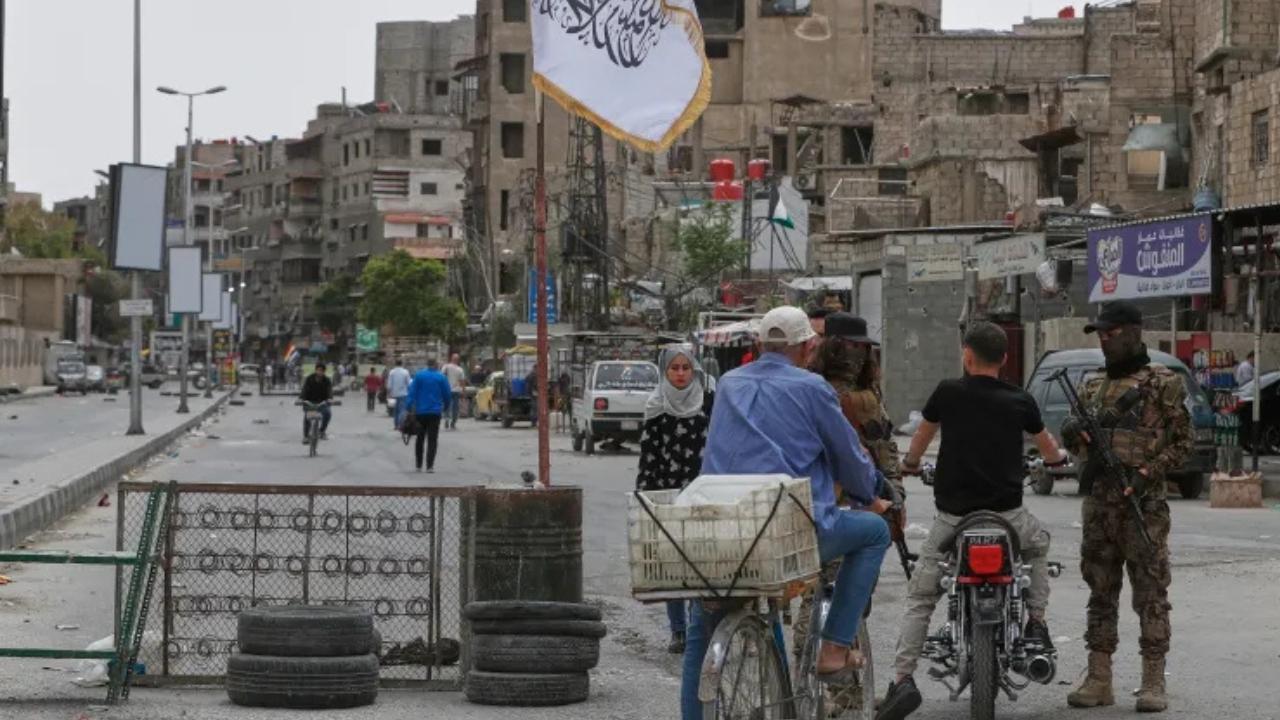
Syria’s southern province of Sweida witnessed one of its deadliest outbreaks of violence in recent months, as fierce clashes erupted between local militias and Bedouin tribal groups. Reports confirmed that at least 30 individuals lost their lives in violent confrontations that began early today and continued into the afternoon. The Syrian Interior Ministry acknowledged the deadly fighting and described it as a serious security challenge in a region that has experienced rising tensions.
Eyewitnesses described scenes of chaos in the streets of Sweida city, with automatic gunfire echoing across neighborhoods and black smoke rising from several locations. Security forces were deployed in an attempt to calm the situation but struggled to contain the violence. Residents said the clashes involved heavy weapons, including machine guns and rocket-propelled grenades, leaving several areas damaged.
The cause of the clashes appears to stem from long-standing disputes between local Druze militias and armed Bedouin groups. Sources in Sweida reported that the violence began after a dispute over control of checkpoints and local smuggling routes. These routes have been a source of tension in recent years, with various groups competing for influence in the absence of strong government control. Security analysts believe the recent flare-up is part of deeper economic and social grievances, with militias vying for control over territory and resources.
Sweida province, home to the country’s Druze minority, has remained under government control throughout much of Syria’s civil war but has faced increasing lawlessness. While the central government maintains a presence, local militias often manage day-to-day affairs. The security vacuum has allowed various armed factions to gain influence, leading to periodic clashes and growing instability.
According to local officials, government forces attempted to broker a ceasefire between the rival groups, but the effort collapsed within hours as fresh fighting broke out. Videos circulating from the region showed armed men patrolling streets, vehicles set on fire, and residents fleeing their neighborhoods for safety. Hospitals in Sweida were reportedly overwhelmed with casualties, while medical staff called for urgent supplies.
The Interior Ministry released a brief statement acknowledging the loss of life and called on all armed groups to stand down immediately. Authorities promised to restore order but admitted that the situation remained volatile. Military reinforcements were dispatched to key areas around Sweida city in an attempt to stabilize the situation, though sporadic gunfire was still reported during the afternoon.
Human rights organizations expressed concern about the rising civilian toll and called on all sides to respect humanitarian laws. The ongoing fighting has displaced many families, adding to the already challenging living conditions in southern Syria. Observers noted that economic hardship, high unemployment, and poor public services have contributed to the rising influence of armed groups in the region.
Local community leaders warned that unless economic and security reforms are introduced, Sweida could see more frequent and deadlier clashes. Some analysts also pointed to regional dynamics, explaining that southern Syria remains a sensitive area for both domestic and foreign actors. The proximity to Jordan and Israel means that any deterioration in security can have cross-border consequences.
International reactions have been limited, but some regional observers said the latest events in Sweida reflect the broader weakness of Syria’s central government in controlling its territories. The country’s long civil war has severely weakened state institutions, and many provinces, including Sweida, operate under a mix of local control and minimal government oversight.
The events in Sweida also highlight the complex nature of Syria’s post-war environment, where sectarian tensions, economic pressures, and local power struggles combine to produce dangerous instability. With little political progress on resolving the broader Syrian conflict, many fear that provinces like Sweida will continue to face recurring cycles of violence.
As of today evening, clashes in parts of Sweida have reportedly subsided, but tensions remain high. Authorities have announced the formation of a special security committee to investigate the incident and attempt reconciliation efforts between the warring groups. Whether this move will succeed in preventing further bloodshed remains uncertain, as local residents remain wary of a fragile peace.
Sweida’s recent violence serves as a reminder that Syria’s conflict is far from over, and localized unrest continues to threaten fragile stability. The international community continues to monitor developments, but immediate prospects for long-term peace in southern Syria appear slim. Many in Sweida hope for an end to the violence, but deep-rooted issues must be addressed to ensure lasting security.








Achieve Radiant Skin with This Simple Rice Flour Treatment
Transform your skincare routine! Discover how a rice flour mix can restore your skin's glow without

Meta Unveils Subscription Plans for Instagram, Facebook, and WhatsApp
Meta introduces new subscription plans for users of Instagram, Facebook, and WhatsApp, featuring enh

Suvarna Joy on Education Leadership, Resilience, and Building Purpose Through Adversity in the UAE
Suvarna Joy shares her journey of education leadership, motherhood, faith, and resilience within the

Anticipated Dates for UAE Eid Al Adha 2026 Unveiled by Astronomical Experts
Experts predict Eid Al Adha 2026 in the UAE to start on May 27, prompting early holiday planning amo

DAE Achieves Remarkable Growth in Q1 2026 With Record Revenue
Dubai Aerospace Enterprise announces impressive financial results for Q1 2026, reflecting a surge in

Price Increase for Sony PS5 in Southeast Asia Effective May 1
Sony announces a price increase for the PS5 across Southeast Asia starting May 1, 2026, impacting ga




