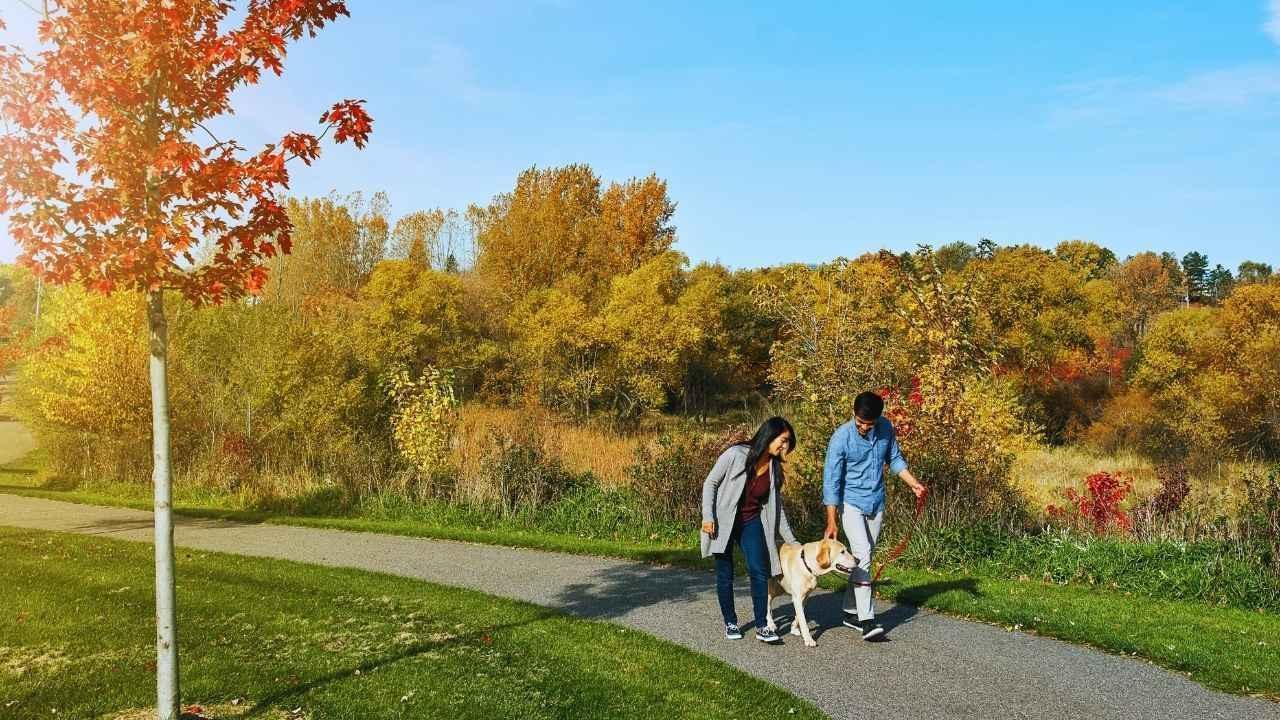
Post by : Anees Nasser
In an era defined by its constant hustle, one of the most straightforward activities—walking—is proving to be highly effective for mental health: it’s simply stepping outside. Once considered merely a leisurely activity or a mode of transportation, walking now plays a pivotal role in mental wellness across demographics. In 2025, it transcends its fitness label, evolving into a proactive approach to managing stress, anxiety, solitude, and the weariness brought on by the digital age.
As global awareness regarding mental health expands, the unassuming act of walking—calm, widely accessible, and free of cost—is emerging as an essential daily resource.
Daily stress levels have surged for numerous families. With climbing financial responsibilities, work-related issues, digital fatigue, and high stimulation surrounding us, individuals are feeling overwhelmed. Instead of seeking lengthy vacations or costly therapies, many are turning to simple daily actions for relief. Walking presents that opportunity without barriers.
The act provides mental breathing room, reducing overstimulation, extracting individuals from their screens and confined spaces, while maintaining a calm rhythm that soothes the mind effortlessly.
Thus, walking transforms into more than mere movement; it becomes a critical pause that is increasingly necessary.
Walking has gained substantial traction due to its ability to facilitate mental resetting. When one steps outside after hours spent indoors—be it working from home, household duties, or grappling with digital stress—the environmental shift swiftly alters their mental landscape. It acts as a much-needed break from managing complex thought processes.
Even brief interactions with nature—observing trees, people, or the sky—serve to divert the mind from repetitive anxiety or stress.
As conversations around mental health evolve, individuals are realizing that they don’t necessarily require extensive therapeutic methods; small, consistent actions can yield significant results.
Anxiety remains one of the prevailing mental health struggles today. The incessant influx of notifications, deadlines, and choices amplifies stress levels. By counteracting this, walking has emerged as an effective practice for calming the nervous system.
The steady rhythm of walking helps stabilize breathing, alleviating muscle tension and releasing pent-up stress. Outdoor walks, enhanced by fresh air and natural light, anchor the individual to their environment, facilitating a shift away from internal worries.
This grounding effect is why mental health professionals are increasingly advocating for regular, short walks as part of comprehensive anxiety management.
Today’s society is heavily screen-centric. Phones and laptops dominate our hours and contribute to digital burnout, eye strain, irritability, and sleep problems. Walking provides an escape from screen time without necessitating abrupt disconnection.
During a stroll, individuals naturally set aside their devices, granting their minds a respite from blue light and incessant notifications. This time of silence fosters improved focus and reduces overstimulation, enhancing productivity when they return.
In an age where the digital realm dictates so much, walking serves as a natural detox.
Many adults and youth face sleep challenges in today’s fast-paced world. Juggling busy schedules, mental restlessness, and nighttime device usage complicate relaxation. Regular walking has proven to be an effective method of enhancing sleep quality.
The physical activity fosters an internal rhythm, while exposure to sunlight—during morning or afternoon walks—stabilizes the body’s natural circadian cycle. Those who incorporate walking into their routines often experience quicker sleep onset, fewer night awakenings, and improved morning freshness.
Even an evening stroll can help ease the mind, smoothing the path to better sleep.
Frequent interaction with nature has been associated with mood enhancement, stress reduction, and emotional stability. However, not everyone has the luxury of easy access to nature-rich environments. Walking serves as an effective alternative, delivering small doses of nature into daily life.
A stroll through a green park, tree-adorned streets, or quiet lanes provides refreshing air and soothing sounds. While seemingly mundane, these experiences hold significant psychological benefits, leaving individuals feeling revitalized.
In urban areas where nature is scarce, walking becomes essential for connecting with the natural world.
Increasing urban loneliness affects many, from long-working individuals to students and isolated seniors. Walking serves to alleviate this solitude creatively.
A simple daily walk reintroduces individuals to their surroundings—neighbors, fellow walkers, pets, and local vendors. Even in the absence of direct dialogue, these interactions foster a sense of community.
Some choose to form walking groups or share walks with friends, transforming it into a positive social ritual that bolsters mental health.
While meditation is highly endorsed for mental wellness, many find it challenging to remain still or maintain focus. Walking presents the same advantages without the associated pressures.
The consistent rhythm of walking offers a moving meditation experience. Participants can tune into their breath, acknowledge natural sounds, or focus on their stride, gently calming scattered thoughts.
Unlike seated meditation, walking meditation feels organic, catering to those uncomfortable with prolonged stillness.
Many individuals report that establishing solutions often occurs while walking. The activity relaxes the mind, allowing for more creative thought processes. Without the pressure of a ticking clock, information can be processed with greater clarity.
When feeling stuck or overwhelmed, a simple walk may offer inspiration, making it a habit for professionals, students, and creatives eager to refresh their minds.
Today’s schedules are unpredictable. Professional commitments often blur into personal life, leading to chaotic lifestyles. Here, walking emerges as a grounding element.
It acts as a consistent anchor—something to rely upon daily, despite a shifting schedule. Regular walkers often enjoy enhanced discipline in diverse aspects of life, including nutrition, rest, and maintaining good habits.
Such stability is crucial for mental wellbeing during turbulent times.
Walking’s greatest strength lies in its accessibility. No equipment, funds, specialized training, or fitness levels are required. People of all ages—from children to seniors—can partake in this activity.
This inclusivity has solidified walking as a global mental health cornerstone. Individuals weave it into their daily activities—post-meals, pre-work, during breaks, or early mornings—demonstrating its universal appeal.
Such widespread adaptability is why walking is increasingly viewed as a modern wellness vital.
Unlike high-intensity workout plans that may quickly fall by the wayside, walking offers a sustainable practice. It doesn’t tax the body, needs no motivational boost, and doesn’t clash with everyday responsibilities. Its constancy renders it remarkably effective.
Individuals can walk in all conditions—rain or shine, summer or winter, alone or accompanied. This adaptability molds it into a habit that endures throughout life’s various seasons, reinforcing its long-term mental health advantages.
Cities are increasingly embracing walking-friendly infrastructure, developing pedestrian pathways, green spaces, and car-free zones to promote a culture of walking. The global shift towards healthier cityscapes has resulted in improved walkways, pedestrian-friendly areas, and safe routes for night strolls.
As public spaces become more conducive to walking, a rising number of individuals are motivated to embrace this activity routinely. Such urban planning trends bolster the focus on walking as an instrument for improved mental health.
As mental health remains a focal point in society, daily walks are poised to be a fundamental strategy for those seeking equilibrium. They offer a unique blend of simplicity, accessibility, consistency, and emotional relief.
Walking can be tailored to meet a variety of needs—stress relief, quiet time, stimulation, routine, or simply fresh air. This versatile activity seamlessly integrates into daily life.
As we anticipate future challenges involving heightened digital interactions, demanding workloads, and intensified emotional pressures, daily walks will persist as a subtle yet powerful anchor.
This article is for informational and lifestyle purposes only and is not intended as medical advice. Please consult a professional before making significant changes to your physical activity routine.










Anticipated Dates for UAE Eid Al Adha 2026 Unveiled by Astronomical Experts
Experts predict Eid Al Adha 2026 in the UAE to start on May 27, prompting early holiday planning amo

DAE Achieves Remarkable Growth in Q1 2026 With Record Revenue
Dubai Aerospace Enterprise announces impressive financial results for Q1 2026, reflecting a surge in

Price Increase for Sony PS5 in Southeast Asia Effective May 1
Sony announces a price increase for the PS5 across Southeast Asia starting May 1, 2026, impacting ga

Potential ‘Super El Niño’ in 2026: Understanding the Climate Risks
Could a Super El Niño emerge in 2026? Discover its implications and potential global climate impacts

Global Energy Crisis Intensifies: Markets React to Oil Supply Challenges
Markets are on edge as oil disruptions escalate, influencing prices and economic stability. Explore

Must-See Tourist Spots in London You Can't Overlook
Explore London's essential attractions, from royal landmarks to vibrant markets, ensuring an unforge




