Post by : Raina Nasser
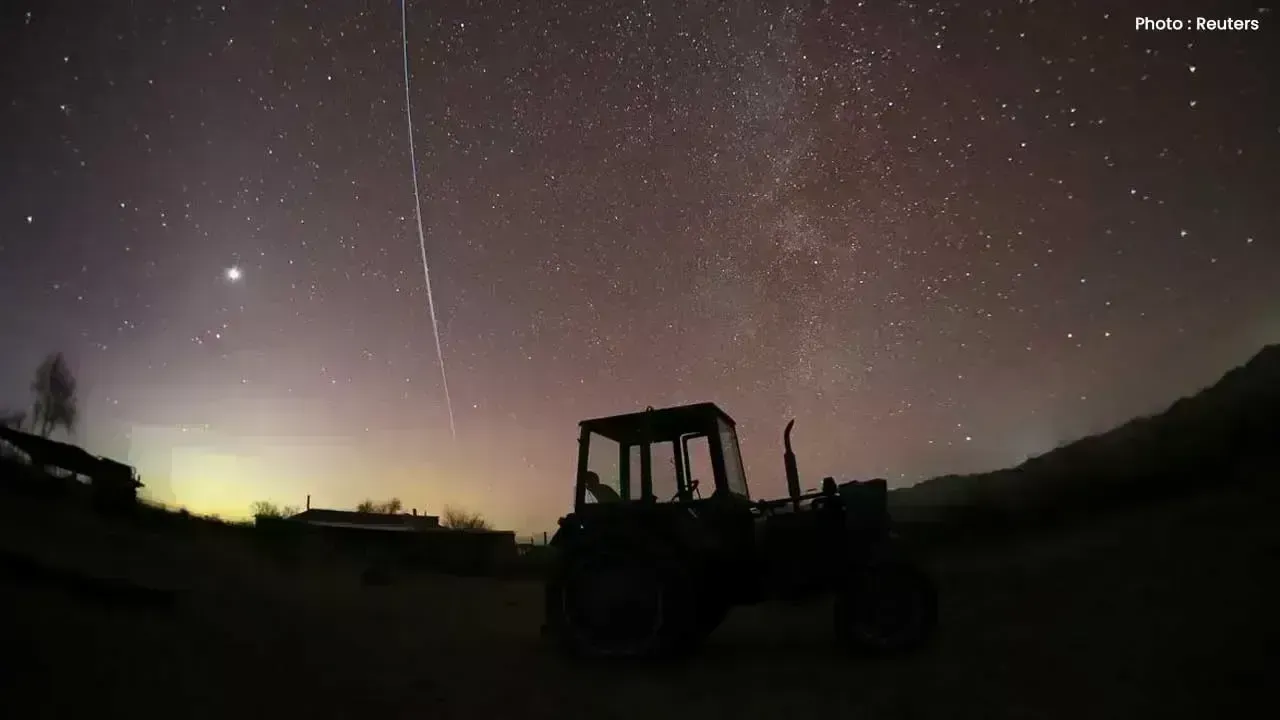
Recent intelligence findings indicate that Russia may be developing a perilous weapon aimed at Starlink satellites orbiting the Earth. Starlink, a vast satellite network, provides critical internet access globally and is heavily utilized by Ukrainian forces during the ongoing conflict.
Intelligence agencies from two NATO members have labeled this weapon as a “zone-effect” system. The mechanism involves deploying hundreds of thousands of minuscule metal pellets into space. This would lead the pellets to disperse throughout Starlink’s orbital path, significantly impairing or disabling numerous satellites concurrently.
These pellets are remarkably tiny, measuring just a few millimeters in diameter, making them challenging to track. This size factor complicates the swift identification of the perpetrator behind any such attack.
Experts assert that a Russia Starlink strike could pose severe repercussions. The pellets would not exclusively target Starlink satellites but could inadvertently harm other nations’ satellites, including those of Russia and China, inducing chaos in outer space and disturbing global communications, defense, and navigational systems.
The functionality of Starlink satellites is vital for Ukraine, facilitating military communication, precise weapon guidance, and maintaining connectivity for civilians when traditional networks are compromised. Consequently, Russia views Starlink as a significant adversarial asset.
Earlier warnings from Russian officials highlighted that satellites aiding Ukraine could be targeted, and Russia has claimed to have missile technology capable of striking low-orbit satellites.
Differing from traditional satellite offensives that employ missiles, this innovative approach aims to incapacitate multiple satellites simultaneously. Reports suggest that these pellets might be launched from small satellites that are not currently in space.
Experts in space technology caution that managing such a weapon could prove challenging. Once released, the pellets could quickly disperse, damaging any satellite within their operational path. Over time, this debris might descend into lower orbits, posing threats to space stations.
Both the International Space Station and China’s space outpost exist below Starlink’s orbit and could potentially be endangered by debris dispersion.
While some experts speculate that Russia might not deploy such a weapon due to the risk of damaging its own space capabilities, others contend that the mere existence of this threat could leverage psychological fear against rivals without the need for actual engagement.
Currently, there is no definitive timeline or confirmation regarding Russia's ability to activate this system. Intelligence sources indicate that the initiative remains under wraps and continues to evolve.
The notion of a Russia Starlink attack has incited profound global apprehension, as the realm of space is increasingly integral to contemporary life. Significant orbital disruptions could have ramifications for countries far removed from the conflict.










Mattel Revives Masters of the Universe Action Figures Ahead of Film Launch
Mattel is reintroducing Masters of the Universe figures in line with its upcoming film, tapping into

China Executes 11 Members of Criminal Clan Linked to Myanmar Scam
China has executed 11 criminals associated with the Ming family, known for major scams and human tra

US Issues Alarm to Iran as Military Forces Deploy in Gulf Region
With a significant military presence in the Gulf, Trump urges Iran to negotiate a nuclear deal or fa

Copper Prices Reach Unprecedented Highs Amid Geopolitical Turmoil
Copper prices soar to all-time highs as geopolitical tensions and a weakening dollar boost investor

New Zealand Secures First Win Against India, Triumph by 50 Runs
New Zealand won the 4th T20I against India by 50 runs in Vizag. Despite Dube's impressive 65, India