Post by : Saif Nasser
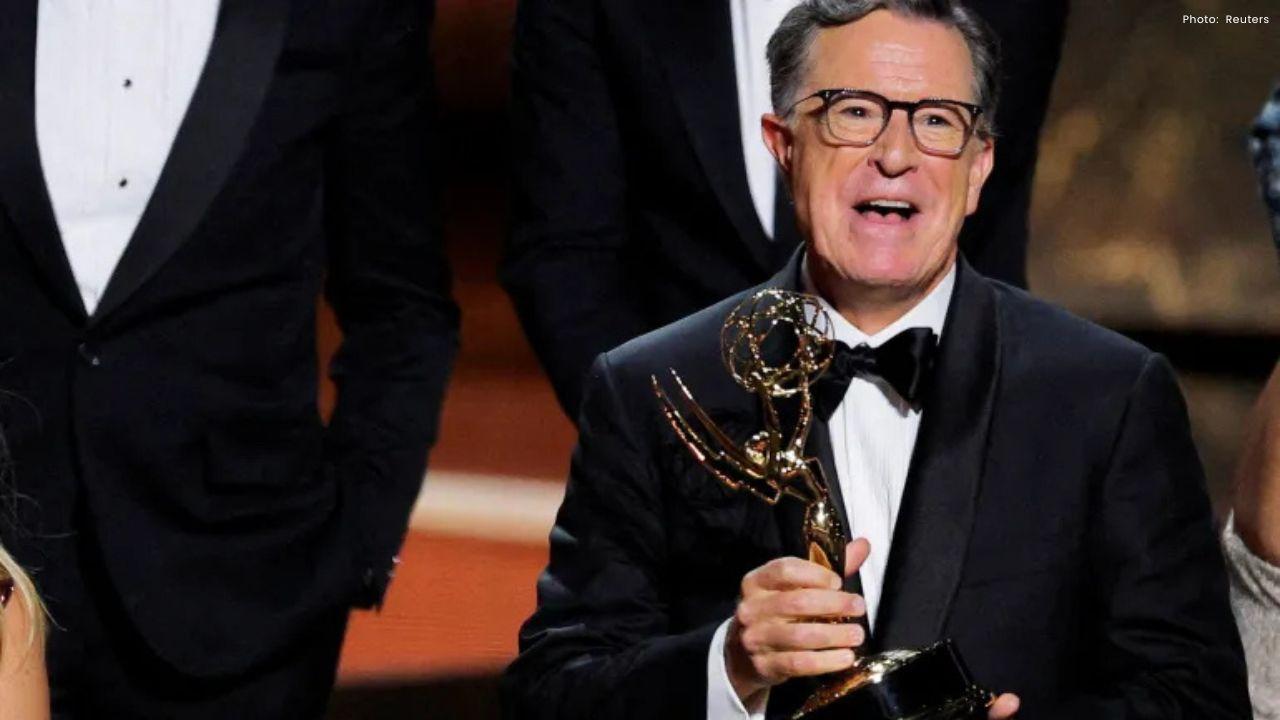
A new dispute between a late-night host and his television network has started a wider discussion about politics and media freedom in the United States. Comedian and host Stephen Colbert said his network, CBS, did not allow him to air an interview with a Texas Senate candidate. He told viewers that the decision came from network lawyers who were worried about election broadcast rules.
According to Colbert, he had recorded an interview with Texas state representative James Talarico, who is running for the US Senate. The interview was meant to appear on his late-night show. But before it could be broadcast, Colbert said he was informed that it could not go on air.
He explained that the legal team warned the show about possible problems with federal election law. These rules are overseen by the Federal Communications Commission, also known as the FCC. One of the key rules is often called the “equal time” rule. It says that if a broadcast station gives airtime to one political candidate, it may have to offer the same chance to other candidates in the same race.
Colbert said he was disappointed and surprised by the move. He told his audience that talk shows have usually been treated as entertainment and news commentary, not campaign platforms. Because of that, they were often not forced to give equal time to every candidate. He suggested that the network was being extra careful because of recent changes in how regulators look at political appearances on entertainment programs.
The network responded with a different explanation. CBS said it did not fully ban the interview but raised legal concerns about airing it during an active election period. The company said it offered other options that would follow the rules. The interview was later shared online instead of being shown on the main television broadcast.
This detail is important. Federal broadcast rules apply to over-the-air television and radio, but they do not apply in the same way to internet platforms. By placing the interview online, the show could still share the conversation without breaking broadcast rules. Many viewers were still able to watch it there.
From an editorial point of view, this case shows a growing tension between old media laws and modern media reality. The equal time rule was created many years ago when most people got their news from a small number of TV and radio stations. Today, people watch clips online, follow social media, and stream shows on demand. The media world has changed, but some rules are still the same.
Supporters of strict enforcement say the rule protects fairness in elections. They argue that broadcasters should not give one candidate an advantage by offering free airtime while others get none. They believe equal access helps protect democracy.
Critics, however, say applying the rule to comedy and late-night talk shows can limit open discussion. They argue that hosts should be free to interview public figures, including candidates, without fear that it will trigger legal trouble. They also warn that networks may choose to avoid political guests completely, which could reduce public debate instead of improving fairness.
Another concern raised by media observers is self-censorship. When networks fear penalties or complaints, they may block content even when the law is not fully clear. That can lead to fewer political conversations on major platforms. In such cases, the public may miss chances to hear directly from candidates in less formal settings.
This situation also shows the difference between television power and internet freedom. When content moves online, it often escapes older broadcast limits. That shift is changing how political messages reach voters. Candidates and media figures now rely more on digital channels when traditional outlets become restricted.
In the end, the blocked interview has become bigger than one show or one candidate. It has reopened a national discussion about how to balance fair elections, free speech, and media independence. As election seasons grow more intense, similar disputes are likely to appear again.






Reopening of the Strait of Hormuz: New Regulations to Impact Global Trade
Iran reopens the strategic Strait of Hormuz with new regulations affecting oil transport and global

Top 10 Must-See Attractions in NYC for First-Time Explorers
Discover essential experiences for first-time visitors to NYC, including attractions, culture, and i

Starbucks Engages Boyu Capital for Major Chinese Expansion
Starbucks teams up with Boyu Capital, selling a majority stake to boost growth and adapt to the Chin

Three Individuals Charged in Massive Meth Trafficking Case in Malaysia
In Malaysia, a married couple and another suspect are charged with trafficking 510kg of meth, facing

Singapore Police Revisit Geylang Murder Scene with Suspect
In Geylang, police return a murder suspect to the scene of a crime involving the fatal stabbing of a