Post by : Saif Nasser
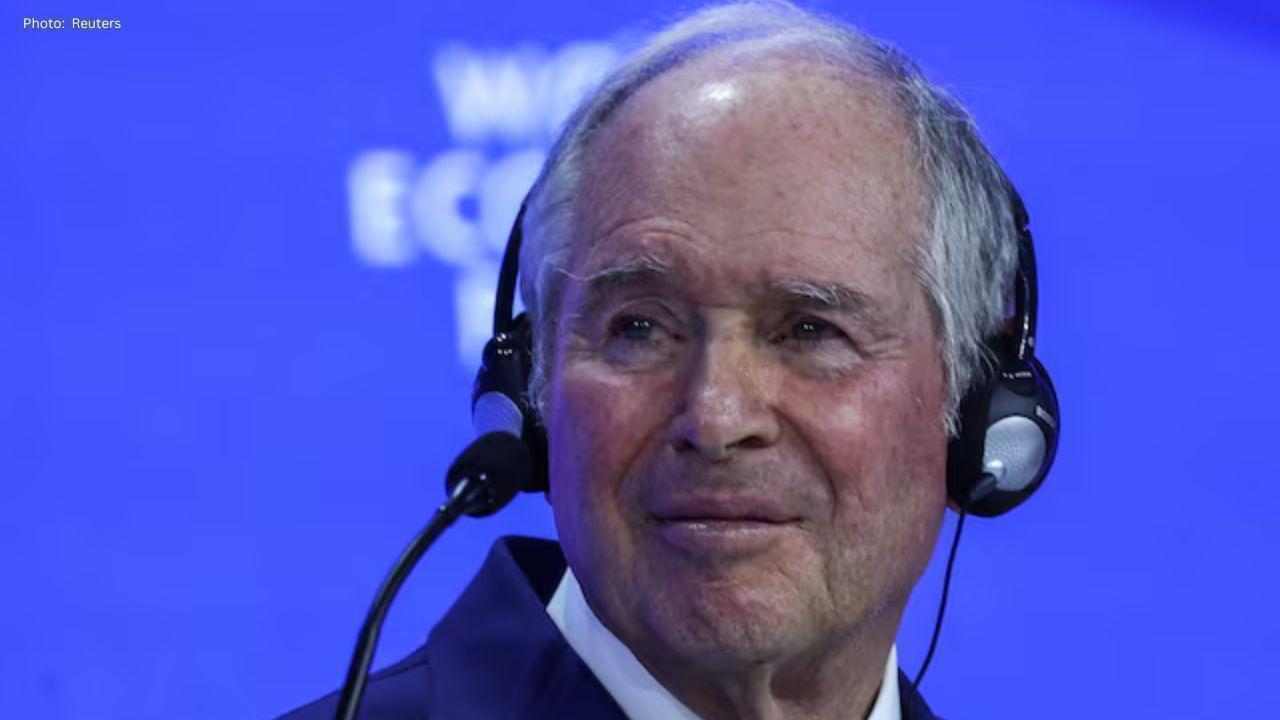
Stephen Schwarzman, the chief executive of Blackstone, has pushed back against growing fears that private credit is creating new risks in the financial system. Speaking during Abu Dhabi Finance Week, he said that recent bankruptcies in the auto sector were wrongly blamed on private credit.
Private credit is a type of lending where companies borrow money from private investment firms instead of traditional banks. This market has grown quickly in recent years, attracting large amounts of money from big institutional investors. Because of this fast growth, many people have started to worry that private credit could become a weak point in the global financial system.
Several high profile bankruptcies in recent months increased those concerns. The collapse of auto parts maker First Brands and subprime auto lender Tricolor caused some investors to lose confidence. These failures made some debt investors reduce their exposure to auto and consumer lending, and slowed the strong rally that credit markets had been enjoying.
Schwarzman strongly disagreed with the idea that private credit caused these problems. He explained that the troubled deals were not led by private lenders. According to him, the loans behind these bankruptcies were handled by traditional banks. He said the deals were researched, funded, and sold by banks, while private credit lenders were mostly not involved.
He also compared how much risk banks and private credit firms usually take. Schwarzman said banks often operate with very high leverage, sometimes borrowing ten times more than their own capital. In contrast, private credit firms usually borrow much less, around one and a half times their capital. In his view, this makes private credit more conservative and safer than traditional banking.
This debate matters because private credit is now a major part of the global financial system. As banks face more regulation, many companies have turned to private lenders for funding. This has made private credit an important source of money for growing businesses, but also a focus of concern for regulators and market watchers.
Some analysts believe the truth lies in between. While Schwarzman is right that banks have played a role in many risky deals, the rapid growth of private credit has still created areas that need closer monitoring. As more money flows into this market, transparency and proper risk checks become even more important.
The recent bankruptcies are a warning sign that not all parts of the credit market are healthy. Whether the risk sits more with banks or private lenders, the impact is felt across the system, especially by investors, workers, and companies connected to these firms.
In conclusion, Schwarzman message was clear: private credit should not be treated as the main culprit for recent failures. He argued that it is, in many cases, a more stable and careful source of lending. Still, as the financial world becomes more complex, both banks and private credit firms will need to prove that they can manage risks responsibly and protect the wider economy.
Reporting by Utkarsh Shetti and Tala Ramadan in Abu Dhabi; Editing by Alexander Smith










Reopening of the Strait of Hormuz: New Regulations to Impact Global Trade
Iran reopens the strategic Strait of Hormuz with new regulations affecting oil transport and global

Top 10 Must-See Attractions in NYC for First-Time Explorers
Discover essential experiences for first-time visitors to NYC, including attractions, culture, and i

Starbucks Engages Boyu Capital for Major Chinese Expansion
Starbucks teams up with Boyu Capital, selling a majority stake to boost growth and adapt to the Chin

Three Individuals Charged in Massive Meth Trafficking Case in Malaysia
In Malaysia, a married couple and another suspect are charged with trafficking 510kg of meth, facing

Singapore Police Revisit Geylang Murder Scene with Suspect
In Geylang, police return a murder suspect to the scene of a crime involving the fatal stabbing of a