Post by : Bianca Suleiman
Once limited in options, early adopters of electric vehicles (EVs) in Peru have witnessed a significant transformation. Back in 2019, Luis Zwiebach, a green-energy pioneer, found himself flying thousands of miles just to test a Tesla and even had to create a makeshift "grounding fork" to charge it. Fast forward to today, and numerous showrooms in Lima now feature a variety of affordable Chinese electric cars, marking a noticeable shift across South America.
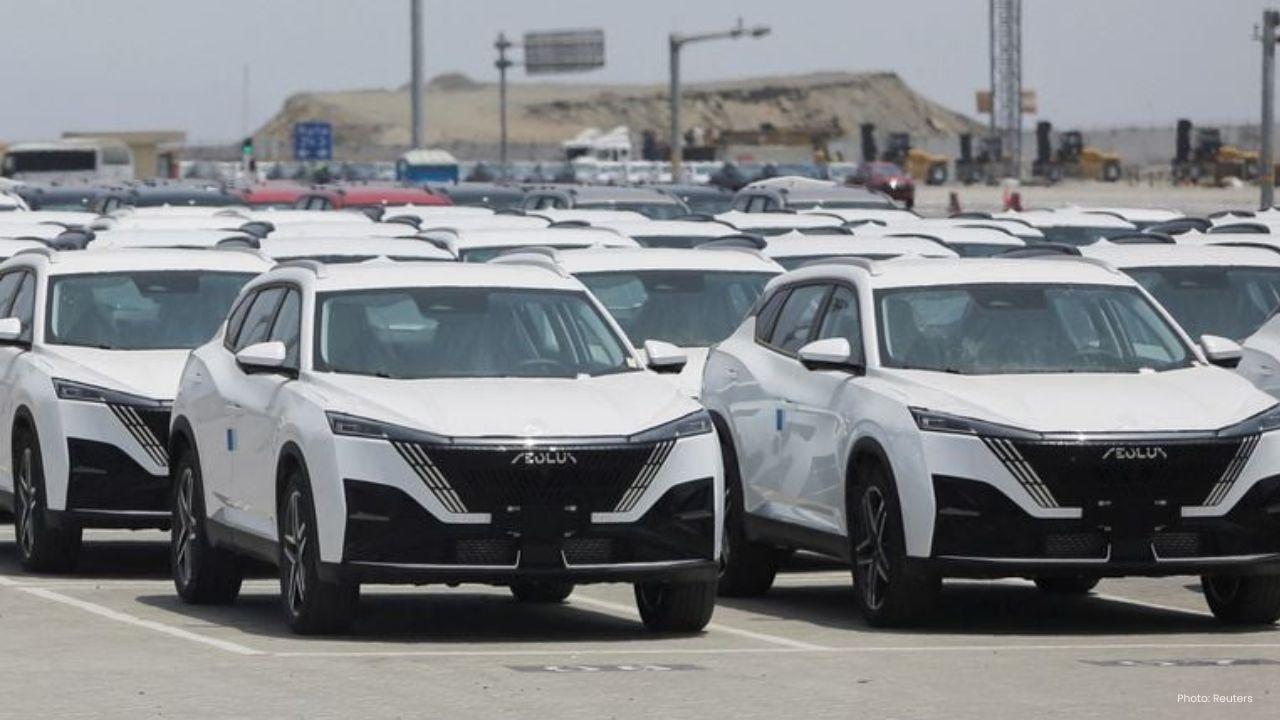
The most notable change is attributed to the unveiling of Peru’s Chinese-operated Chancay megaport. The enhanced trans-Pacific shipping routes coupled with an influx of new arrivals have enabled major Chinese manufacturers like BYD, Geely, Chery, and GWM to firmly establish their presence. Their vehicles are priced nearly 40% less than high-end alternatives, attracting buyers who previously hesitated to make the switch to electric.
The momentum for EVs is accelerating in the region. For instance, Peru celebrated a year-on-year growth of 44%, with hybrid and electric vehicle sales reaching 7,256 units in just nine months. Chinese brands are aggressively expanding, opening numerous showrooms and unveiling new models each month. The docks at Chancay are teeming with imported cars, with each vessel transporting up to 1,200 vehicles—which often continue their journey to Chile, Ecuador, and Colombia, casting Peru as the distribution center.
A similar trend is observable throughout South America. Chile’s EV market share surpassed 10% this year, while Uruguay's soared to 28% in Q3. Brazilian figures are also robust, aided by significant import volumes. Notably, Chinese brands have doubled their market share in Uruguay since 2023, with select models starting as low as $19,000—well below the prices of traditional competitors.
Brazil stands out as the region's largest vehicle market and has become a vital strategic hub. Chinese companies are making considerable investments in new production plants, benefiting from a brief period of reduced EV tariffs. For instance, BYD has commenced assembly lines for electric vehicles at a former Ford site, and GWM is operational at a revamped Mercedes-Benz factory. These locations aim to begin exports in the next two years, bolstering regional supply chains.
However, obstacles persist. The vast distances of South America and inconsistent charging infrastructure pose challenges for potential EV buyers. Zwiebach, who now provides charging solutions and solar installations in Lima and Arequipa, acknowledges that traversing the entirety of Peru remains complex. Nevertheless, the transition is already underway. With lower operational costs, growing infrastructure, and an influx of competitively priced Chinese models, South America is on the brink of a new automotive epoch—one shipment at a time.









DAE Achieves Remarkable Growth in Q1 2026 With Record Revenue
Dubai Aerospace Enterprise announces impressive financial results for Q1 2026, reflecting a surge in

Price Increase for Sony PS5 in Southeast Asia Effective May 1
Sony announces a price increase for the PS5 across Southeast Asia starting May 1, 2026, impacting ga

Potential ‘Super El Niño’ in 2026: Understanding the Climate Risks
Could a Super El Niño emerge in 2026? Discover its implications and potential global climate impacts

Global Energy Crisis Intensifies: Markets React to Oil Supply Challenges
Markets are on edge as oil disruptions escalate, influencing prices and economic stability. Explore

Must-See Tourist Spots in London You Can't Overlook
Explore London's essential attractions, from royal landmarks to vibrant markets, ensuring an unforge

Ultimate Guide to Snagging Cheap Flights in 2026
Unlock the secrets to booking affordable flights in 2026 with insightful tips and strategies tailore