Post by : Saif Nasser
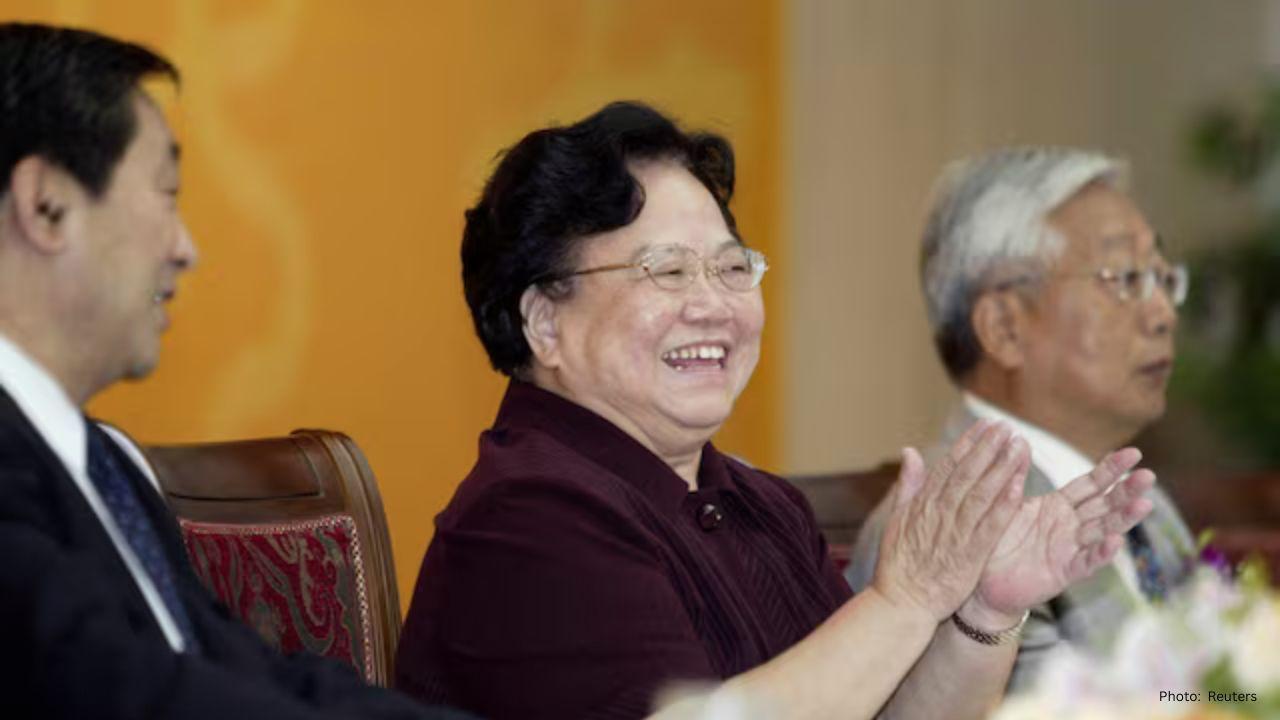
The death of Peng Peiyun, a former senior official who once led China’s one-child policy, has triggered a wave of anger and debate on Chinese social media. Instead of praise, many people used online platforms to criticise the policy and its lasting impact on families and society.
Peng Peiyun served as head of China’s Family Planning Commission from 1988 to 1998. During that time, the one-child policy was strictly enforced across the country. State media described her as an “outstanding leader” who worked for women and children. However, public reaction online told a very different story.
On Weibo, China’s popular social media site, users shared painful memories linked to the policy. Many posts mentioned forced abortions, sterilisation, and families being torn apart. Some users wrote emotional messages about children who were never born, blaming the policy for deep personal loss.
China introduced the one-child policy in 1980 because leaders feared that fast population growth would strain food, jobs, and resources. For more than three decades, most couples were allowed to have only one child. Local officials often enforced the rule harshly, especially in rural areas.
In the countryside, large families were once common, as parents depended on children for support in old age. Sons were especially valued, which led to the neglect of baby girls and, in some cases, gender-based abortions. These practices created a serious imbalance between men and women that still affects society today.
Many social media users now say the policy lasted too long. Some argued that if it had ended earlier, China would not be facing such a sharp population decline. China’s population fell below India’s in 2023 and dropped again last year to about 1.39 billion. Experts warn the decline will continue and may speed up in the coming years.
In later years, Peng herself acknowledged that the policy should be relaxed. China officially ended the one-child rule in 2015 and later allowed couples to have two, and then three, children. Today, the government is trying to encourage births by offering childcare support, longer maternity leave, and tax benefits.
Despite these efforts, many young couples are choosing not to have children due to high living costs, job pressure, and housing prices. At the same time, China’s population is aging fast. Fewer workers and more elderly people are raising concerns about economic growth, pensions, and healthcare costs.
The strong reaction to Peng Peiyun’s death shows how deeply the one-child policy still affects Chinese society. For many families, it remains a painful chapter that continues to shape the country’s future.









Mattel Revives Masters of the Universe Action Figures Ahead of Film Launch
Mattel is reintroducing Masters of the Universe figures in line with its upcoming film, tapping into

China Executes 11 Members of Criminal Clan Linked to Myanmar Scam
China has executed 11 criminals associated with the Ming family, known for major scams and human tra

US Issues Alarm to Iran as Military Forces Deploy in Gulf Region
With a significant military presence in the Gulf, Trump urges Iran to negotiate a nuclear deal or fa

Copper Prices Reach Unprecedented Highs Amid Geopolitical Turmoil
Copper prices soar to all-time highs as geopolitical tensions and a weakening dollar boost investor

New Zealand Secures First Win Against India, Triumph by 50 Runs
New Zealand won the 4th T20I against India by 50 runs in Vizag. Despite Dube's impressive 65, India