Post by : Monika
Photo: Reuters
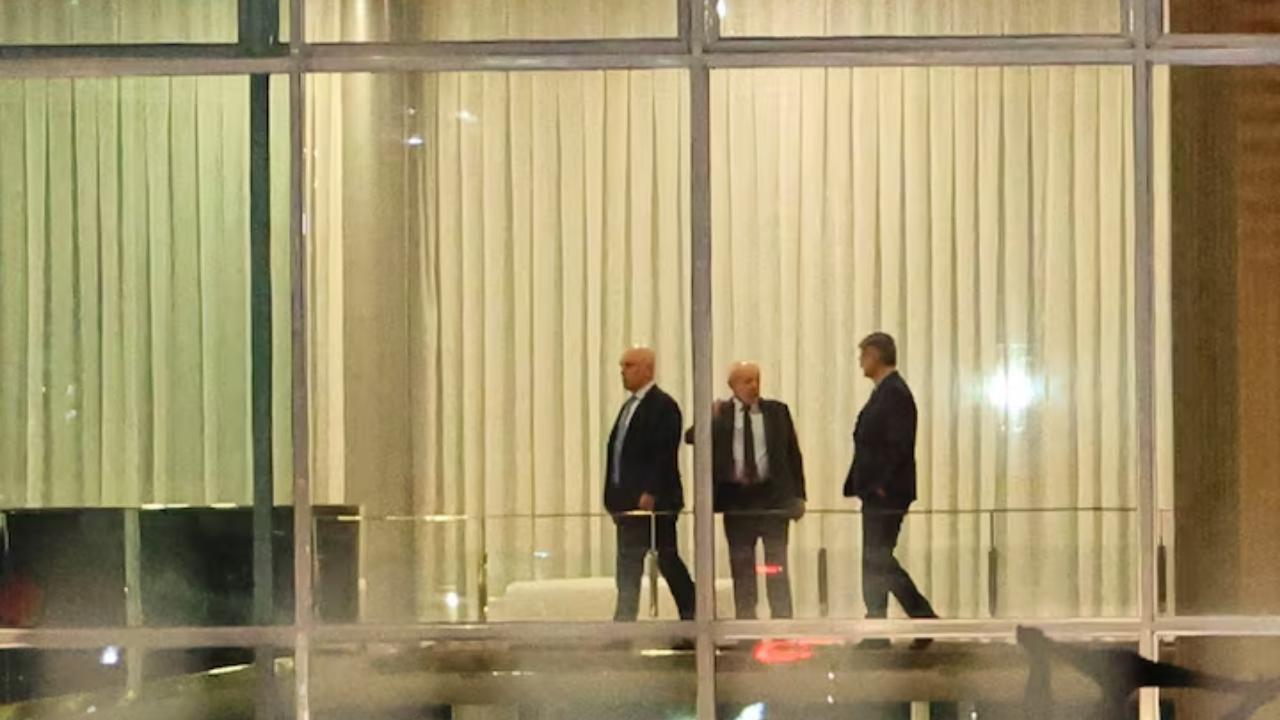
Banks in Brazil are facing a complicated situation after the United States announced sanctions against one of the country’s most powerful judges. The decision has caused confusion and worry in Brazil’s banking sector, as financial institutions try to understand what they are allowed to do under the new restrictions.
The judge at the center of this situation is Alexandre de Moraes, a Supreme Court justice in Brazil. He is currently overseeing the criminal case against former Brazilian President Jair Bolsonaro.
Because of his role in the case, Moraes is now being targeted by the U.S. under a law called the Global Magnitsky Act. This law allows the U.S. to punish foreign leaders and officials who are accused of corruption or violating human rights.
These recent events have created a lot of questions for banks in Brazil. They are now trying to understand how the sanctions might affect the way they do business—both inside Brazil and when working with companies or systems connected to the United States.
What Happened?
On July 30, 2025, former U.S. President Donald Trump announced that Justice Alexandre de Moraes was being sanctioned. The action was taken using the Global Magnitsky Act. This law lets the U.S. block the property of any foreign person found responsible for serious abuses. Trump’s administration claims that Moraes allowed unfair arrests and restricted free speech while leading the trial against Bolsonaro.
As part of the sanctions, Moraes had his U.S. visa canceled. His bank accounts and any property he may have in the U.S. were frozen, although Brazil’s Supreme Court later said he does not own anything in the U.S. Still, the action has far-reaching effects, even if he has no assets in America.
In addition to the sanctions, Trump also announced a major economic move against Brazil. He signed a new order to impose up to 50% tariffs on many goods being imported from Brazil. He claimed this was partly because of the treatment of Bolsonaro and the larger political issues happening in Brazil’s court system.
What These Sanctions Mean
The sanctions stop any American business or person from working with Justice Moraes. This includes U.S. companies, banks, and even global financial systems that use U.S. infrastructure. For example, major credit card companies like Visa and Mastercard are based in the U.S. and must follow these rules.
Even though Moraes doesn’t have any direct connection to the U.S. banking system, his name is now marked in global systems as someone under U.S. sanctions. That means banks in other countries—especially Brazil—must be very careful when doing any business that could involve U.S. systems or companies.
Why Banks in Brazil Are Worried
Brazilian banks are now in a difficult spot. Many of their systems connect to global financial networks, especially when they handle transactions in U.S. dollars. Even deals that are processed inside Brazil might pass through systems based in the U.S. That’s why banks are scrambling to understand what the sanctions mean for their daily work.
Local transactions that happen in Brazil’s own currency—the real—seem to be safe for now. But any banking deal that involves U.S. dollars, foreign currency exchanges, or international transfers could cause problems. These types of transactions may involve U.S. companies or software and could fall under U.S. laws.
Some banks, like Bradesco, one of the biggest in Brazil, have already hired law firms to guide them. They are asking whether they need to block certain accounts or stop specific types of transactions that involve Justice Moraes.
A source from another top bank said that they believe regular Brazilian currency transactions are fine, but foreign currency deals might carry legal risks. However, since Brazil’s central bank has not given any official advice yet, all banks are acting cautiously.
Political Response in Brazil
Brazil’s leaders have spoken out strongly against the sanctions. President Luiz Inácio Lula da Silva said that the U.S. actions were unacceptable. He called them interference in Brazil’s own legal system and warned that such actions damage the country’s independence.
Vice President Geraldo Alckmin also criticized the move, saying that the Global Magnitsky Act should not be used to punish judges who are simply doing their job. He stressed that the rule of law in Brazil must be respected.
Brazil’s Supreme Court made a public statement too. It said that the court would continue to follow the country’s constitution and legal rules, no matter what outside pressure came from foreign countries.
On the other hand, Bolsonaro’s supporters praised the U.S. sanctions. Eduardo Bolsonaro, the former president’s son and a current congressman, said that these penalties show that backing Moraes is now a dangerous and expensive decision. He suggested that the U.S. is watching closely what happens with his father’s trial.
What Banks Are Trying to Figure Out
Banks in Brazil are mainly focused on three big questions:
Are local currency transactions safe?
Most banks think that Brazilian real (BRL) transactions are okay for now. These are not directly connected to U.S. systems.
What about U.S. dollar and international deals?
This is where the concern lies. Any transaction that goes through the U.S., uses U.S.-based payment systems, or involves U.S. companies could be risky.
Will Moraes be blocked from using certain services?
Since credit card systems like Visa and Mastercard are American, it’s possible that Moraes could lose access to their services—even within Brazil.
Banks are seeking legal help to know how far they need to go. Some are reviewing their accounts to see if Moraes has any ties to their financial products or services. They are also trying to understand if they need to block his use of cards, accounts, or foreign transfers.
No Help Yet from Brazil’s Central Bank
So far, the Central Bank of Brazil has not given any official statement about the situation. This lack of guidance is making banks even more cautious. Without clear rules, financial institutions are choosing to act carefully rather than risk breaking any international laws.
Many are waiting for legal advice to become more specific. If the central bank finally releases instructions, banks will likely follow them quickly to avoid making mistakes.
What Might Happen Next
In the coming weeks, there will likely be more legal discussions. Banks will continue asking questions and adjusting their policies. If more Brazilian officials are sanctioned, the issue could grow even bigger.
On the political side, these sanctions have already increased tension between Brazil and the United States. President Lula may take steps to respond, especially if he sees this as a threat to his country’s independence or legal system.
This case is also likely to affect how other countries view U.S. sanctions. If a judge like Moraes—who holds no assets in the U.S.—can still be targeted, then others around the world might worry that they too could be affected by American laws.
For Brazil’s banks, the big challenge now is finding the right balance. They must follow Brazil’s laws while making sure they don’t break any U.S. rules either. This careful balancing act shows just how connected global finance has become—and how politics can quickly become a problem for money systems everywhere.
This situation is not just about one judge or one court case. It shows how powerful U.S. rules can be, even in other countries. Brazilian banks, which once felt safe inside their own system, now have to look across borders to make sure they’re not caught in a conflict that has gone international. How they handle it could set a model for how banks around the world deal with future political and legal fights.

DAE Achieves Remarkable Growth in Q1 2026 With Record Revenue
Dubai Aerospace Enterprise announces impressive financial results for Q1 2026, reflecting a surge in

Price Increase for Sony PS5 in Southeast Asia Effective May 1
Sony announces a price increase for the PS5 across Southeast Asia starting May 1, 2026, impacting ga

Potential ‘Super El Niño’ in 2026: Understanding the Climate Risks
Could a Super El Niño emerge in 2026? Discover its implications and potential global climate impacts

Global Energy Crisis Intensifies: Markets React to Oil Supply Challenges
Markets are on edge as oil disruptions escalate, influencing prices and economic stability. Explore

Must-See Tourist Spots in London You Can't Overlook
Explore London's essential attractions, from royal landmarks to vibrant markets, ensuring an unforge

Ultimate Guide to Snagging Cheap Flights in 2026
Unlock the secrets to booking affordable flights in 2026 with insightful tips and strategies tailore




