Post by : Saif Nasser
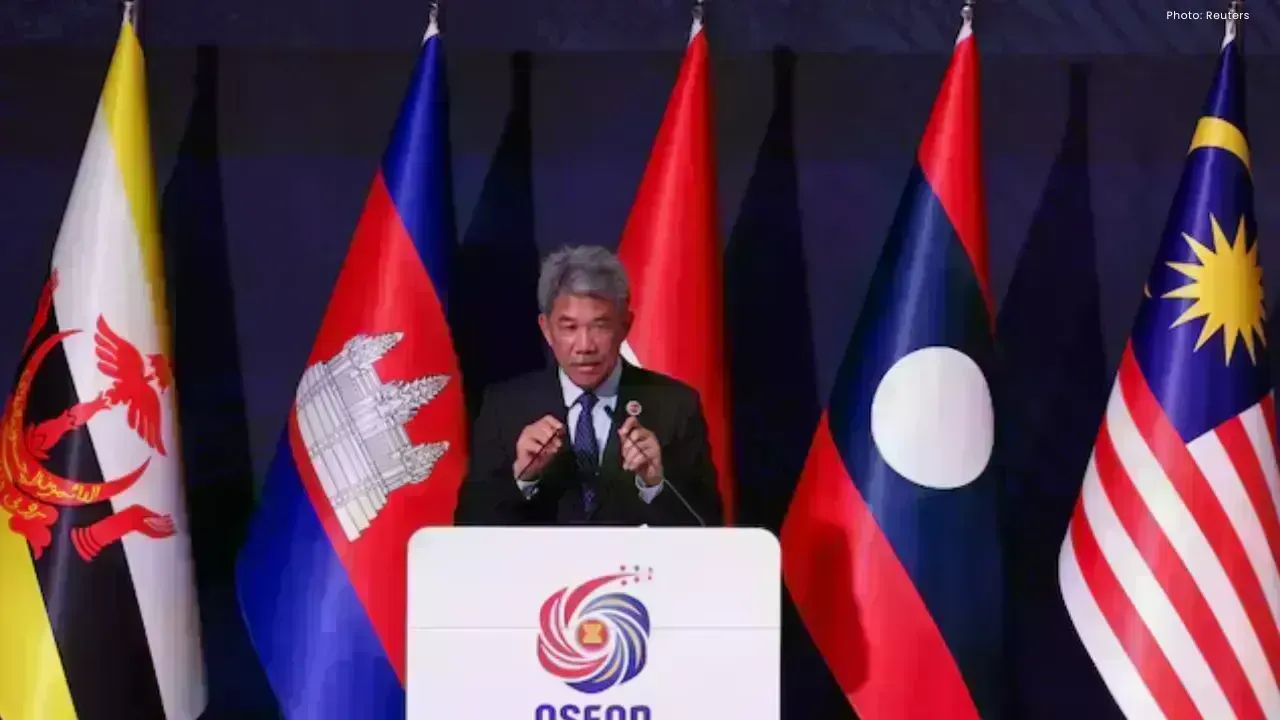
ASEAN has taken a firm and meaningful stand by refusing to certify or observe Myanmar’s ongoing election. Malaysia’s Foreign Minister Mohamad Hasan confirmed that the regional bloc will not send official observers and, as a result, will not endorse the election results. This decision reflects deep concerns within Southeast Asia about the credibility of the poll and the political situation in Myanmar since the military seized power in 2021.
Myanmar has been trapped in violence and unrest for nearly five years following the military coup that removed an elected civilian government. Since then, fighting between the army and resistance groups has spread across the country. Thousands of people have died, many more have been displaced, and normal daily life has become extremely difficult for ordinary citizens. In this environment, the military government launched a three-stage election process starting in December last year, claiming it would help restore order and move the country toward stability.
However, many countries and international organizations strongly disagree with that claim. The United Nations, several Western governments, and human rights groups have described the election as an attempt to give legal cover to military rule. They argue that a true election cannot take place when opposition leaders are jailed, political parties are restricted, and large parts of the country are affected by armed conflict. The military government has denied these accusations, insisting the process is lawful and necessary.
The lack of voter participation has further weakened confidence in the election. Turnout during the second stage earlier this month was reported to be very low. Early results show the military-backed Union Solidarity and Development Party winning a large majority of the contested seats. Critics say this outcome is not surprising, given that many opposition voices have been silenced and voters in conflict areas were unable or unwilling to take part.
ASEAN’s refusal to send observers is a serious signal. Election observers are important because they help ensure voting is fair, transparent, and free from pressure. Without observers, election results carry little trust at the regional and global level. Mohamad Hasan revealed that Myanmar had requested ASEAN observers during last year’s leaders’ summit in Kuala Lumpur, but the request was rejected. While some individual ASEAN member states may choose to observe on their own, ASEAN as a group has decided to stay away.
This move highlights a growing shift within ASEAN. The bloc has long followed a policy of non-interference in the internal affairs of member states. While this policy has helped maintain unity among diverse countries, the crisis in Myanmar has tested its limits. By refusing to certify the election, ASEAN is showing that there are boundaries to neutrality, especially when violence and exclusion undermine basic political standards.
The decision also has wider regional importance. Myanmar’s instability affects neighboring countries through refugee flows, border insecurity, and illegal trade. Continued conflict weakens ASEAN’s image as a stable and cooperative regional group. Without ASEAN’s endorsement, Myanmar’s military leaders will find it harder to gain international acceptance and economic support.
At the same time, ASEAN faces a difficult balance. Isolating Myanmar completely could worsen suffering for civilians and push the country further into crisis. The challenge for ASEAN will be to maintain pressure on the military leadership while still encouraging dialogue, humanitarian aid, and a peaceful solution that includes all sides.
During the same parliamentary session, Malaysia’s foreign minister also spoke about progress on another major regional issue, the South China Sea. He said ASEAN is close to finalizing a long-discussed code of conduct with China aimed at managing disputes in the contested waters. China claims large parts of the sea, including areas also claimed by several ASEAN members, which has complicated fishing, energy exploration, and regional security for years.
Together, these developments show ASEAN at a critical moment. By rejecting Myanmar’s election while continuing diplomatic efforts on regional security, the bloc is trying to protect its credibility and stability. The stance on Myanmar sends a clear message that elections held under fear and conflict cannot bring true legitimacy. Whether this pressure will lead to real change in Myanmar remains uncertain, but ASEAN has made it clear that peace, trust, and fairness matter for the future of the region.








7.5 Magnitude Earthquake Strikes Japan, Tsunami Alerts Issued
Japan experiences a hefty 7.5 quake, prompting tsunami alerts and safety measures. Stay updated on a

Reopening of the Strait of Hormuz: New Regulations to Impact Global Trade
Iran reopens the strategic Strait of Hormuz with new regulations affecting oil transport and global

Top 10 Must-See Attractions in NYC for First-Time Explorers
Discover essential experiences for first-time visitors to NYC, including attractions, culture, and i

Starbucks Engages Boyu Capital for Major Chinese Expansion
Starbucks teams up with Boyu Capital, selling a majority stake to boost growth and adapt to the Chin

Three Individuals Charged in Massive Meth Trafficking Case in Malaysia
In Malaysia, a married couple and another suspect are charged with trafficking 510kg of meth, facing