Post by : Mikhael Nasser
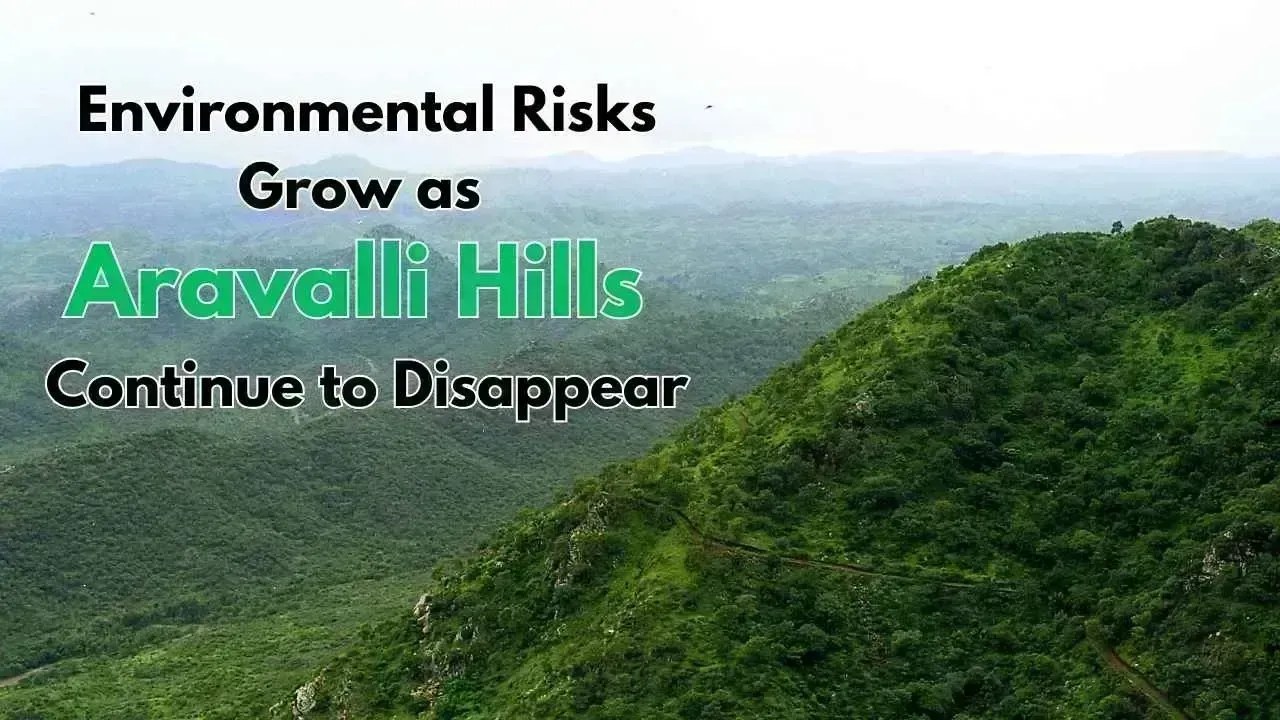
The Aravalli hills stand as one of North India’s significant natural assets. These hills are recognized as among the oldest mountain ranges globally, with an age estimated at around 1.5 to 2 billion years, far older than the Himalayas. Stretching across Rajasthan, Haryana, Delhi, and Gujarat, they have shielded the region for millennia.
Currently, the protective capabilities of the Aravalli hills are deteriorating. Significant portions have suffered damage or have been obliterated due to various human activities. Environmental specialists caution that this degradation could soon escalate into severe ecological issues not only for Rajasthan but notably for Delhi, Haryana, and surrounding areas.
Formed through tectonic movements millions of years ago, the Aravalli hills have been molded by natural elements into their current landscapes. Historically, they have served as a natural barrier, preventing desert sands from advancing into greener territories of North India.
The region was once abundant in forests and wildlife, with ancient civilizations relying on these hills for sustenance, minerals, and protection. Significant trade routes traversed this mountain range, and many underground water systems still link to it today.
The Aravalli hills are crucial for maintaining ecological equilibrium in North India. Their impact transcends historical significance; they play a vital role in daily living.
Key contributions of the Aravallis include:
Preventing the spread of desertification
Mitigating dust storms and improving air quality
Storing rainwater and recharging aquifers
Nurturing diverse plant and animal life
Regulating local climatic conditions
Cities such as Delhi, Gurugram, Faridabad, and parts of Haryana rely significantly on the Aravalli hills for improved air quality and a moderated climate. This mountain range is often referred to as the “green lungs” of the region.
Despite their vital role, the Aravalli hills have faced immense degradation in recent decades due to:
Unauthorized mining for minerals and stones
Deforestation for urban expansion
Uncontrolled urban development
Extension of roads, housing, and industrial projects
In numerous locations, entire hills have been leveled; orchards stripped, and natural waterways obstructed. This ongoing destruction jeopardizes the Aravalli hills' ability to serve as a protective barrier.
As the Aravalli hills deteriorate, experts indicate that the risks to the environment are intensifying.
Increased Air Pollution:
Diminished greenery results in higher levels of air pollution; dust storms frequently plague Delhi and adjacent regions.
Expansion of Desert Areas:
The Thar Desert may encroach into Haryana and Delhi, rendering previously arable land barren.
Declining Water Tables:
The hills assist in underground rainwater storage; their decline leads to swift reductions in water supplies.
Higher Temperatures:
The loss of vegetation heightens temperatures, rendering summers increasingly precarious.
Decreased Biodiversity:
Numerous species of fauna and flora are losing their habitats, leading to a drop in biodiversity.
Experts caution that persistent destruction could culminate in lasting environmental repercussions that may take years to mitigate.
Delhi and Haryana already grapple with air pollution, water scarcity, and severe weather patterns. The erosion of the Aravalli hills exacerbates these challenges.
Further deterioration of air quality in Delhi
Increased water shortages
Drying agricultural land in Haryana
Heightened flooding risks during heavy rainfall
According to environmental scientists, the Aravallis function as a vital shield. Their removal exposes millions to ecological and health threats.
It is imperative to safeguard the remaining Aravalli hills. Experts advocate for:
Strong measures against illegal mineral extraction
Extensive afforestation initiatives
Regulating building in sensitive areas
Strict enforcement of environmental regulations
Public education is crucial; it’s vital for communities to recognize that the Aravallis are not mere land to be developed but a lifeblood for North India.
The Aravalli hills constitute an invaluable aspect of natural heritage that has safeguarded Rajasthan, Delhi, and Haryana for aeons. Their ancient lineage highlights their significance for maintaining climate health, water stability, and environmental security.
The current degradation of this historic mountain range is not solely a regional concern; it poses a dire warning for the future. Without immediate action, irreversible harm may ensue.
Upholding the Aravallis equates to preserving the environment, public health, and prospects for millions. The remnants of this ancient formation must be protected before time runs out.
This article is intended for general awareness and is based on publicly accessible reports, environmental research, and expert perspectives. Conditions, legislation, and conservation measures may evolve. Readers should consult official sources for the latest and most accurate information. The intention is not to incite alarm or misinterpret findings but to responsibly address environmental issues.








Anticipated Dates for UAE Eid Al Adha 2026 Unveiled by Astronomical Experts
Experts predict Eid Al Adha 2026 in the UAE to start on May 27, prompting early holiday planning amo

DAE Achieves Remarkable Growth in Q1 2026 With Record Revenue
Dubai Aerospace Enterprise announces impressive financial results for Q1 2026, reflecting a surge in

Price Increase for Sony PS5 in Southeast Asia Effective May 1
Sony announces a price increase for the PS5 across Southeast Asia starting May 1, 2026, impacting ga

Potential ‘Super El Niño’ in 2026: Understanding the Climate Risks
Could a Super El Niño emerge in 2026? Discover its implications and potential global climate impacts

Global Energy Crisis Intensifies: Markets React to Oil Supply Challenges
Markets are on edge as oil disruptions escalate, influencing prices and economic stability. Explore

Must-See Tourist Spots in London You Can't Overlook
Explore London's essential attractions, from royal landmarks to vibrant markets, ensuring an unforge




