Post by : Raina Nasser
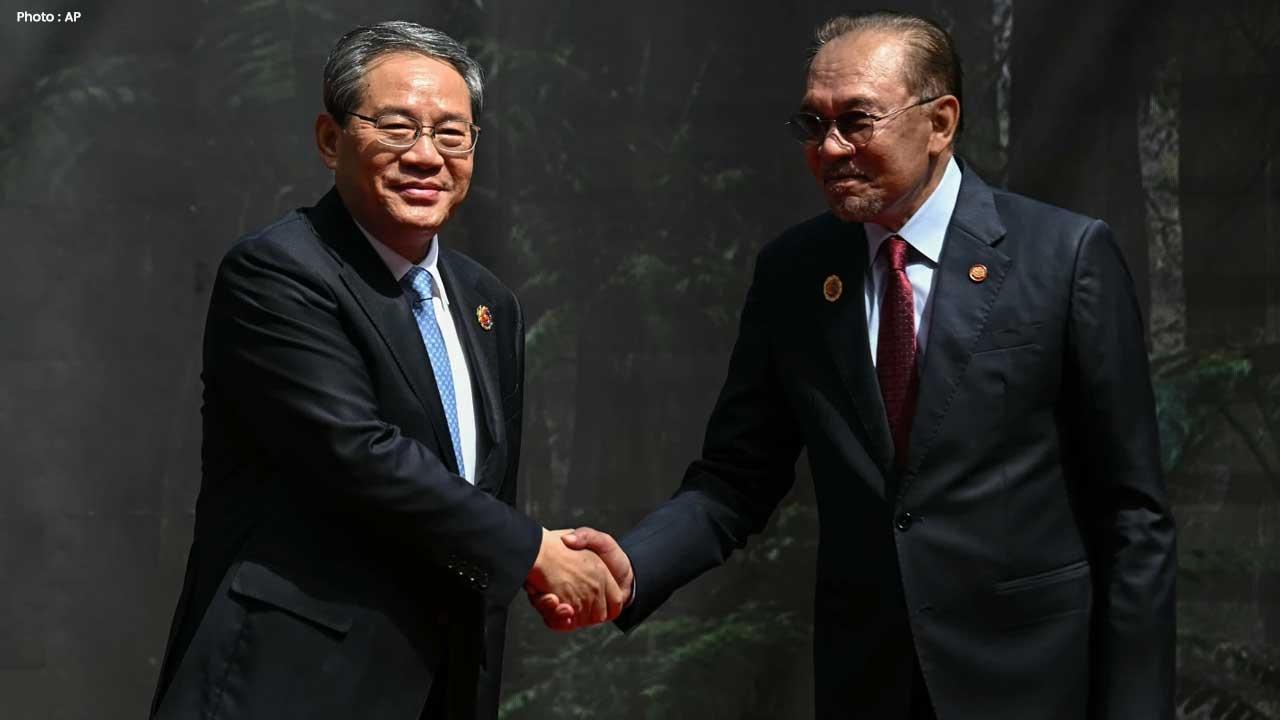
Against a backdrop of mounting geopolitical competition in the Asia-Pacific, Malaysian Prime Minister Anwar Ibrahim used the East Asia Summit in Kuala Lumpur to press world leaders for diplomatic engagement and cooperative solutions rather than coercive tactics. His address sought to center peace and multilateral stability as the region’s guiding principles.
The summit, which convenes ASEAN members alongside major partners including China, the United States, India, Japan, Australia, South Korea, Russia and New Zealand, provided a prominent platform for Anwar to appeal for collective restraint. He emphasised the need to "renew our shared purpose" and to protect global peace and security amid intensifying rivalries.
This year’s meeting carried added significance after a recent peace agreement between Cambodia and Thailand and amidst shifting US trade approaches across Southeast Asia. US President Donald Trump, who joined ASEAN sessions prior to travelling to Japan, reiterated Washington’s intent to broaden partnerships on critical minerals and lower economic dependence on China, signalling adjustments in US Indo-Pacific policy.
China’s Premier Li Qiang, by contrast, underscored state sovereignty, non-interference and deeper connectivity through the Belt and Road Initiative. Observers said the US–China strategic contest informed many exchanges, yet ASEAN endeavoured to preserve its neutral posture and prioritise regional balance.
Veteran diplomats and analysts, including former Malaysian ambassador Ilango Karuppannan, judged this summit notable for its careful diplomatic balance and for Anwar’s sustained advocacy of dialogue. He commended efforts to mediate the Gaza situation while urging additional measures to secure a lasting resolution for the Palestinian people.
Addressing North Korea, Anwar called for continued engagement despite the escalation in missile tests. He argued that advocates of dialogue cannot exclude any theatre of tension—from Gaza to Ukraine to Myanmar—if the goal is comprehensive conflict resolution.
On maritime security, he cautioned that outside interference risks exacerbating South China Sea disputes and urged adherence to international law alongside support for progress on a regional Code of Conduct.
Economic discussions highlighted resilience through the Regional Comprehensive Economic Partnership (RCEP), which now covers a substantial share of global GDP. Leaders from China, Japan, South Korea, Australia and New Zealand reaffirmed commitments to strengthen supply chains and sustain multilateral trade amid adjustments in US tariff policy.
Separately, Canada signalled intentions to increase diversification of its export markets, while Malaysia announced completion of a free trade agreement with South Korea—moves interpreted as efforts to reduce exposure to singular trade pressures.
For Malaysia, the summit underscored competing external economic and strategic vectors: US offers of deeper economic ties, China’s emphasis on connectivity, and ASEAN’s attempt to navigate neutrality. In that setting, Anwar Ibrahim’s plea for engagement over division emerged as a clear call to prioritise diplomacy in shaping Asia’s future.
At a juncture when power politics shape regional choices, Malaysia’s prime minister sought to reassert multilateral dialogue and cooperation as essential instruments for long-term security and stability across Asia.









Mattel Revives Masters of the Universe Action Figures Ahead of Film Launch
Mattel is reintroducing Masters of the Universe figures in line with its upcoming film, tapping into

China Executes 11 Members of Criminal Clan Linked to Myanmar Scam
China has executed 11 criminals associated with the Ming family, known for major scams and human tra

US Issues Alarm to Iran as Military Forces Deploy in Gulf Region
With a significant military presence in the Gulf, Trump urges Iran to negotiate a nuclear deal or fa

Copper Prices Reach Unprecedented Highs Amid Geopolitical Turmoil
Copper prices soar to all-time highs as geopolitical tensions and a weakening dollar boost investor

New Zealand Secures First Win Against India, Triumph by 50 Runs
New Zealand won the 4th T20I against India by 50 runs in Vizag. Despite Dube's impressive 65, India