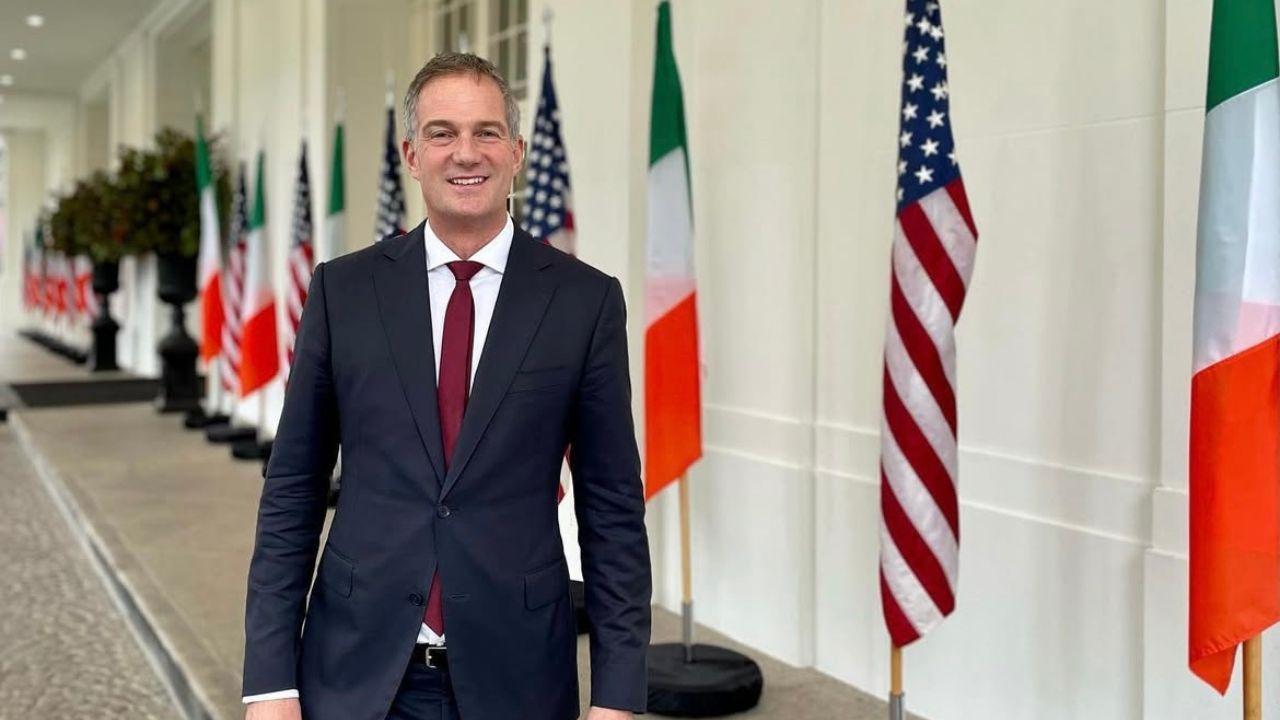
Post by : Jyoti Singh
Photo: Instragram Petejkyle
Alan Turing Institute Faces Funding Crisis Amid Internal Disputes. The Alan Turing Institute, the United Kingdom’s national research body for advanced technology and data science, is facing one of the biggest challenges since it was founded in 2015. Staff members have warned that the organisation is at risk of collapse after Technology Secretary Peter Kyle threatened to withdraw government funding unless major changes were made to its leadership and focus.
A whistleblowing complaint submitted to the Charity Commission by staff members accuses the institute of misusing public funds, fostering a toxic work environment, and failing to deliver on its mission. The institute, which was awarded a £100 million grant by the previous Conservative government last year, could lose this crucial financial support if the government’s demands are not met.
The Government’s Warning
Peter Kyle, who heads the Department for Science, Innovation & Technology (DSIT), has told the institute it needs to refocus its work, placing more attention on defence and national security research. He has also called for a complete overhaul of its leadership, saying the changes would ensure the institute provides real value for money for taxpayers.
The DSIT spokesperson explained that the changes Kyle wants to see would help the Turing Institute play a key role in safeguarding our national security and make it operate in a way that meets public expectations. However, this would mark a major shift from its current focus, which has been on a range of research areas such as health, environmental sustainability, and national security.
The Staff’s Complaint
The staff’s whistleblowing letter, signed anonymously due to a well-founded fear of retaliation, lists eight major concerns about how the institute is being run. It warns that ongoing problems with leadership, transparency, and delivery of projects have caused alarm among both public and private funders.
Among the allegations are:
Spending decisions are lacking transparency, measurable outcomes, and trustee oversight.
A culture within the institute is described as dominated by fear and defensiveness.
Governance instability and leadership failures have gone unaddressed despite repeated warnings.
The complaint claims these issues have been raised with the leadership team, including chairman Doug Gurr, but no meaningful action has been taken.
The Risk of Collapse
The letter also states that the £100 million government grant is now at risk of being withdrawn, a move that could effectively shut down the institute. Without this funding, the institute would struggle to continue its research programmes and maintain its staff.
The Charity Commission confirmed that it is reviewing the concerns raised but stressed it is still in the early stages of its assessment. No decision has yet been made on whether a formal investigation will be launched.
The Institute’s Response
In response to the allegations, a spokesperson for the Turing Institute told the BBC that the organisation is undergoing substantial organisational change to fulfil its mission as the UK’s leading centre for data science and technology research.
The spokesperson said the institute is now focusing on projects that will have a real-world impact on society’s biggest challenges. This includes placing more emphasis on defence, national security, and the UK’s sovereign technological capabilities, in line with the government’s direction.
The institute, headquartered at the British Library in London, said it has not received any official notification of a complaint and has not seen the letter reportedly sent by staff.
Months of Internal Turmoil
The crisis did not emerge overnight. For months, the Turing Institute has been under strain due to planned job cuts and the cancellation of certain research projects. In late 2024, 93 members of staff signed a letter expressing no confidence in the leadership team.
High-profile resignations have followed. Professors Helen Margetts and Cosmina Dorobantu, who co-directed a successful programme helping the public sector use technology more effectively, resigned in July. Jonathan Starck, the institute’s former chief technology officer, left in May after only eight months in the role.
Some remaining staff have described the internal environment as toxic, with a fear of speaking up about management decisions.
Shift in Research Focus
Since its founding under former Prime Minister David Cameron, the Alan Turing Institute has built a reputation for research in areas like health data, environmental sustainability, and national security. Its recent projects have included using advanced computing for weather prediction and studying how children use technology for learning and play.
However, Peter Kyle’s letter signals a clear push for the institute to concentrate on defence-related research, saying this is critical for national security and should form the heart of its work.
The institute’s current strategy, called Turing 2.0, is already aimed at refocusing research to make a stronger impact in key national areas. Kyle’s demands would further narrow its priorities toward defence and security, potentially reshaping the institute’s entire direction.
Importance to the UK’s Technology Goals
The technology sector is a central part of the UK government’s economic growth strategy. Investments in data centres, supercomputers, and partnerships with major tech firms are intended to keep the country competitive in a fast-changing global market.
As part of this effort, the Turing Institute’s work is considered vital to the UK’s research and development in advanced computing and data analysis. Any major disruption to the institute’s operations, or a shift away from certain areas of research, could have long-term consequences for the country’s technological leadership.
What Happens Next?
The Charity Commission’s review of the complaint will determine whether a formal investigation is needed. In the meantime, the institute must respond to the government’s demands to secure its funding beyond the current year. If it fails to satisfy the government’s requirements, the £100 million grant could be cut, leading to the possible collapse of one of the UK’s most important research institutions.
For now, both the staff and leadership of the Alan Turing Institute remain locked in a tense standoff — one that could determine not only the future of the organisation but also the direction of the UK’s technology research for years to come.









Mattel Revives Masters of the Universe Action Figures Ahead of Film Launch
Mattel is reintroducing Masters of the Universe figures in line with its upcoming film, tapping into

China Executes 11 Members of Criminal Clan Linked to Myanmar Scam
China has executed 11 criminals associated with the Ming family, known for major scams and human tra

US Issues Alarm to Iran as Military Forces Deploy in Gulf Region
With a significant military presence in the Gulf, Trump urges Iran to negotiate a nuclear deal or fa

Copper Prices Reach Unprecedented Highs Amid Geopolitical Turmoil
Copper prices soar to all-time highs as geopolitical tensions and a weakening dollar boost investor

New Zealand Secures First Win Against India, Triumph by 50 Runs
New Zealand won the 4th T20I against India by 50 runs in Vizag. Despite Dube's impressive 65, India