Post by : Mara Rahim
In a pivotal move, the All India Football Federation (AIFF) has enforced a ban on dual roles in response to a Supreme Court ruling, aiming to reshape the governance of football in India. This action resolves a longstanding issue that has lingered since 2017, prohibiting executive committee members of AIFF from simultaneously serving in state associations. This change seeks to mitigate conflicts of interest and foster transparent administration.
Following the Supreme Court's order on October 15, the AIFF officially adopted Articles 25.3(c) and 25.3(d) during a virtual Special General Meeting (SGM). These articles stipulate that officials cannot hold concurrent positions within both national and state football organizations. This transition aligns the federation’s governance structure with recommendations proposed by Justice (Retd) L. Nageswara Rao, aimed at enhancing governance within Indian football.
It's important to note that the current AIFF president, Kalyan Chaubey, alongside the existing executive committee members, will not be immediately impacted by this ruling, as they will remain in their roles until their term concludes in September 2026. The Supreme Court had recognized the practicality of this arrangement, considering the proximity to the end of their term.
The adoption of these new articles marks the conclusion of a lengthy process spanning nearly a decade. The AIFF expressed appreciation to all stakeholders who contributed to achieving this reform. While the federation initially implemented most provisions of the Supreme Court-approved constitution on October 12, they delayed the inclusion of Articles 23.3 and 25.3(c) and (d) to seek clarification. The Supreme Court's recent order provided the needed guidance for full implementation.
The dual-post ban has been a contentious issue, necessitating a balance between the Supreme Court’s directives and the statutes of FIFA/AFC, along with the interests of existing leadership. By officially adopting these articles, the AIFF has aligned its governance framework with both international and national regulations, while aiming to enhance transparency in the management of Indian football.
Anticipated improvements in decision-making and conflict reduction within the AIFF are expected as a result of this reform. By barring officials from multiple roles, the federation promotes a more accountable, professional, and transparent atmosphere. This decision underscores the commitment of Indian football authorities to uphold modern governance practices consistent with global standards set forth by FIFA and the Asian Football Confederation.
The action taken by the AIFF signifies a landmark moment in governance for Indian football. With the dual-post ban now implemented, the federation stands better positioned to uphold integrity, fairness, and accountability. This reform sends a compelling message to stakeholders regarding the necessity of professional and transparent administration, setting the stage for the ongoing advancement of football in India.









Four Fatalities from Cebu Landfill Disaster; Rescue Efforts Ongoing
A landfill disaster in Cebu has left four dead and many missing, as rescue teams navigate hazardous

Netanyahu Envisions Ending US Military Assistance in the Next Decade
Benjamin Netanyahu announces a goal for Israel to become independent from US military aid within ten

Dhurandhar Surges Past ₹844 Crore: A Record-Breaking Journey for Ranveer Singh's Spy Thriller
Ranveer Singh's Dhurandhar collects ₹3.6 Cr on Day 36, reaching ₹844.45 Cr in India. The spy drama r

FCC Greenlights SpaceX to Deploy 7,500 Additional Starlink Satellites Globally
The FCC has approved SpaceX's plan to launch 7,500 new Starlink satellites, enhancing global interne

Indonesia Halts Access to Elon Musk's Grok AI Due to Content Safety Issues
Indonesia has temporarily halted Elon Musk’s Grok chatbot over concerns of unsafe AI-generated conte
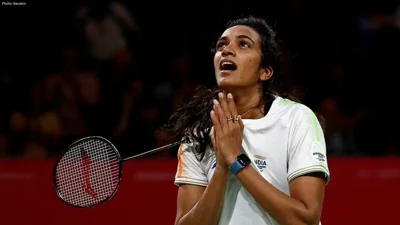
PV Sindhu's Journey at Malaysia Open Ends in Semifinal Against Wang Zhiyi
PV Sindhu's Malaysia Open bid concludes in the semifinals as she falls to China's Wang Zhiyi with sc