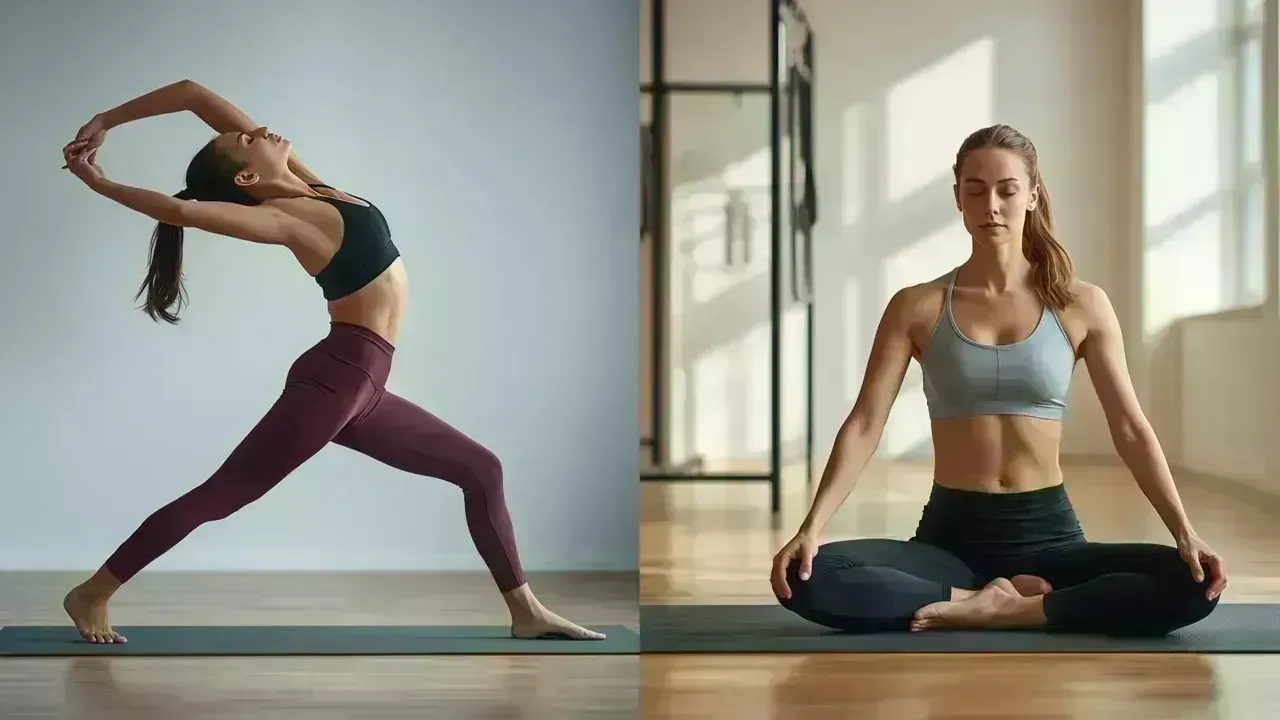
Post by : Sami Jeet
Yoga and Pilates are frequently compared due to their shared focus on movement control, flexibility, and the mind-body connection. However, their respective benefits for weight loss and core strength vary significantly. Recognizing these distinctions can help you select the best practice tailored to your unique fitness aspirations, body type, and lifestyle.
Yoga is an ancient discipline embracing physical postures, breathing exercises, and mindfulness. It encompasses a range from slow, restorative styles to faster, more vigorous flows.
While yoga generally burns calories at a slower rate compared to higher-intensity workouts, quicker styles can elevate energy expenditure.
More importantly, yoga reduces stress hormones like cortisol, associated with fat accumulation, particularly around the abdomen.
Regular practice enhances body consciousness, encouraging healthier eating choices and consistency.
Numerous yoga positions necessitate stabilizing your body weight through core muscles.
Poses like planks, boat pose, warrior variations, and balancing positions engage the deeper abdominal muscles.
Yoga fortifies the core functionally, enhancing posture and spinal stability rather than merely focusing on visible abs.
Pilates is a low-impact fitness method emphasizing controlled movements, alignment, and core activation, developed to refine muscle balance and strength with precision.
Pilates typically burns fewer calories than cardio-centric activities.
However, it contributes to lean muscle growth, which can boost metabolism over time.
Regular Pilates practice enhances muscle tone, creating a leaner appearance without dramatic weight loss.
Every Pilates exercise emphasizes core involvement.
It targets deeper muscles like the transverse abdominis, pelvic floor, and lower back.
The oresult is strengthened and toned abdominal muscles along with better lower back support.
The calorie expenditure in yoga depends on the style practiced.
Gentle yoga has lower calorie burns, whereas power or vinyasa styles can yield higher rates.
Pilates usually results in moderate calorie burn while maintaining consistent muscle engagement.
When it comes to weight reduction, flowing yoga styles generally burn more calories compared to conventional Pilates mat sessions, though reformer Pilates can be more physically demanding.
Pilates offers a more focused approach to core strength.
Each exercise originates from the core, making it particularly effective for abdominal sculpting and spinal support.
Conversely, yoga promotes core strength in a more holistic manner, integrating strength with flexibility and balance.
If your primary objective is to achieve visible abdominal definition and enhanced lower-back strength, Pilates has a slight advantage.
If overall body strength with core activation is your goal, yoga is highly beneficial.
Yoga tends to emphasize stretching, joint mobility, and muscle lengthening.
Pilates enhances flexibility, balancing controlled strength over deep stretching.
Those with stiffness may find yoga to be more beneficial in the initial stages.
Yoga integrates breathwork and mindfulness, making it exceptionally good for reducing stress.
Lower stress levels can lead to improved sleep patterns and healthier weight management.
While Pilates is more movement-oriented and less meditative, it still fosters enhanced body awareness.
For both practices, consistency holds more importance than intensity.
The best outcomes arise from selecting the method you genuinely enjoy and can commit to long term.
Both yoga and Pilates are accessible to beginners when properly guided.
Yoga provides a variety of modifications and intensities, from gentle to more rigorous.
Pilates beginners may require guidance to ensure correct form, as minor errors can diminish overall effectiveness.
Select yoga if your aims include stress relief, flexibility enhancement, moderate weight reduction, and overall body balance.
Opt for Pilates if your focus is on developing strong core muscles, better posture, and muscle toning.
Many individuals find success in combining both practices to achieve optimal results, using yoga for mobility and Pilates for core power.
Yoga and Pilates should be seen as complementary practices, not competitors.
For effective weight loss, higher intensity yoga styles often yield superior calorie-burning results.
For core strength, Pilates offers a more targeted and quantifiable approach.
Ultimately, the best choice is the one that resonates with you, fostering consistent practice.
This article serves informational purposes. Fitness outcomes may differ based on individual health, body type, and consistency. Always consult a fitness professional before beginning a new exercise regimen.










Anticipated Dates for UAE Eid Al Adha 2026 Unveiled by Astronomical Experts
Experts predict Eid Al Adha 2026 in the UAE to start on May 27, prompting early holiday planning amo

DAE Achieves Remarkable Growth in Q1 2026 With Record Revenue
Dubai Aerospace Enterprise announces impressive financial results for Q1 2026, reflecting a surge in

Price Increase for Sony PS5 in Southeast Asia Effective May 1
Sony announces a price increase for the PS5 across Southeast Asia starting May 1, 2026, impacting ga

Potential ‘Super El Niño’ in 2026: Understanding the Climate Risks
Could a Super El Niño emerge in 2026? Discover its implications and potential global climate impacts

Global Energy Crisis Intensifies: Markets React to Oil Supply Challenges
Markets are on edge as oil disruptions escalate, influencing prices and economic stability. Explore

Must-See Tourist Spots in London You Can't Overlook
Explore London's essential attractions, from royal landmarks to vibrant markets, ensuring an unforge




