Post by : Shweta
A significant controversy has developed between U.S. Vice President JD Vance and Pope Leo XIV concerning the application of religious doctrines to rationalize the ongoing conflict in Iran.
The core of the disagreement focuses on the notion of “just war,” a classical tenet within Christian doctrine as articulated by Saint Augustine. This framework establishes specific criteria under which military actions can be morally defended, such as self-defense and the goal of reinstating peace.
Pope Leo XIV has vocally opposed the notion of employing religion as a basis for warfare, asserting that divine support is not granted to those who initiate violence. He denounced threats of catastrophic destruction, cautioning that such threats violate both ethical principles and international law.
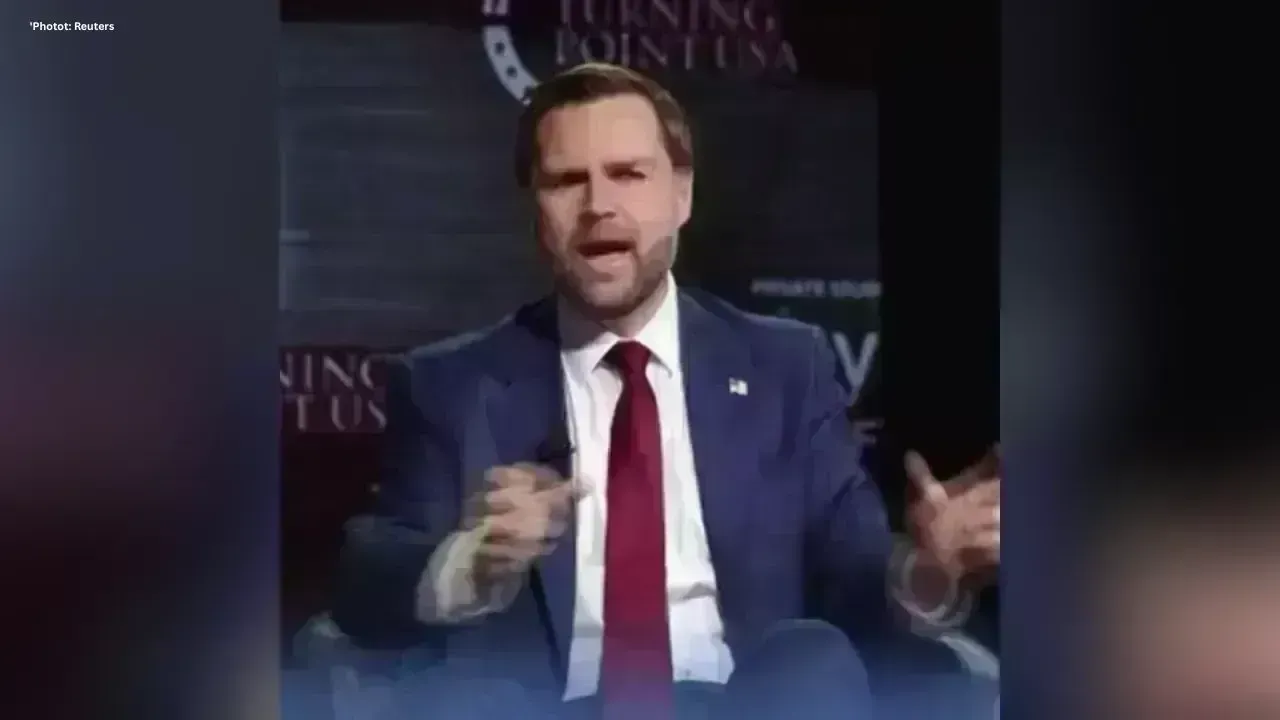
In a rebuttal, JD Vance challenged the papal stance, pointing to an established historical tradition that endorses just war theory. He referenced instances such as World War II, claiming that military interventions may occasionally be legitimate to avert greater evils. However, his comments faced backlash, leading to allegations that he was overreaching and attempting to teach theology to a spiritual leader—an online phenomenon dubbed “popesplaining.”
This debate arises concurrently with heightened scrutiny of the Trump administration for its use of religious rhetoric regarding the Iran conflict. President Donald Trump has also encountered criticism for provocative actions, including imagery of himself having Christ-like qualities.
Religious scholars and leaders have entered the fray, underscoring that the Catholic Church’s stance on warfare is not merely subjective but entrenched in doctrinal norms. They emphasize that for a military engagement to qualify as just, it needs to satisfy stringent moral prerequisites, including being a definitive last resort and having a distinctly defensive objective.
This disagreement underscores broader anxieties regarding the intersection of faith with contemporary politics and warfare. Critics warn that invoking religion to justify military endeavors risks oversimplifying intricate disputes and could alienate individuals with differing beliefs.
As the discourse progresses, the clash between political figures and religious leaders mirrors a larger global conversation about ethics, spirituality, and the legitimacy of warfare in today's landscape.




Top 10 Must-See Attractions in NYC for First-Time Explorers
Discover essential experiences for first-time visitors to NYC, including attractions, culture, and i

Starbucks Engages Boyu Capital for Major Chinese Expansion
Starbucks teams up with Boyu Capital, selling a majority stake to boost growth and adapt to the Chin

Three Individuals Charged in Massive Meth Trafficking Case in Malaysia
In Malaysia, a married couple and another suspect are charged with trafficking 510kg of meth, facing

Singapore Police Revisit Geylang Murder Scene with Suspect
In Geylang, police return a murder suspect to the scene of a crime involving the fatal stabbing of a

Mattel Revives Masters of the Universe Action Figures Ahead of Film Launch
Mattel is reintroducing Masters of the Universe figures in line with its upcoming film, tapping into