Post by : Saif Nasser
The United States and Iran are moving closer to possible military conflict as diplomatic talks over Iran’s nuclear program lose momentum. Officials from both sides, along with diplomats from Europe and the Gulf region, say the situation has become more dangerous in recent weeks.
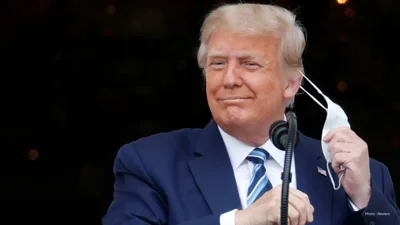
At the center of the crisis is a growing U.S. military presence in the Middle East. President Donald Trump has ordered aircraft carriers, warships, and fighter jets into the region. This is one of the largest American military buildups there since the 2003 invasion of Iraq.
The show of force has overshadowed ongoing talks between Washington and Tehran about Iran’s nuclear activities. Many now fear that the path of diplomacy is shrinking while the risk of confrontation is rising.
Iran’s Gulf neighbors and its long-time enemy, Israel, believe the chances of conflict are now higher than the chances of a peaceful agreement. Israeli officials say the gap between the two sides appears too wide to close. Israel is reportedly preparing for possible joint military action with the United States, although no final decision has been announced.
If such an operation takes place, it would not be the first time the two countries have targeted Iran together. Last June, U.S. and Israeli forces carried out airstrikes against Iranian military and nuclear facilities. That action sharply increased tensions in the region.
The current crisis began with disagreements over Iran’s nuclear program. The United States demands that Iran stop enriching uranium on its own soil. Uranium enrichment can be used for peaceful energy production, but it can also be used to develop nuclear weapons. Iran insists that its nuclear work is for peaceful purposes only and says it has no plan to build nuclear weapons.
Talks between the two sides have stalled over core issues. These include uranium enrichment, Iran’s ballistic missile program, and economic sanctions placed on Tehran. According to sources familiar with the discussions, when Omani mediators delivered missile-related proposals from the United States, Iran’s Foreign Minister Abbas Araqchi refused even to open the envelope.
After a recent round of talks in Geneva, Iranian officials said the two sides had agreed on certain guiding principles. However, the White House said there were still major differences. Iran is expected to submit a written proposal soon, but few expect a breakthrough.
President Trump has warned that Iran must reach a deal soon or face serious consequences. He suggested that a decision could come within 10 to 15 days. Iran responded by threatening to retaliate against U.S. military bases in the region if it is attacked. As tensions have grown, oil prices have also risen, reflecting fears that conflict could disrupt global energy supplies.
The Strait of Hormuz, a narrow waterway near Iran, is one of the world’s most important oil routes. About one-fifth of global oil passes through it. In past years, Iran has threatened to close the strait during times of crisis. Any military action could put shipping and global markets at risk.
Some experts believe the large U.S. military deployment gives Washington the ability to strike Iranian targets while also defending its bases and allies. Military analysts say a possible U.S. strategy would begin by disabling Iran’s air defense systems. After that, strikes could focus on the Revolutionary Guards Navy, which has been linked to tanker attacks in the Gulf.
However, many European and Arab officials question what the final goal would be. Some wonder whether limited strikes would simply weaken Iran’s military or aim at something more ambitious, such as forcing political change in Tehran. Iran’s leadership is led by Supreme Leader Ayatollah Ali Khamenei and supported by the powerful Islamic Revolutionary Guards Corps. Many observers doubt that airstrikes alone could change Iran’s political system.
There are also concerns that once military action begins, it may be difficult to control. A limited strike could quickly expand into a wider regional conflict. Iran has influence through allied groups in several Middle Eastern countries. Any escalation could affect Lebanon, Iraq, Syria, and beyond.
Some analysts say President Trump may feel trapped by his own show of strength. After sending so many forces into the region, it may be difficult for him to step back without appearing weak. At the same time, launching an attack carries serious risks. A short conflict could grow into a long and costly struggle.
Iran, for its part, appears firm in its position. Iranian leaders say uranium enrichment and missile development are sovereign rights. While Iran has expressed willingness to allow international inspections by the International Atomic Energy Agency, it has shown little sign of agreeing to end enrichment entirely.
Both sides seem to believe that the other will eventually give in. Washington may think that overwhelming military power will force Tehran to accept its demands. Tehran may believe that the United States does not want another prolonged war in the Middle East.
The coming weeks will be critical. U.S. Secretary of State Marco Rubio is scheduled to meet Israeli Prime Minister Benjamin Netanyahu to discuss the crisis. Meanwhile, American forces continue to move into position.
History shows that wars are often easier to start than to finish. Many regional governments worry that once fighting begins, it could spread beyond anyone’s control. For now, diplomacy remains open, but the sound of military engines is growing louder than the voices at the negotiating table.
The world is watching closely. The choice between talks and conflict will not only shape U.S.-Iran relations but also the future stability of the Middle East.






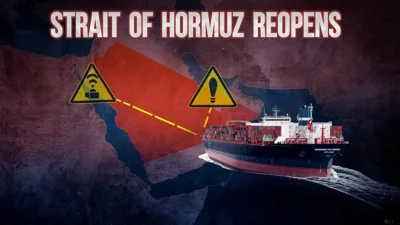
Reopening of the Strait of Hormuz: New Regulations to Impact Global Trade
Iran reopens the strategic Strait of Hormuz with new regulations affecting oil transport and global

Top 10 Must-See Attractions in NYC for First-Time Explorers
Discover essential experiences for first-time visitors to NYC, including attractions, culture, and i

Starbucks Engages Boyu Capital for Major Chinese Expansion
Starbucks teams up with Boyu Capital, selling a majority stake to boost growth and adapt to the Chin

Three Individuals Charged in Massive Meth Trafficking Case in Malaysia
In Malaysia, a married couple and another suspect are charged with trafficking 510kg of meth, facing

Singapore Police Revisit Geylang Murder Scene with Suspect
In Geylang, police return a murder suspect to the scene of a crime involving the fatal stabbing of a