Post by : Saif Nasser
The United States is once again facing uncertainty in global trade after President Donald Trump reacted strongly to a major ruling by the Supreme Court. The court decided that the president does not have the power to set wide tariffs on his own under the law he used.
The ruling was passed in a 6-3 decision. The court said that the Constitution clearly gives Congress the authority to collect taxes and duties. Chief Justice John Roberts, who wrote the opinion, explained that the president does not have unlimited power to impose tariffs during peacetime. The court also said the United States is not at war with every country, so emergency powers could not be used in this case.
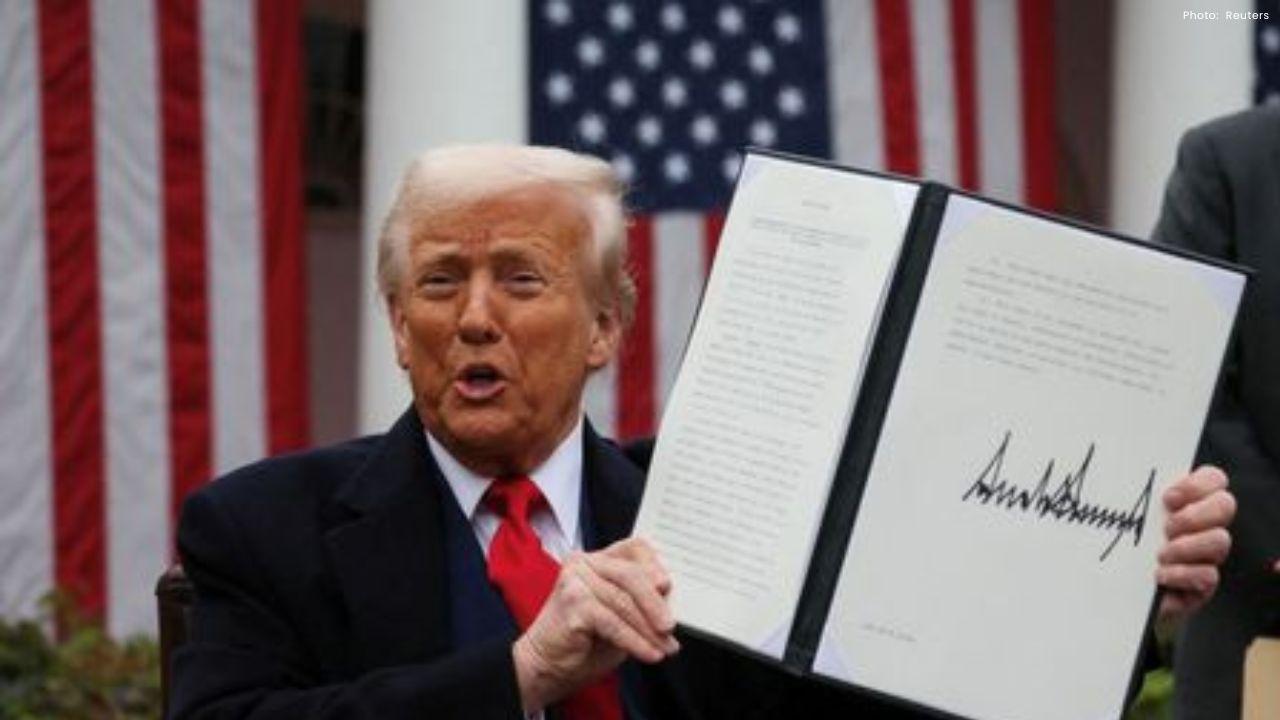
President Trump responded with anger. He told reporters he was ashamed of certain members of the court. He said the ruling was wrong and claimed it weakened the country’s position in trade talks. However, he made it clear that he would follow the court’s order. Soon after, he signed an executive order repealing the tariffs that had been struck down.
But the president did not stop there. Within hours, he announced a new 10% tariff on most goods imported into the United States. This new tax will last for 150 days. Some products, such as critical minerals, metals, and energy items, will be exempt. The White House said the move was allowed under Section 122 of the Trade Act of 1974, which gives the president limited power to act during serious international payment problems.
This decision marks a new chapter in the trade tensions that have shaped global markets for more than a year. Trump has argued that tariffs help protect American industries and reduce trade imbalances. He believes they give the United States stronger leverage in negotiations with foreign governments.
However, critics say frequent changes in tariff policy create confusion and harm businesses. Investors reacted quickly to the Supreme Court’s ruling. At first, stock markets rose because some traders believed the decision would reduce trade tensions. But gains were limited as uncertainty returned after the president announced the new 10% levy.
Economists warn that constant policy shifts make it hard for companies to plan ahead. Businesses that import goods may face higher costs. In many cases, these costs are passed on to consumers through higher prices.
The ruling also raises questions about trade deals negotiated in recent months. Many agreements were made under the threat of high tariffs. Now, it is unclear how those deals will be affected. There are also concerns about the $175 billion collected from earlier tariffs that the court found unlawful. The future of that money remains uncertain.
Treasury Secretary Scott Bessent said the ruling changes the president’s leverage but does not end his ability to act. He suggested that the administration will find other legal paths to maintain tariff levels.
This clash between the executive branch and the judiciary highlights the balance of power in the American system. The Constitution divides authority among the branches of government to prevent any one branch from becoming too powerful. In this case, the Supreme Court reaffirmed Congress’s role in setting taxes and trade duties.
As the situation develops, businesses, investors, and foreign governments will be watching closely. The next 150 days could shape the future of U.S. trade policy and global markets. For now, the only certainty is that uncertainty remains.







Reopening of the Strait of Hormuz: New Regulations to Impact Global Trade
Iran reopens the strategic Strait of Hormuz with new regulations affecting oil transport and global

Top 10 Must-See Attractions in NYC for First-Time Explorers
Discover essential experiences for first-time visitors to NYC, including attractions, culture, and i

Starbucks Engages Boyu Capital for Major Chinese Expansion
Starbucks teams up with Boyu Capital, selling a majority stake to boost growth and adapt to the Chin

Three Individuals Charged in Massive Meth Trafficking Case in Malaysia
In Malaysia, a married couple and another suspect are charged with trafficking 510kg of meth, facing
Singapore Police Revisit Geylang Murder Scene with Suspect
In Geylang, police return a murder suspect to the scene of a crime involving the fatal stabbing of a