Post by : Saif Nasser
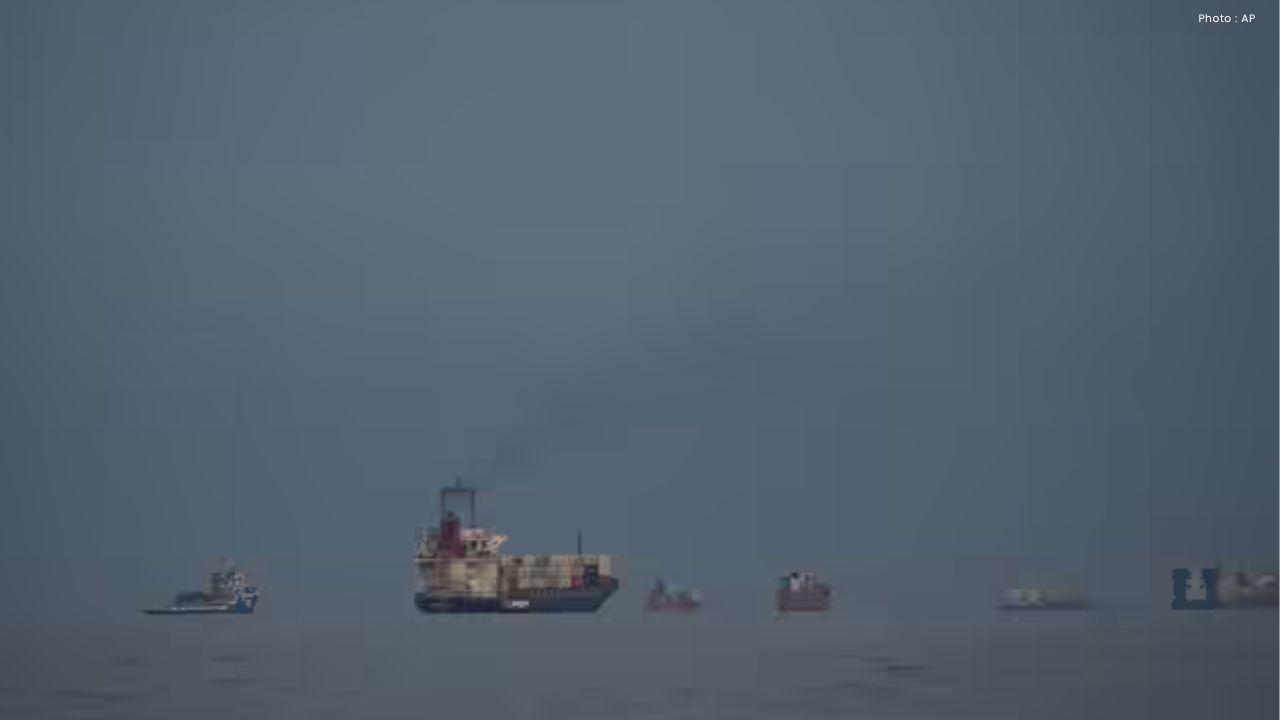
The ongoing conflict involving Iran, the United States, and Israel is now affecting global shipping in unexpected ways. In a striking development, several commercial ships passing through the Strait of Hormuz have started identifying themselves as “Chinese” in an effort to avoid being targeted during the conflict.
This unusual move shows how serious and dangerous the situation has become in one of the world’s most important trade routes. The Strait of Hormuz is a narrow waterway through which about 20% of the world’s oil supply passes. Any disruption in this region can have a direct impact on global energy prices and supply chains.
According to shipping data, at least a number of vessels traveling through the Persian Gulf and nearby waters changed their identification signals. Instead of showing their real ownership or destination, they used messages like “China owner” or “Chinese crew.” This was done to reduce the risk of being attacked.
Experts say this tactic is not about gaining special permission but about safety. Ships believe that identifying themselves as Chinese may make them less likely to be targeted in the conflict. China is seen as a neutral or less directly involved player compared to the United States and its allies.
The reason behind this behavior lies in the growing tension in the region. Since late February, the conflict has intensified after military strikes by the United States and Israel on Iran. In response, Iran has taken steps to control or restrict movement in the Strait of Hormuz. Many ships now face risks from missile attacks, drones, and naval activity.
The situation has become so uncertain that even ship insurance costs have increased sharply. Some shipping companies are choosing to delay their journeys or avoid the route entirely. Others, however, continue to pass through the strait because it remains one of the fastest and most important routes for global trade.
China plays an important role in this situation. It is one of the largest buyers of oil passing through the Strait of Hormuz and depends heavily on energy supplies from the region. Reports suggest that a large portion of Iran’s oil exports are sent to China, making it a key partner in energy trade.
Because of this, ships believe that being seen as connected to China could offer some level of protection. While there is no official guarantee of safety, the perception alone is enough to influence behavior in such a high-risk environment.
At the same time, the United States has taken a practical approach to the situation. Officials have indicated that they are allowing some ships, including those linked to countries like China and India, to continue passing through the strait in order to maintain global fuel supplies. This shows how complex the situation has become, where security concerns must be balanced with economic needs.
However, this temporary adjustment does not remove the risks. The region remains unstable, and attacks on ships have already been reported. Each new incident increases fear among shipping companies and raises costs for global trade.
The impact of this crisis goes far beyond the Middle East. Rising oil prices, delays in shipping, and increased insurance costs can affect economies around the world. Countries that depend on imported oil may face higher fuel prices, which can lead to inflation and increased living costs.
This situation also highlights a deeper issue: the vulnerability of global trade routes. When a single narrow waterway like the Strait of Hormuz becomes unsafe, it can disrupt supply chains across continents. Businesses, governments, and consumers all feel the effects.
Experts believe that if the conflict continues, more ships may adopt similar strategies to protect themselves. Some may change routes, while others may rely on creative methods like altering identification signals. These actions show how companies are trying to adapt to an unpredictable environment.
At the same time, there is growing pressure on world leaders to find a solution. Military action alone may not be enough to restore stability. Diplomatic efforts and international cooperation will be needed to ensure the safety of global shipping routes.
In conclusion, the decision by ships to label themselves as Chinese is a clear sign of fear and uncertainty in the Strait of Hormuz. It reflects the serious risks created by the ongoing conflict and the lengths to which companies will go to protect their vessels and crews.
The world is now watching closely, as the situation in this critical region continues to shape global trade, energy supply, and economic stability.








DAE Achieves Remarkable Growth in Q1 2026 With Record Revenue
Dubai Aerospace Enterprise announces impressive financial results for Q1 2026, reflecting a surge in

Price Increase for Sony PS5 in Southeast Asia Effective May 1
Sony announces a price increase for the PS5 across Southeast Asia starting May 1, 2026, impacting ga

Potential ‘Super El Niño’ in 2026: Understanding the Climate Risks
Could a Super El Niño emerge in 2026? Discover its implications and potential global climate impacts

Global Energy Crisis Intensifies: Markets React to Oil Supply Challenges
Markets are on edge as oil disruptions escalate, influencing prices and economic stability. Explore

Must-See Tourist Spots in London You Can't Overlook
Explore London's essential attractions, from royal landmarks to vibrant markets, ensuring an unforge

Ultimate Guide to Snagging Cheap Flights in 2026
Unlock the secrets to booking affordable flights in 2026 with insightful tips and strategies tailore